Kodomo Gion Festival: The Float That Walks Through the Sea in Saga
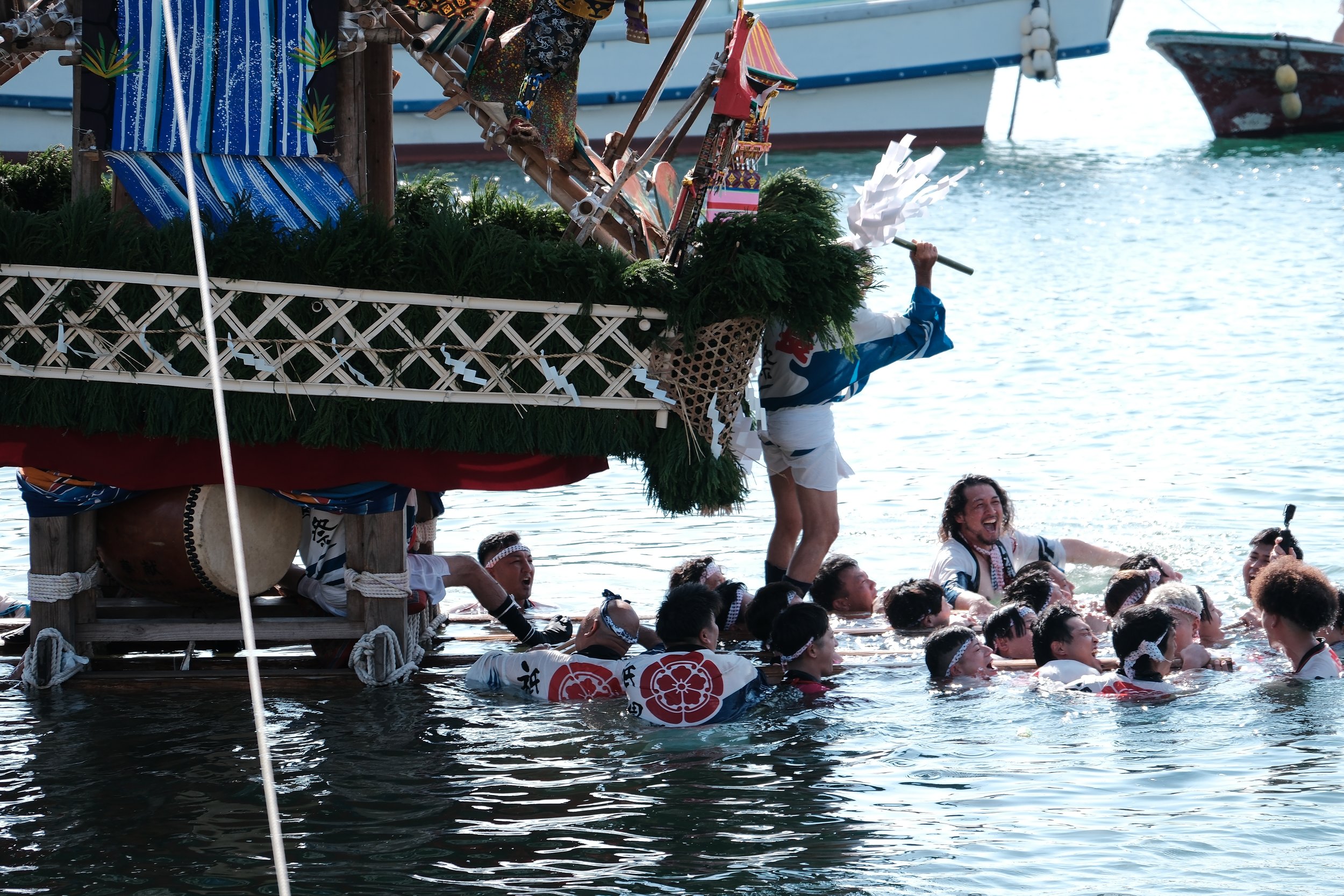
Held in a small fishing community near Yobuko, the Kodomo Gion Festival is a centuries-old summer ritual in which local men carry a towering yamakasa through the village and into the sea.
The Kodomo Gion Festival was held this past weekend in the small community of Kodomo, near Yobuko in Saga Prefecture. We made the day trip from Fukuoka to witness the love and effort the local community continues to put into this traditional festival, and came away deeply inspired by what we saw.
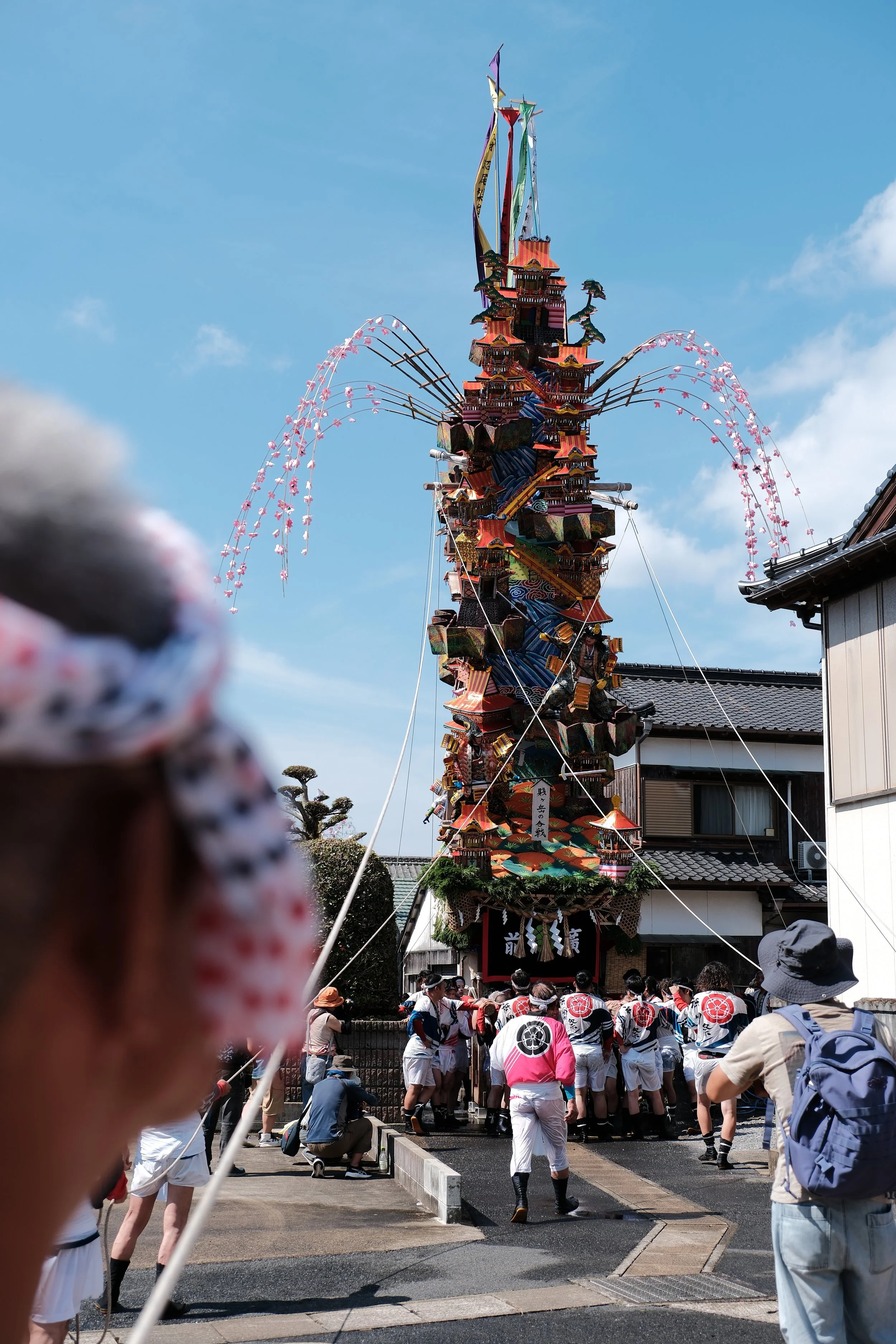
Under the blazing summer sun, we arrived to surprisingly little fanfare. There were no large crowds, prominent signs or obvious tourism infrastructure. We almost doubted that we were in the right place at the right time. Only five or six other people with cameras seemed to be wandering around, while the towering floats waited in a quiet side street.
We later learned that the tide was higher than expected and the procession had been delayed. This appeared to be common knowledge among the people participating, but the change had not been communicated to the small number of visitors waiting nearby. It was one of those slightly confusing but memorable parts of attending a genuinely local festival. I do not think the organizers expected many unrelated visitors to appear—and, to be fair, there were not many of us.
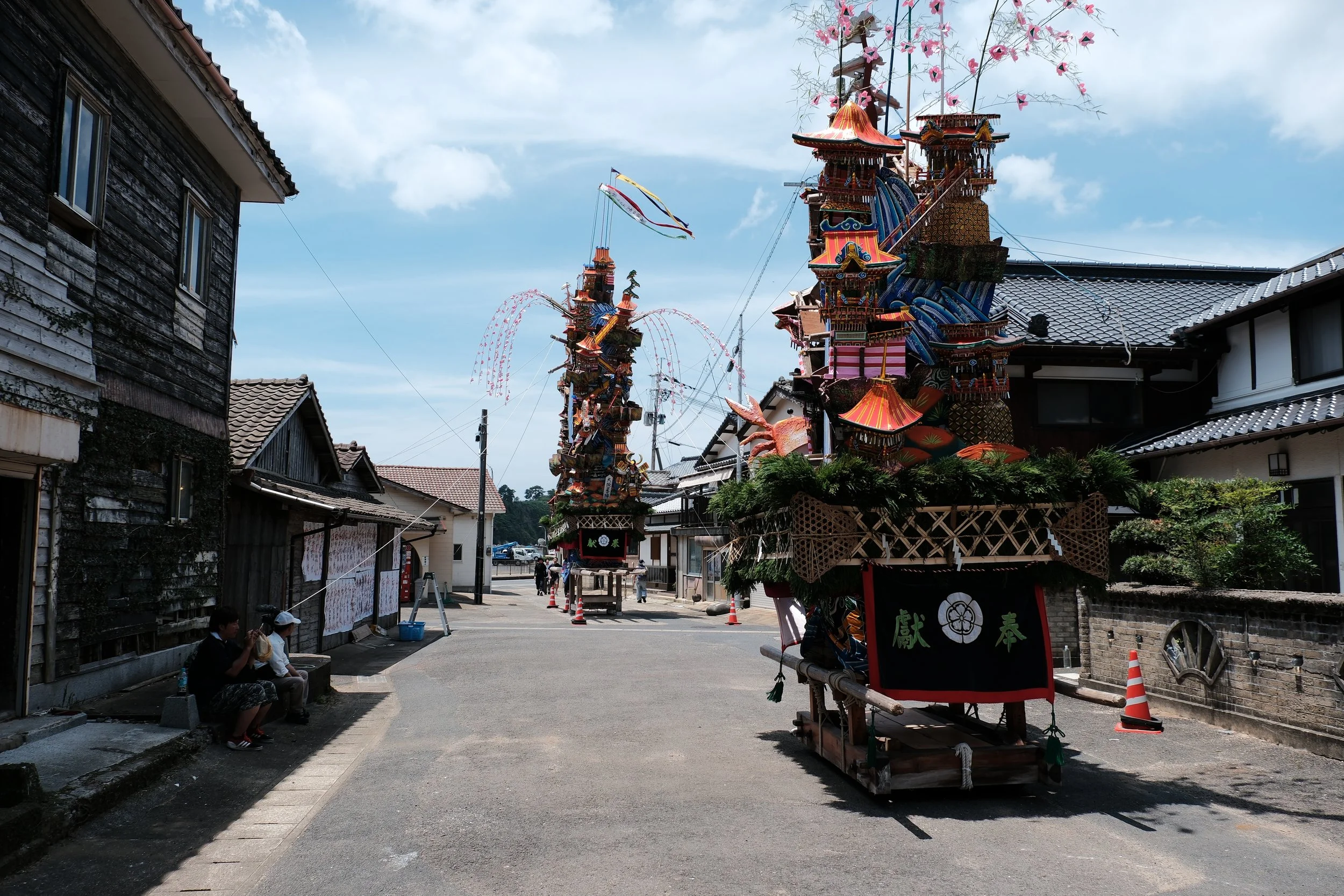
We arrived an hour before the scheduled start time, to get a good seat. Turns out, arriving early wasn’t necessary at all.
A Festival Born From a Prayer Against Disease
The festival’s Japanese name is 小友祇園祭, pronounced Kodomo Gion Matsuri. Despite the pronunciation, “Kodomo” does not mean “children” in this context. It is the name of the local district, written with the characters for “small” and “friend.”
The tradition is said to have begun in 1658, when an epidemic was spreading through the community. Villagers attached sacred paper streamers to bamboo and carried them around the district while praying for protection from disease. Over time, this simple act of purification developed into the much larger Gion yamagasa seen today.
The festival is connected to the local Yasaka Shrine and now includes prayers for protection from illness, a successful harvest and a plentiful catch. It was traditionally held on the 14th and 15th days of the sixth month of the old lunar calendar, which also explains why the modern dates and procession times can move from year to year.
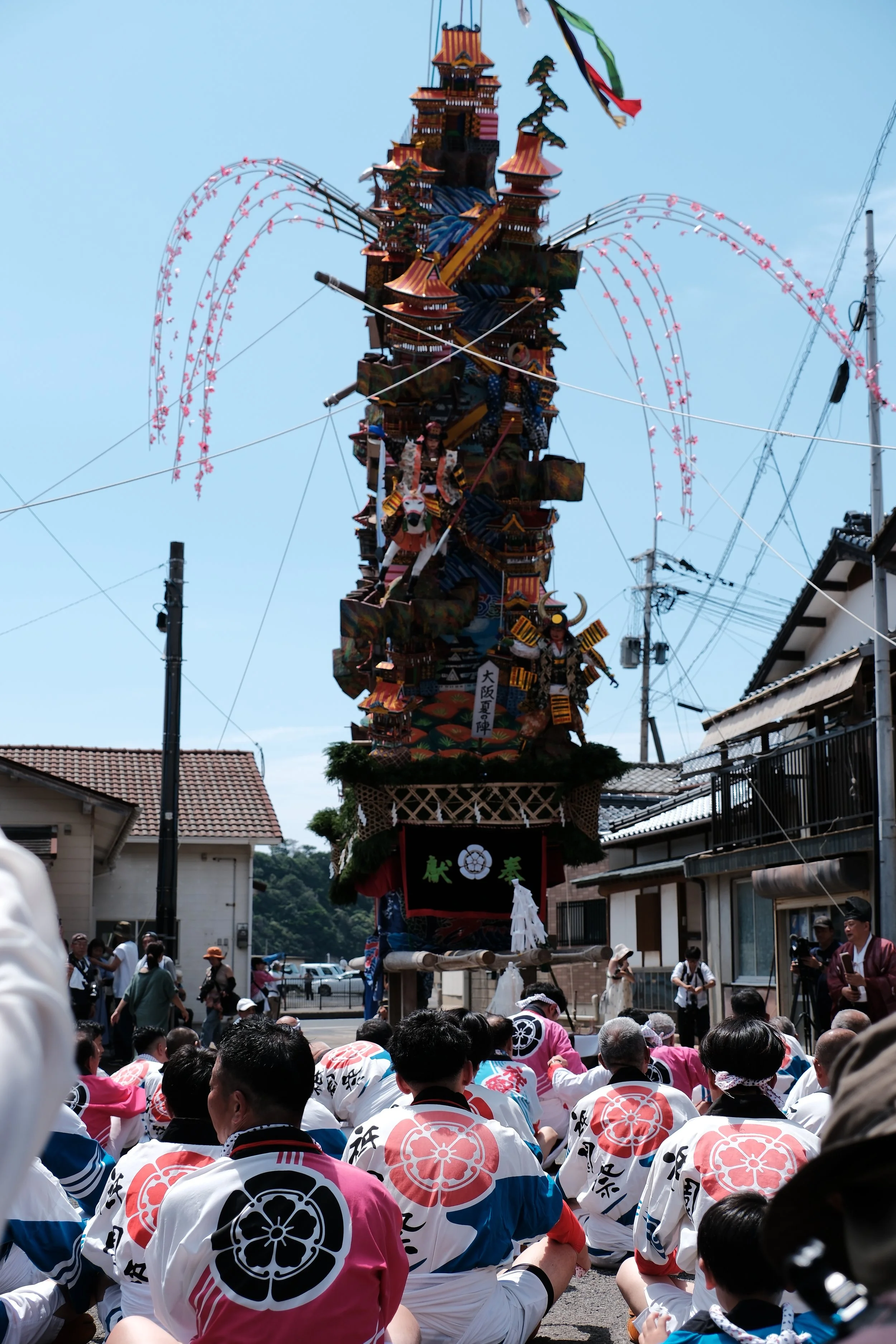
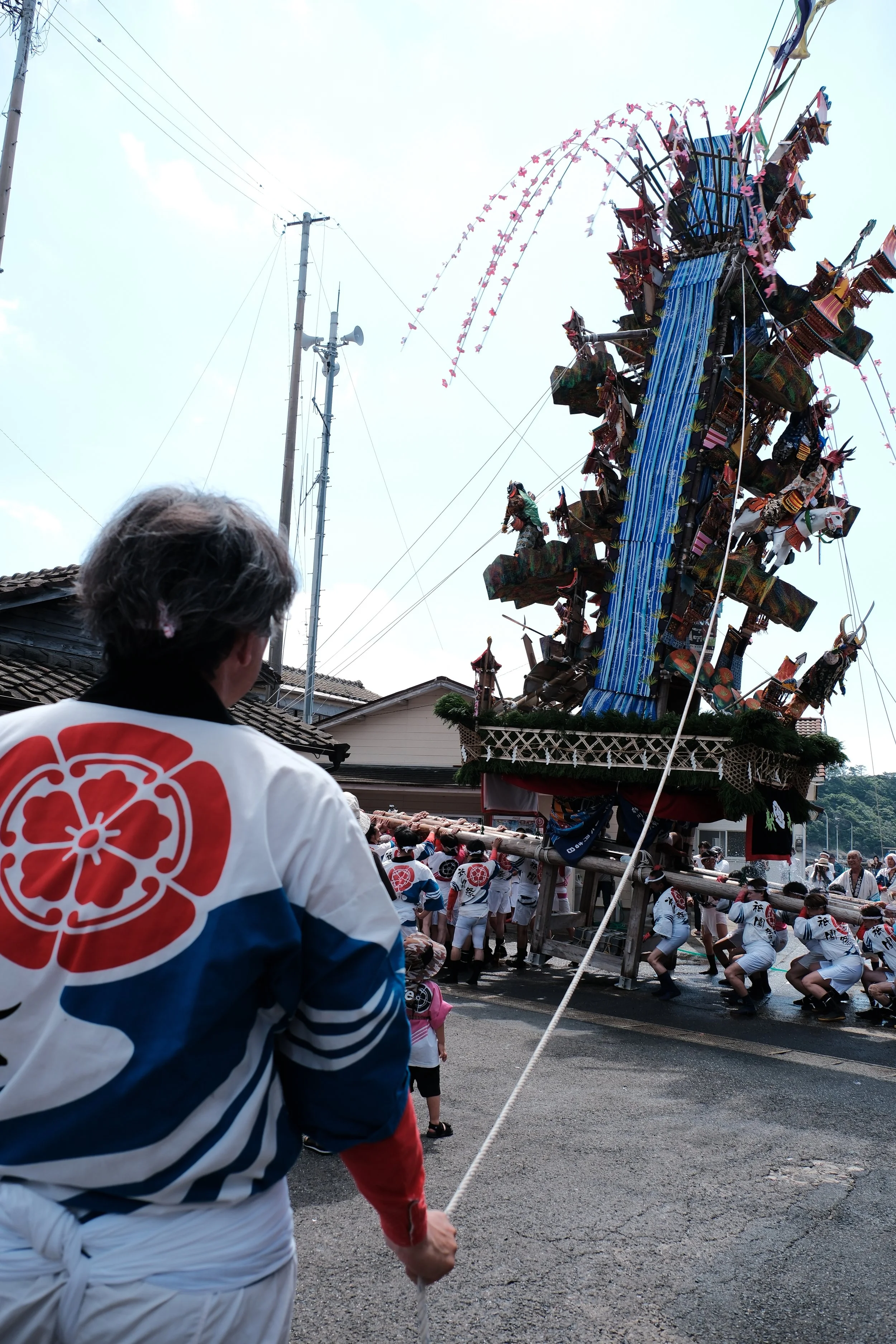
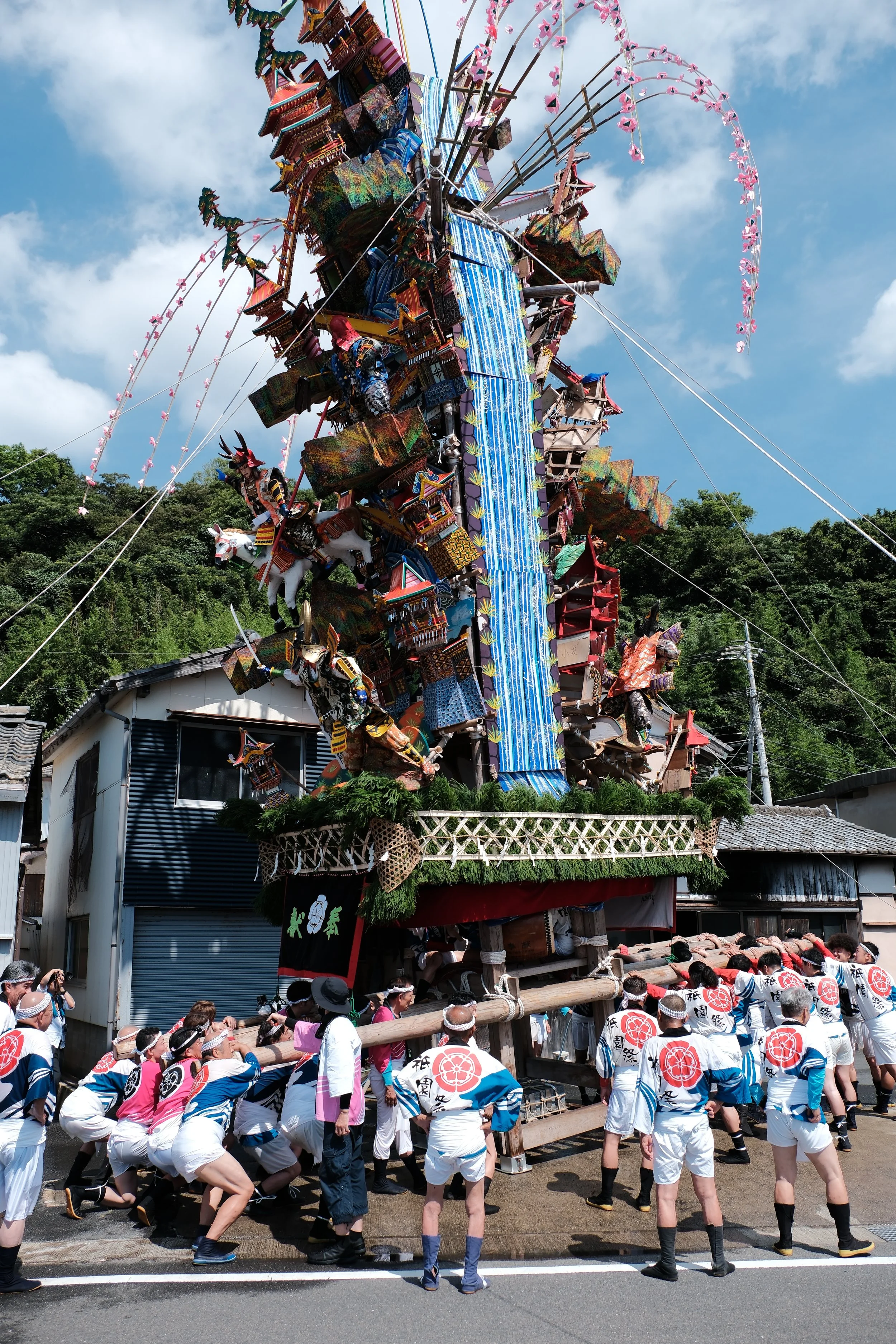
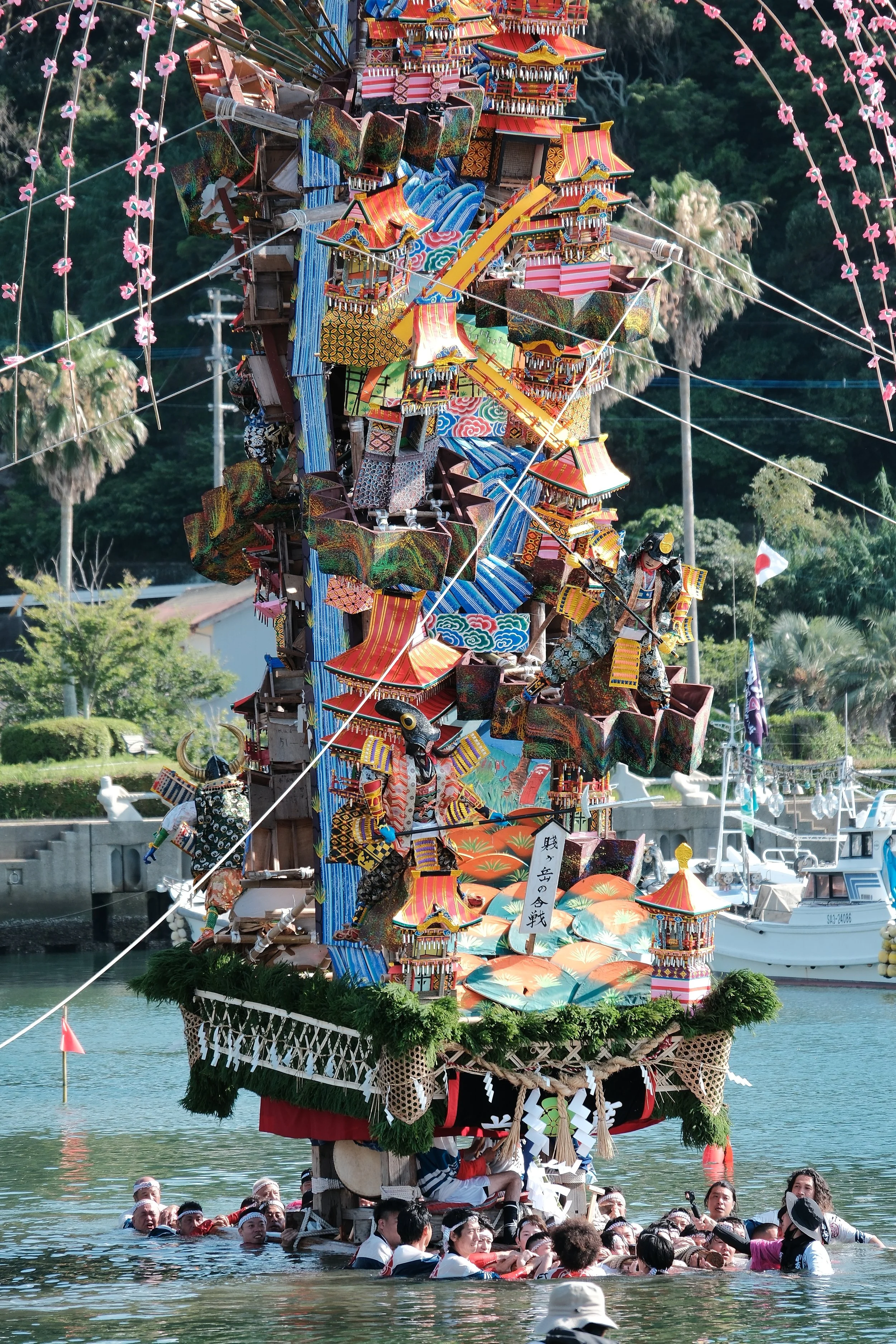
The main yamagasa is approximately 15 metres tall and weighs around three tonnes. Decorated with embroidered fabric, colourful streamers and ornaments, it towers over the narrow streets of a village where most of the surrounding buildings are only a fraction of its height. Around 50 men have traditionally carried it using four long wooden beams, first through the community and then into the water.
This is not primarily a children’s festival or a performance created for tourists. It is a religious and community tradition maintained by the residents of Kodomo, with visitors permitted to observe from the surrounding streets and shoreline.
Waiting for the Tide
The most riveting part of the festival is the yamagasa’s journey into the bay. Unlike a parade that begins at a fixed time regardless of the conditions, this procession is closely tied to the sea. The tide needs to be low enough for the participants to find their footing and carry the enormous structure through the water safely.
Official schedules provide an approximate time for the sea procession, but they also warn that it may move depending on the weather and tides. This year, that warning became a very real part of our experience.
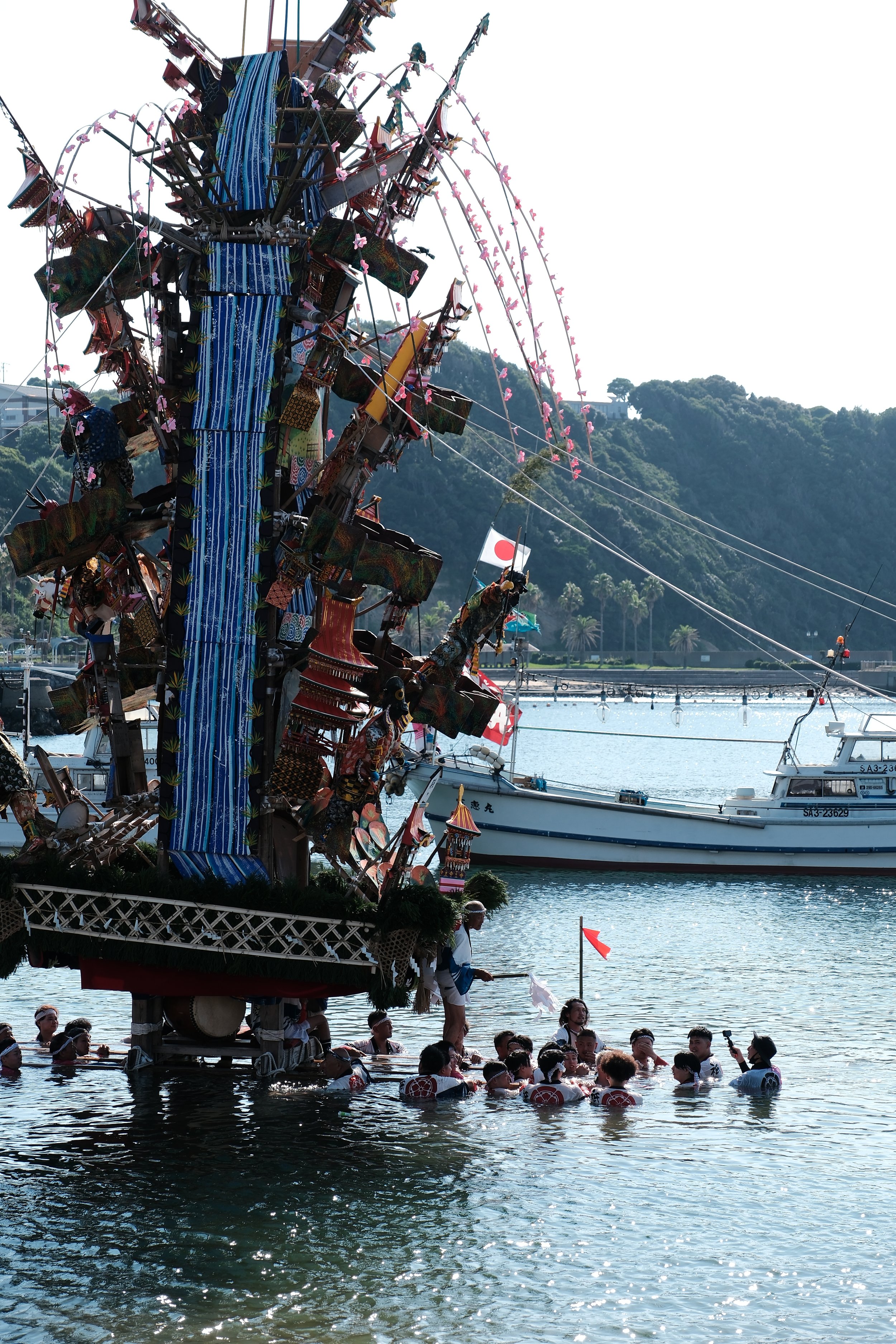
As we waited, the pace remained remarkably relaxed. At one point, several of the men sat together in the ocean drinking beer, while others floated farther out in the deeper water and waited for their feet to touch the bottom. There was no sense that the delay needed to be disguised or filled with entertainment for an audience. The festival would continue when the conditions were right.
For visitors accustomed to tightly organized events, this can be confusing. There may not be an English announcement—or any public announcement—when the time changes. Bring water, sun protection and patience, and treat the published schedule as a general guide rather than a guaranteed starting time.
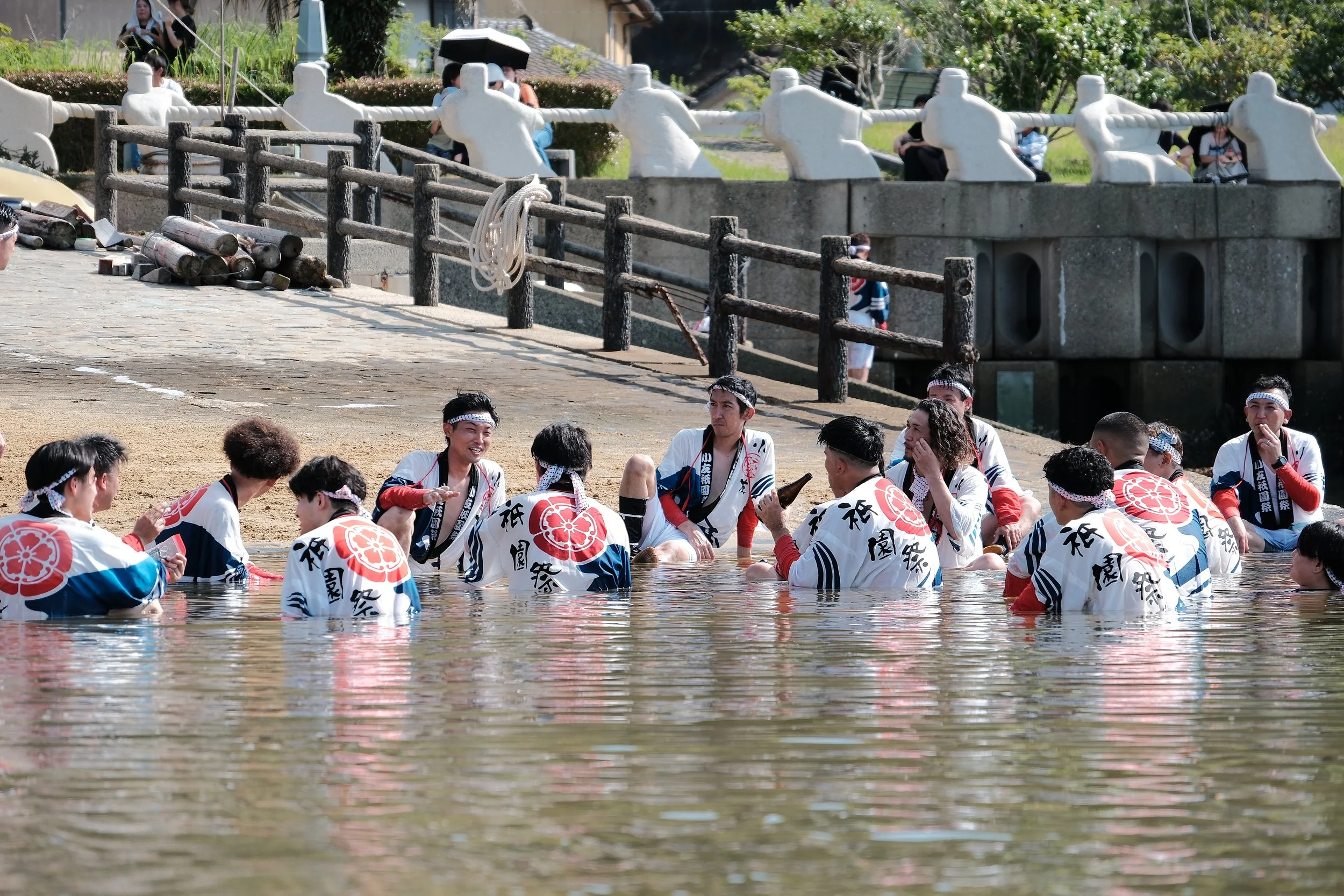
Participants sat at the boat launch, drinking beer, smoking cigarettes and waiting for the tide mid-festival.
A Very Different Kind of Yamagasa
The comparison with Fukuoka’s Hakata Gion Yamakasa is unavoidable, but the experience is completely different.
In Hakata, the teams appear larger than the floats themselves, and the final race moves through the city with remarkable speed. The entire Oiyama course is completed in around half an hour, surrounded by enormous crowds, road closures, television crews and generations of highly organized neighbourhood groups.
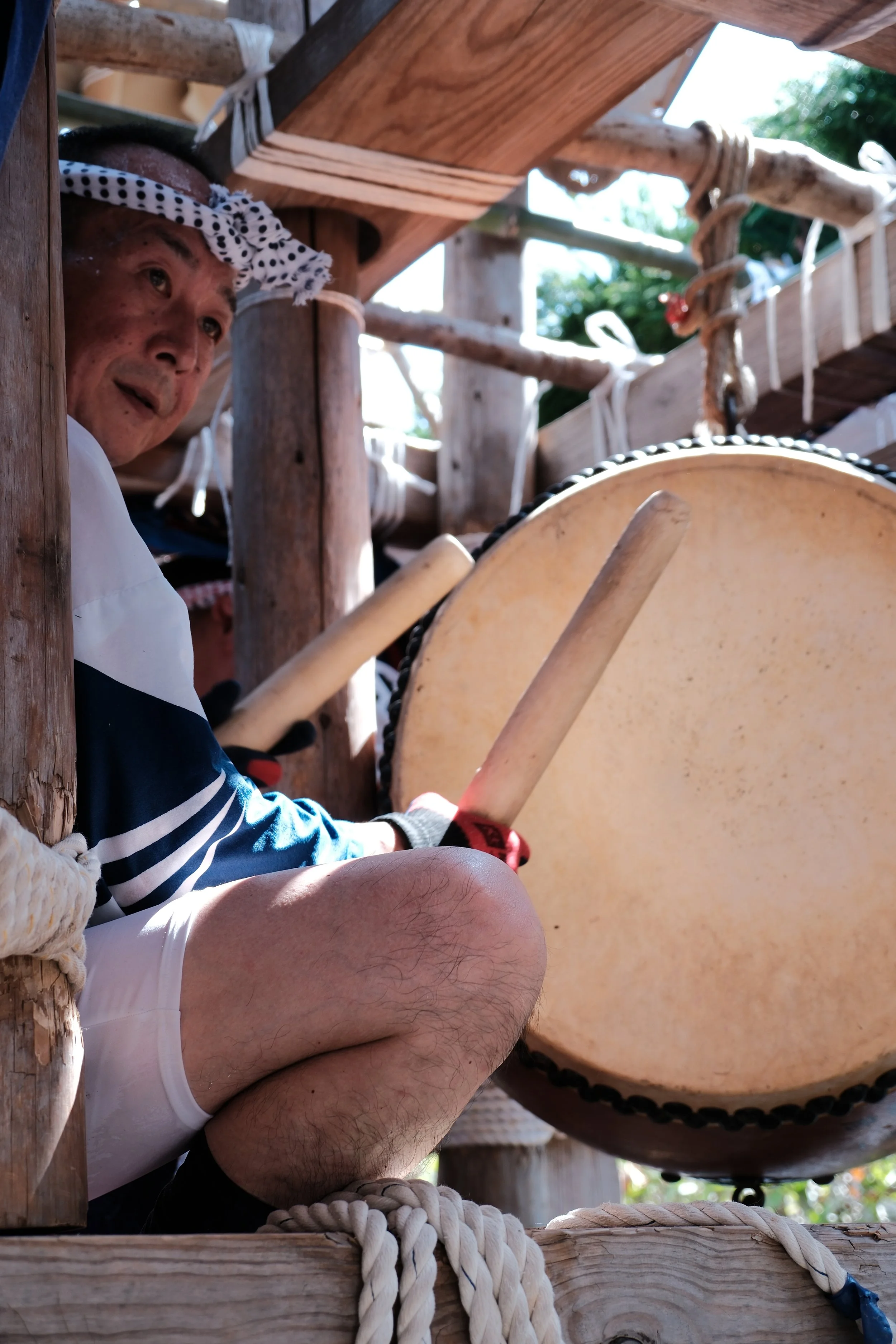
Kodomo Gion Festival is far more modest. The group we watched appeared to be a combination of men approaching retirement age, their sons, sons-in-law, relatives and friends. Their ages and physical strength varied considerably, while the structure they were carrying remained enormous.
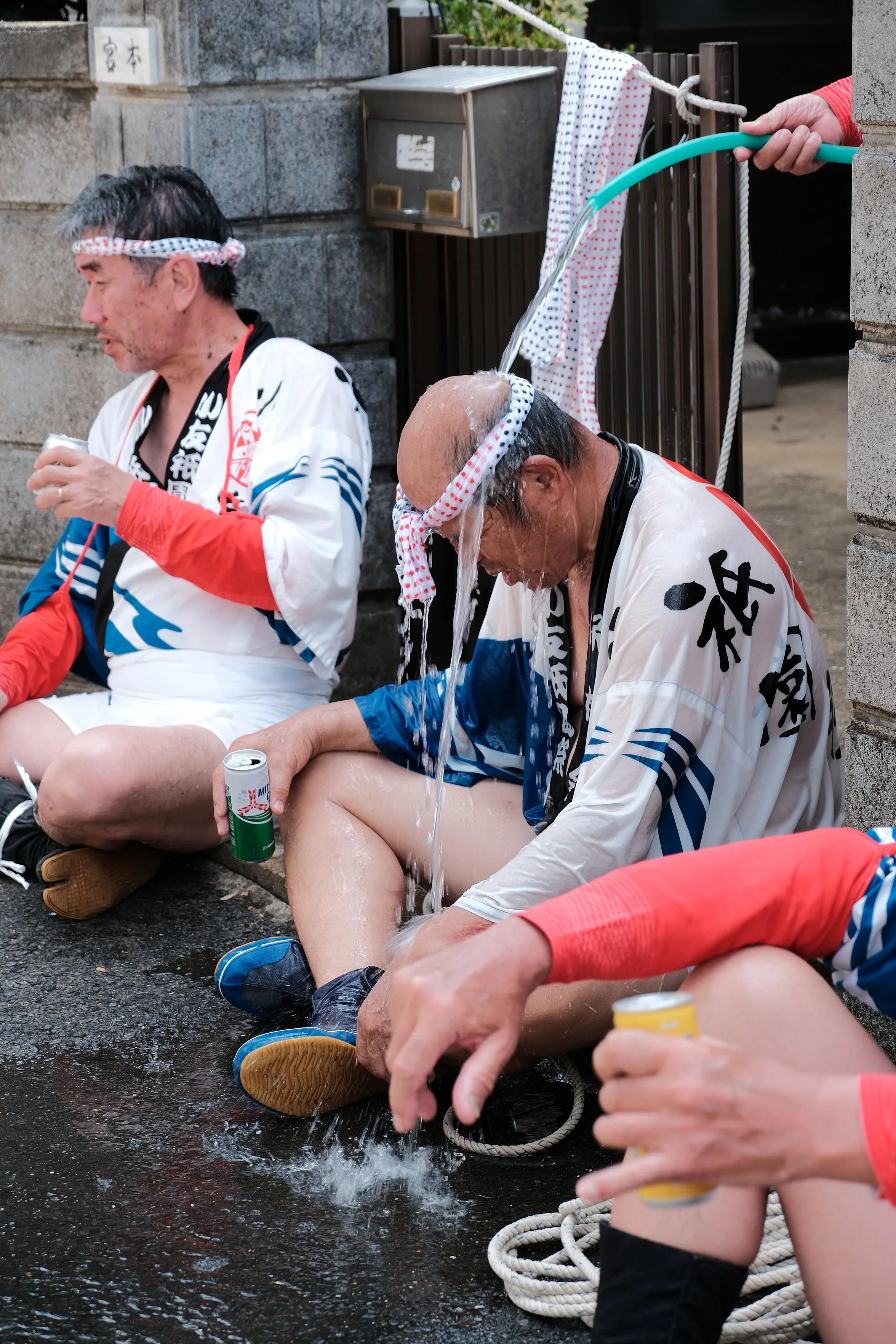
Although the total distance was not especially far, carrying a three-tonne yamagasa under the blazing July sun was clearly exhausting. The participants stopped frequently to rest and reorganize. Local neighbours waited outside with hoses, spraying water over the men as they passed. There was a small station with snacks and drinks, and the atmosphere moved between intense physical effort and long, informal pauses.
It does not have the speed or precision of Fukuoka’s most famous summer festival, but that is not a weakness. The slower pace allows you to notice the individual people involved: the older men offering instructions, the younger participants finding their position under the beams, and the neighbours quietly making sure everyone has water.
It feels authentic, local and completely real.
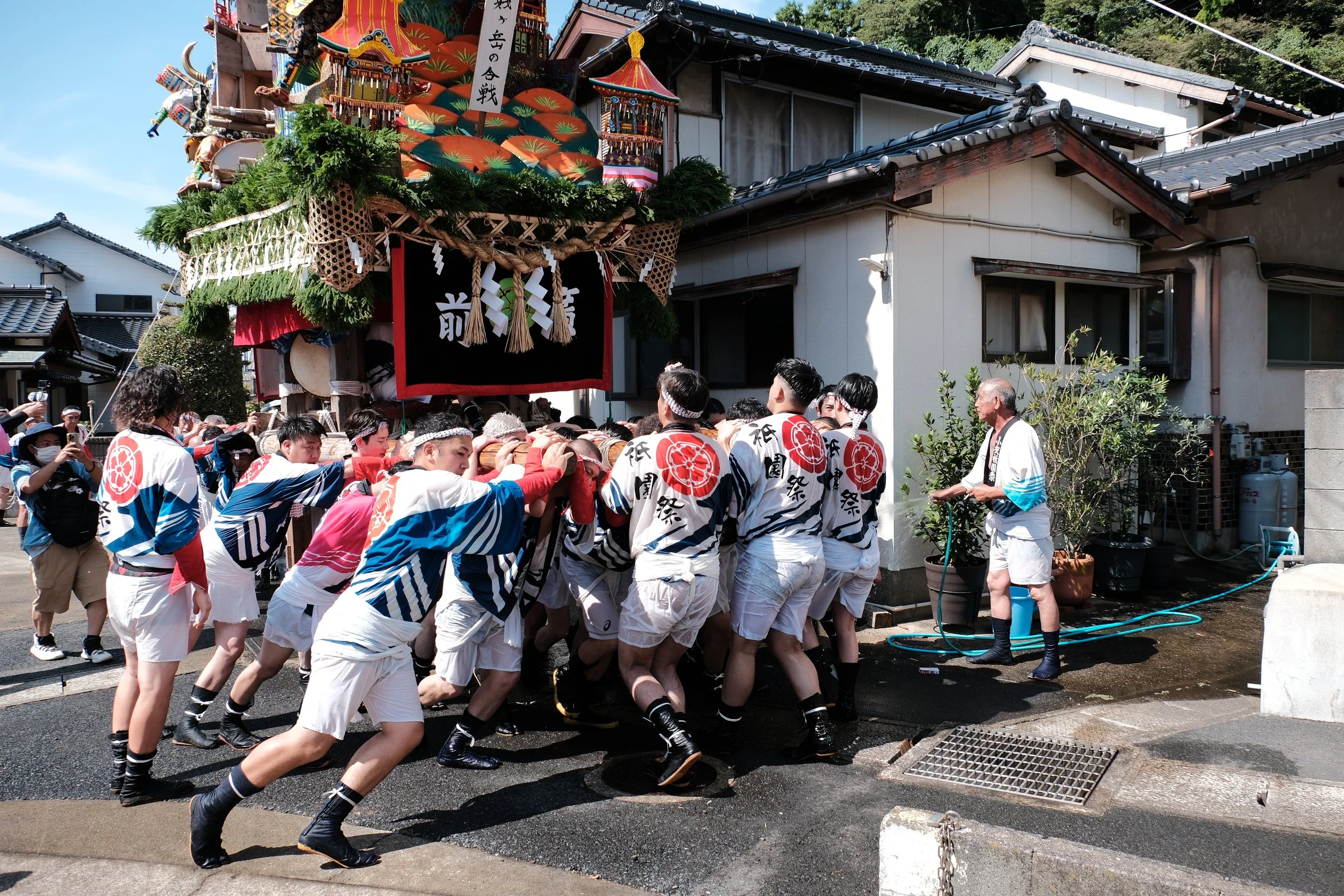
A participant waits with a garden hose, supporting the team by keeping them cool.
Carrying the Yamagasa Into the Sea
When the tide finally became manageable, the participants moved the yamagasa toward the bay. Watching a structure of that size leave the road and enter the water is difficult to describe. The surface beneath the men becomes uneven, the weight shifts, and every movement requires communication between people who may have very different levels of strength and experience.
The sea crossing is not simply a dramatic addition for spectators. Water and purification are part of the history of the ritual. One account connects the sea procession to the community entering the water to cleanse itself during the historic epidemic, although details passed down through local festivals can vary over generations.
From the shoreline, the tall decorations appeared to float above the bay while the participants beneath them moved slowly through the water. There was plenty of time to watch the process unfold. It was not a single quick moment created for cameras, but a prolonged community effort with rests, adjustments and uncertainty built into it.
That pace made the experience feel more intimate. Instead of watching from behind barriers, we stood close enough to see the effort on individual faces and hear conversations between the participants.
Being Welcomed as an Outsider
I had more fun witnessing this local ritual than I expected. The small scale made it easier to see the community spirit behind the festival, and we were treated less like tourists passing through than welcome visitors who had unexpectedly found our way there.
Local families asked where we were from and wanted to know how we had learned about the event. During the wait, I also met Hamaguchi-san, a former chef at the Hyatt in Fukuoka. These small conversations became one of the most memorable parts of the day.
At a major festival, it is easy to remain anonymous within the crowd. In Kodomo, the absence of large spectator numbers made our presence noticeable. Rather than making us feel as though we were intruding, however, the people we spoke with seemed genuinely happy that someone had made the journey to watch.
That does not mean visitors should treat the festival as an open performance space. It remains an active religious and community tradition. Stay out of the procession route, avoid blocking homes or working areas, ask permission before taking close portraits and follow any instructions from residents. During the sea procession, leave plenty of room for participants to enter and exit the water.
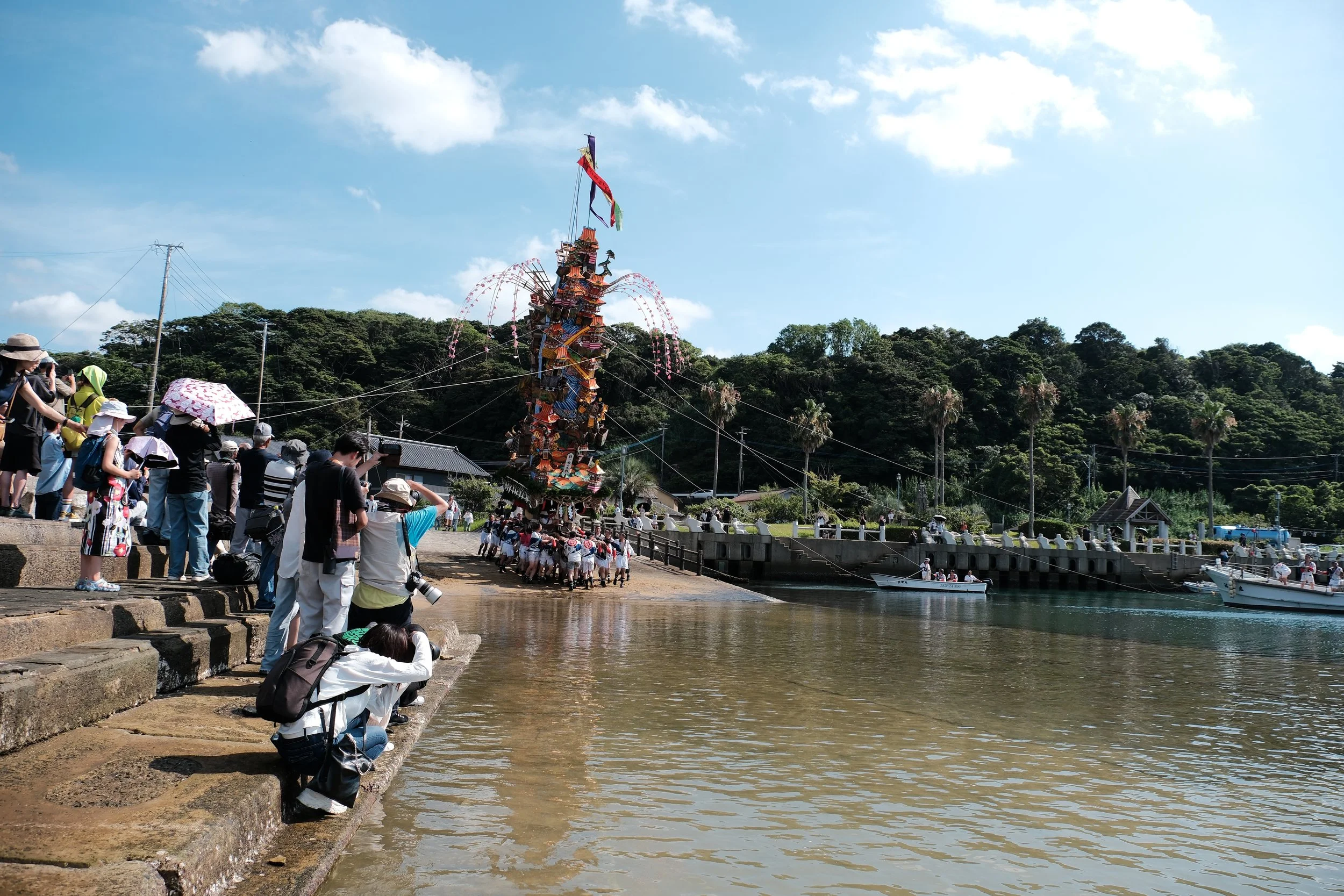
Visitors maintained a safe distance while the men carried the float into the sea.
A Tradition at Risk of Disappearing
While waiting for the festival to begin, we spoke with local residents who told us that participation and attendance have dwindled over the years. Like many rural communities in Japan, Kodomo is facing an ageing population and fewer young people available—or interested—in carrying its traditions forward.
A festival built around lifting a three-tonne structure cannot survive through documentation alone. It requires enough physically capable participants, experienced community members who understand the ritual, neighbours willing to provide support and younger generations prepared to inherit the responsibility.
This is why respectful visitors can have a positive role. Some travellers may wonder whether it is appropriate to appear at a small local event that is not heavily promoted outside the community. Based on the conversations we had, the general sentiment was yes: visitors are welcome, and the community would be happy to see more spectators, provided they behave respectfully.
Tourism cannot solve every challenge facing rural festivals, and an influx of careless visitors could easily create new problems. But showing genuine interest, staying in the area, buying food locally and sharing accurate information can help demonstrate that these traditions still matter beyond the people carrying them.
The Kodomo Gion Festival may lack the polished visitor experience of Japan’s largest festivals, but that is exactly what made it so affecting. We did not simply watch a float enter the sea. We watched a small community work together to keep a centuries-old promise alive.
Kodomo Gion Festival Visitor Information
English Friendly: 1.5/5
The festival is primarily organized for the local community. English signage and announcements are unlikely, and last-minute changes may circulate through local conversations rather than formal visitor updates. Basic Japanese or a translation app will be helpful.
Access by Car:
Approximately 1 hour 30 minutes from central Fukuoka City, depending on traffic. Driving is the most practical option because the festival takes place outside central Yobuko and public transport connections are limited.
Access by Train:
N/A. There is no railway station in Yobuko or Kodomo. The nearest practical station is JR Karatsu Station, followed by a bus and possibly a taxi or additional local connection.
Access by Bus:
Buses run from Karatsu’s Oteguchi Bus Center toward Yobuko, generally taking around 30 minutes. Kodomo is approximately five minutes beyond central Yobuko by car. Confirm the latest local bus route and return times before travelling, as festival timing can shift with the tide.
Address in English:
Yasaka Shrine / Kodomo District
Kodomo, Yobukocho, Karatsu City, Saga Prefecture, Japan
Google Maps:
View the Kodomo Gion Festival area on Google Maps
Festival Dates and Hours:
The festival is generally held over two days in July, with dates changing annually. In 2026, it was held on July 18 and 19, with the sea procession scheduled for approximately 2:30–3:30 p.m. Times can move according to the tide and weather, so confirm the official listing shortly before travelling.
Estimated Costs:
Free. There is no admission fee for watching from public areas.
Parking:
Parking in the immediate community is limited, and narrow residential streets must remain accessible to residents and festival participants. Follow temporary signs or directions from local staff and avoid parking beside homes or along the procession route.
What to Bring:
Sun protection, plenty of water, a hat, comfortable shoes and a towel. There may be long waits with limited shade. A telephoto lens is useful for photographing the sea procession without moving too close to the participants.
Important Note:
The sea procession depends on the tide and weather. Delays and schedule changes are part of the event, and information may not be announced in English—or publicly at all. Arrive with flexibility and allow more time than the official schedule suggests.
