Don’t Cancel Your Kyushu Trip Yet: Traveling After the 2026 Kumamoto Earthquake
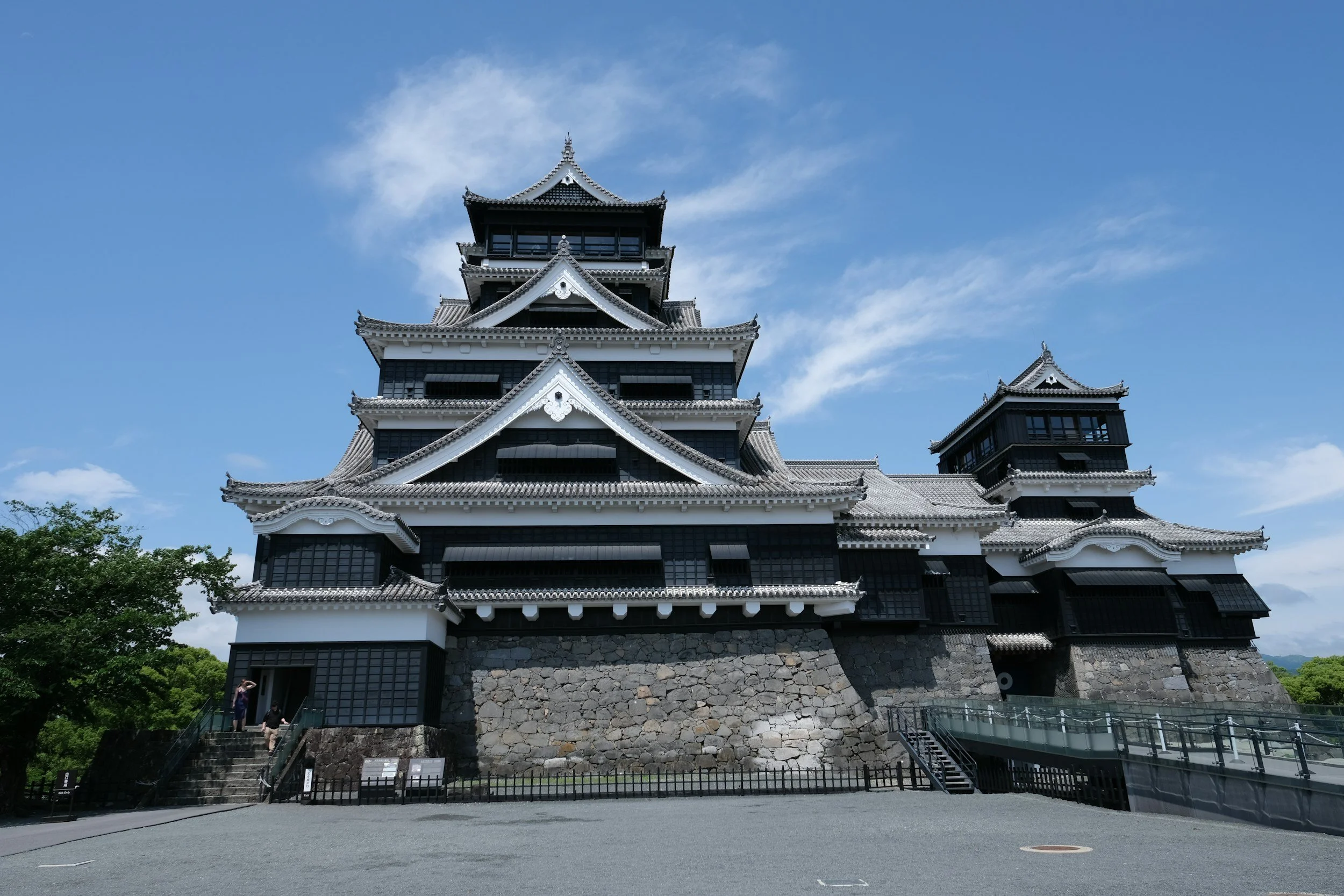
Last updated: August 3, 2026. Always check official transportation notices, municipal guidance and your accommodation directly before traveling. (Image Via Unsplash)
In my 20 years in Japan, I have seen many earthquakes and natural disasters affect different parts of the country. I also experienced the 2016 Kumamoto earthquakes firsthand while living only around an hour from the epicentre.
The July 28, 2026 earthquake brings back difficult memories for those who have experienced the megaquakes in Japan — not only of the shaking, but that awful phone alarm (bless it), and immediate damage, and what happens after the world’s attention begins to move elsewhere.
The earthquake struck the Kumamoto region at approximately 4:27 p.m. Maximum seismic intensity 7 was recorded in Uki City and Hikawa Town, with strong shaking across other parts of Kumamoto and Kyushu. Roads, buildings and transportation infrastructure were damaged, and officials warned residents to remain alert for further strong earthquakes.
Yes, this is a serious disaster. Some communities are grieving, assessing extensive damage or concentrating on rescue and recovery. Those areas need space, and resources, not casual visitors arriving to look at the destruction. But Kyushu is also a very large island, and not every destination has been affected in the same way. Cancelling an entire Kyushu itinerary without checking the individual places involved can create another wave of damage, one that lasts much longer than the earthquake itself.
What Happens After Relief
In the first confusing days following a major natural disaster, media coverage is understandably intense. Images of the worst damage travel around the world, people ask where they can send money, and social media fills with messages of support. Then, gradually, public attention moves on before the recovery is complete.
Buildings may be repaired and businesses may reopen, but the image of a disaster can remain attached to an entire region. Travellers become nervous about including it in their itineraries, school trips move elsewhere and hotels outside the worst-affected area continue receiving cancellations. I have personally watched this pattern play out repeatedly during my time in Japan. The Northern region of Japan is only now shedding the dark imagery of the 2011 Tohoku quake and tsunami. The loss of tourism income can continue long after a business is physically ready to welcome people again.
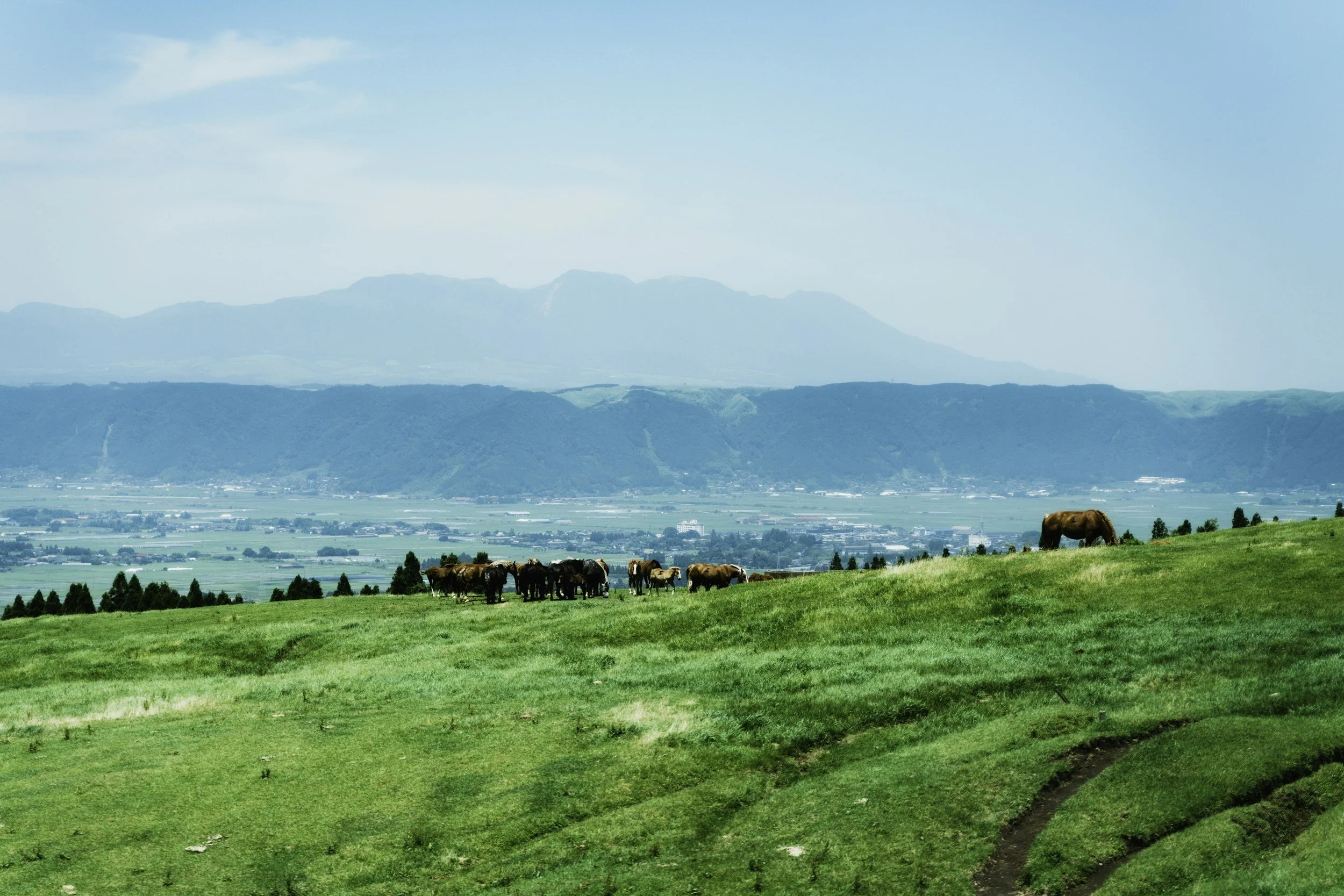
The green rolling hills of Mt. Aso have been popular imagery with tourists to Kyushu in recent years. You can still go here! (Image Via Unsplash)
Forty Cancellations in Two Hours
This time, as the 2026 earthquake struck, I was in Saga Prefecture working on a tourism project highlighting regional arts, crafts and porcelain kilns that have existed for generations. I was scheduled to photograph a ryokan later that evening.
By the time we arrived (approximately two hours after the earthquake) the ryokan had already received 40 cancellations.
It was not in the epicentral area. There had been no opportunity yet for most travelers to contact the property, confirm its condition or understand which transportation routes were affected. Fear travelled faster than reliable information. In the days following the earthquake, hotels, shrines and restaurants around Kyushu began posting on X, Threads and other platforms to explain whether they were open. Some businesses also shared how quickly their August reservations were disappearing during what should have been one of their busiest periods.
Of course, a disclaimer: a social-media post from an individual business does not guarantee that the wider journey is practical. Roads and railways may still be interrupted, and aftershocks remain possible. But these posts are an important reminder to investigate the actual conditions before treating all of Kyushu as a disaster zone.
Kumamoto Had Only Just Reached This Point
The timing of all of this is, excuse my language, a bit shitty.
Ten years after the 2016 earthquakes, Kumamoto had reached an important stage in its recovery. Interest had returned to Mt. Aso, Kurokawa Onsen, Kumamoto Castle and the surrounding areas. Damaged transportation links had reopened, tourism businesses had rebuilt, and the prefecture had spent years preparing to welcome more domestic and international visitors.
That recovery also included surviving the enormous disruption of the coronavirus pandemic.
In fact, 2026 was intended to mark the tenth anniversary of the 2016 disaster with a major tourism campaign presenting Kumamoto’s recovery and encouraging people to return.
To see the region hit by another major earthquake in this exact moment is frustrating. In a few weeks, much of Japan may appear to be functioning normally again. Kumamoto, however, will once more have to fight against an image of tragedy. Some businesses will struggle with lost income even after their buildings, staff and surrounding roads are ready to move forward.
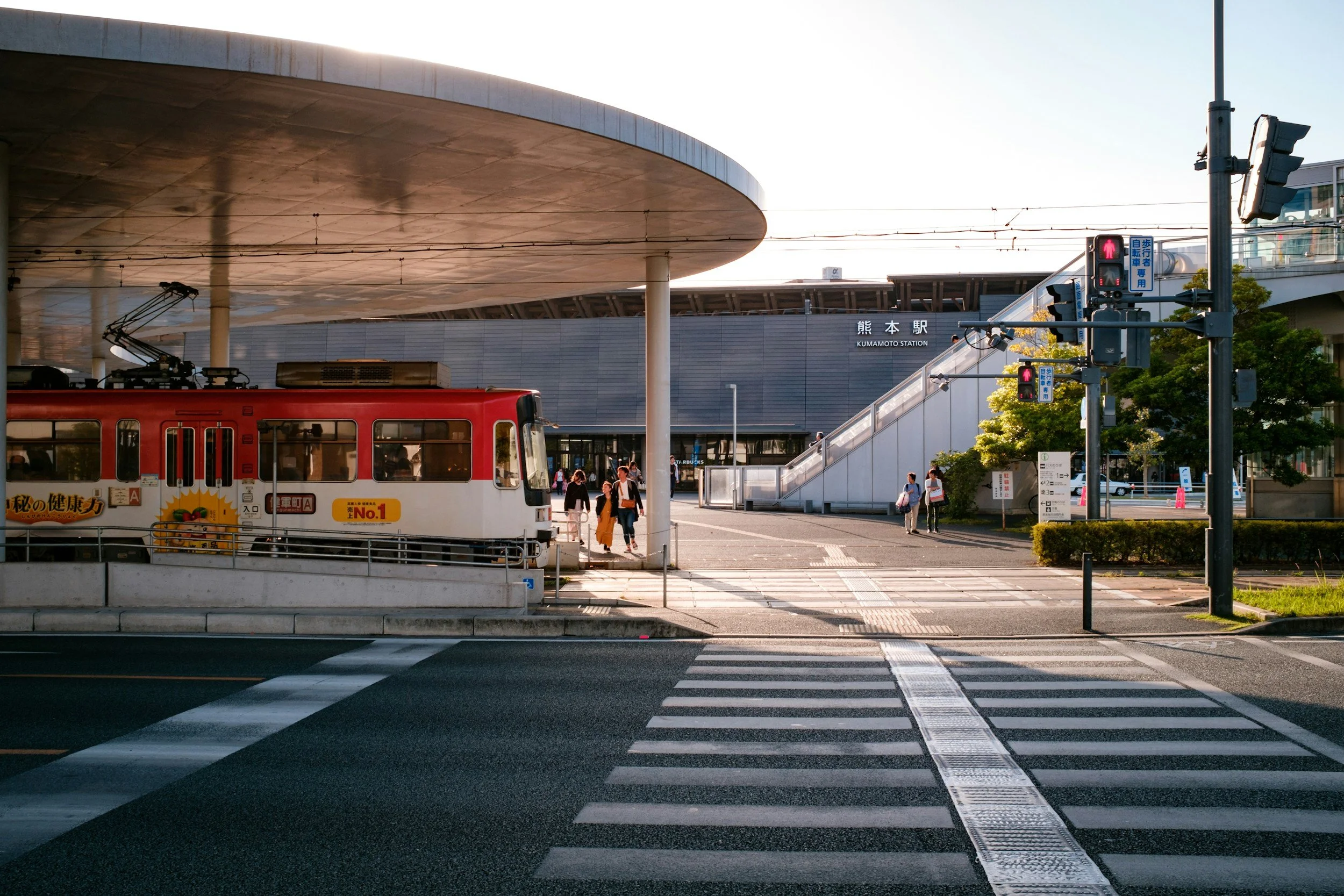
A street car drives past Kumamoto Station (Image Via Unsplash)
Donations are Nice, But Sustainable Support is Better
I strongly believe that the best long-term way to support Kyushu is through sustained economic participation.
This can mean purchasing products from Kumamoto, ordering from regional businesses, rescheduling a trip instead of abandoning it entirely, or visiting an open destination and spending money at local hotels, restaurants and shops.
(It should go without saying though - tourism is helpful when it does NOT interfere with recovery, don’t be a doinkus.)
Obviously this does not mean you should enter restricted areas, use accommodation needed by displaced residents or emergency workers, or drive onto damaged roads, simply to photograph destruction. If you have a trip booked for September onward, I would strongly recommend just reaching out and confirming directly with your accommodation if a trip is still feasible. They will appreciate the enquiry much more than a cancellation request.
So, Should You Cancel Your Upcoming Kyushu Trip?
Not automatically. Look at your exact route rather than reacting to the word “Kyushu” or even “Kumamoto.” Check every hotel, attraction and transportation segment individually.
You should probably cancel, postpone or significantly reroute if:
Your itinerary enters Uki City, Hikawa Town, Uto City, Yatsushiro City, Mashiki Town, Misato Town or another municipality currently requesting that unnecessary visitors stay away.
Your accommodation cannot confirm that it is open, adequately supplied and able to receive leisure guests.
Your journey depends on a suspended railway or closed road.
You need to enter Kumamoto Castle. The castle closed after the earthquake for safety inspections and should be considered unavailable until an official reopening is announced.
You intend to visit damaged areas mainly to observe or photograph the destruction.
You are not comfortable with the continuing possibility of minor aftershocks, service interruptions or last-minute changes.
Which Destinations May Still Be Possible?
Destinations elsewhere in Kyushu - including Fukuoka, Saga, Arita, Imari, Nagasaki, Beppu and Yufuin - remain entirely workable, depending on your transportation route.
Trips to Mt. Aso, Takachiho, Kurokawa Onsen and Kumamoto City may require confirmation. A property may be open while the route you intended to use is not. Local sources have confirmed that the latest road information is on Google Maps and road closures are marked very clearly - going on a guided tour can help mitigate some confusion if driving on your own is not feasible.
Kagoshima and Miyazaki remain possible destinations, but travellers who planned to pass through the damaged area may need to reroute.Flying directly can be simpler than relying on disrupted rail or highway connections. Driving should only be considered after checking official road closures; at the moment the highway is damaged in Yatsushiro and Ebino, causing significant travel delays for the unforseen future.
The Kyushu Shinkansen (Bullet Train) and sections of the surrounding rail network have experienced major disruption following the earthquake.Currently, it is running from Hakata (Fukuoka) to Kumamoto City on limited service, but if you plan to go beyond Kumamoto to Kagoshima, all routes are suspended. Do not rely on a previously saved timetable. Check JR Kyushu’s live operating information immediately before departure.
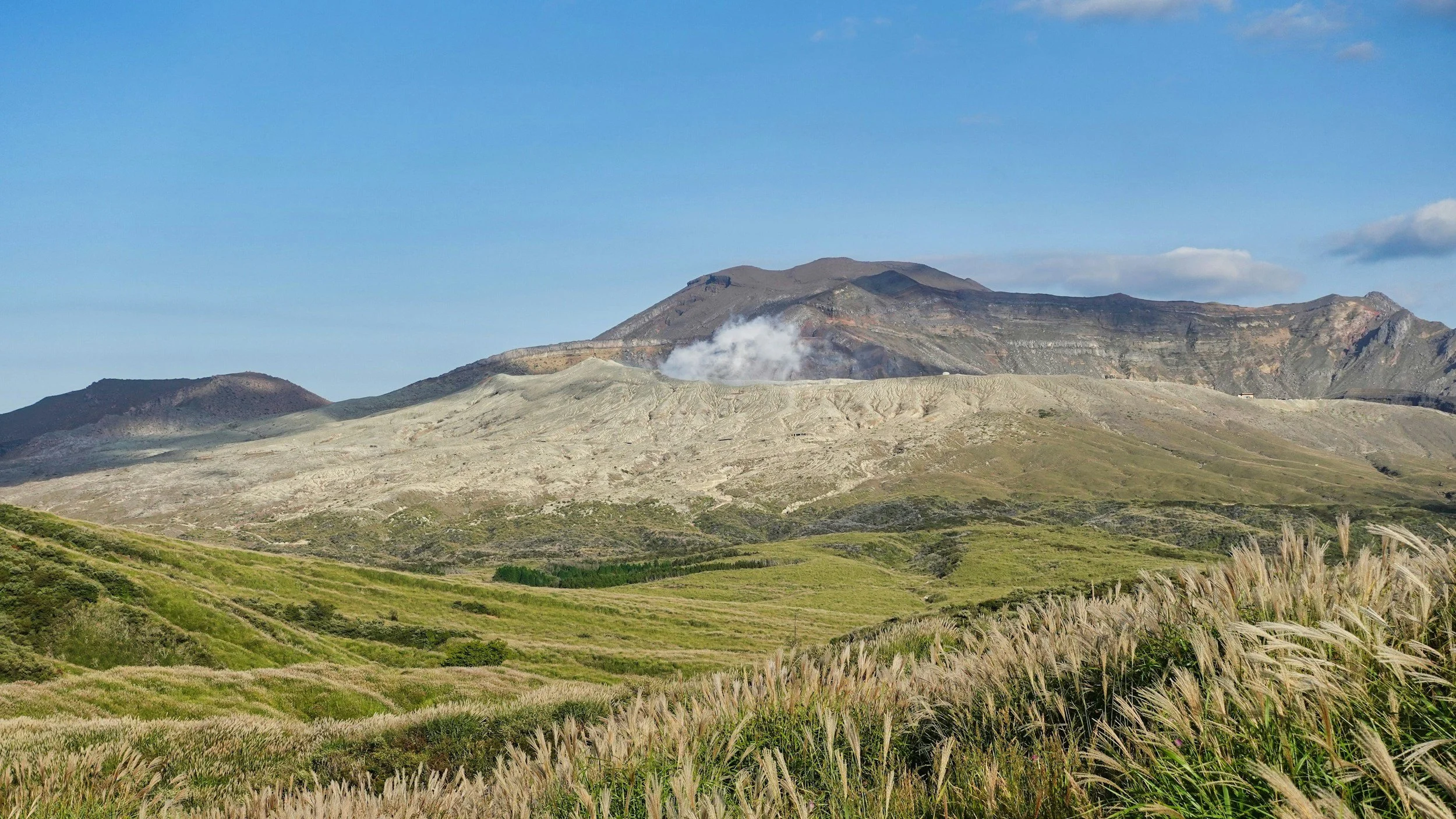
Mt. Aso was surprisingly unscathed by the recent activity. (Image Via Unsplash)
Nobody Can Promise a Risk-Free Vacation
It is completely natural to feel anxious about travelling after a disaster.
Nobody can promise that another earthquake will not happen during your trip. That is true in Kumamoto, but it is also true in Tokyo, where governments and residents have prepared for a major future earthquake for decades. Natural-disaster risk exists throughout Japan.
The practical question is not whether a destination can offer absolute safety. It can’t. The question is whether authorities consider the area accessible, essential services are functioning, your accommodation is ready to receive you, and you personally feel comfortable traveling with the remaining uncertainty. But as a person on the ground, who has traveled even in the past few days since the disaster, I can tell you that the majority of Kyushu is running business as usual.
Prepare properly. Enable emergency alerts (NERV is a great app for this!), always carry a few snacks and some water with you, keep your phone charged, and travel safe!
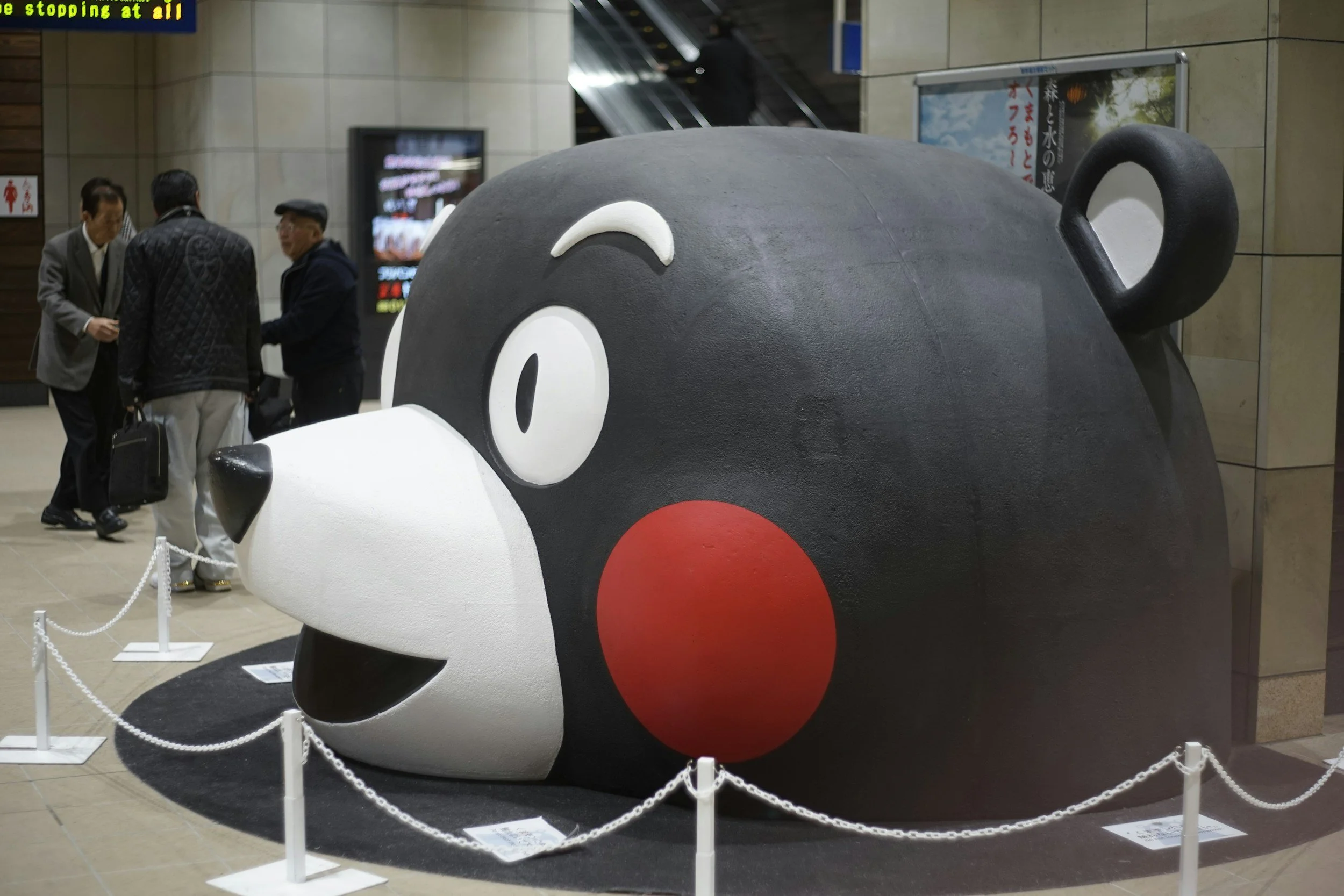
A large Kumamon awaits visitors at Kumamoto Station (Image Via Unsplash))
Useful Links for Traveling in Kyushu After an Earthquake
Information can change quickly after a natural disaster. Check these resources again on the day you travel, and confirm directly with your accommodation whenever possible.
NERV Disaster Prevention App
Provides location-based earthquake early warnings, tsunami information, volcanic alerts and severe-weather notifications. English is supported.
Japan Meteorological Agency — Earthquake and Tsunami Information
Japan’s official source for earthquake intensity, epicentre information, tsunami warnings and emergency weather alerts.
NHK WORLD-JAPAN
English-language news and emergency coverage from Japan’s public broadcaster. During major disasters, live reports and safety information may be available.
JR Kyushu
Check current Shinkansen, limited-express and local-train service information. Do not rely on a previously downloaded timetable after a disaster.
Highway and Road Conditions
Check closures, restrictions and emergency diversions before driving. Navigation apps may suggest unsuitable local roads when an expressway is closed.
Japan Safe Travel Information
The Japan National Tourism Organization shares emergency information and advice specifically for international visitors.
Local Information
Municipal and prefectural websites provide the most specific information about evacuation orders, damaged roads, closed attractions and local recovery conditions.
Emergency Numbers in Japan
110: Police
119: Ambulance and fire
118: Japan Coast Guard
Japan Visitor Hotline: 050-3816-2787
If you feel strong shaking near the coast, do not wait for an English-language alert. Move immediately to higher ground and follow local evacuation signs and instructions.
