Arita: A Porcelain Town That Needs a Loose Itinerary
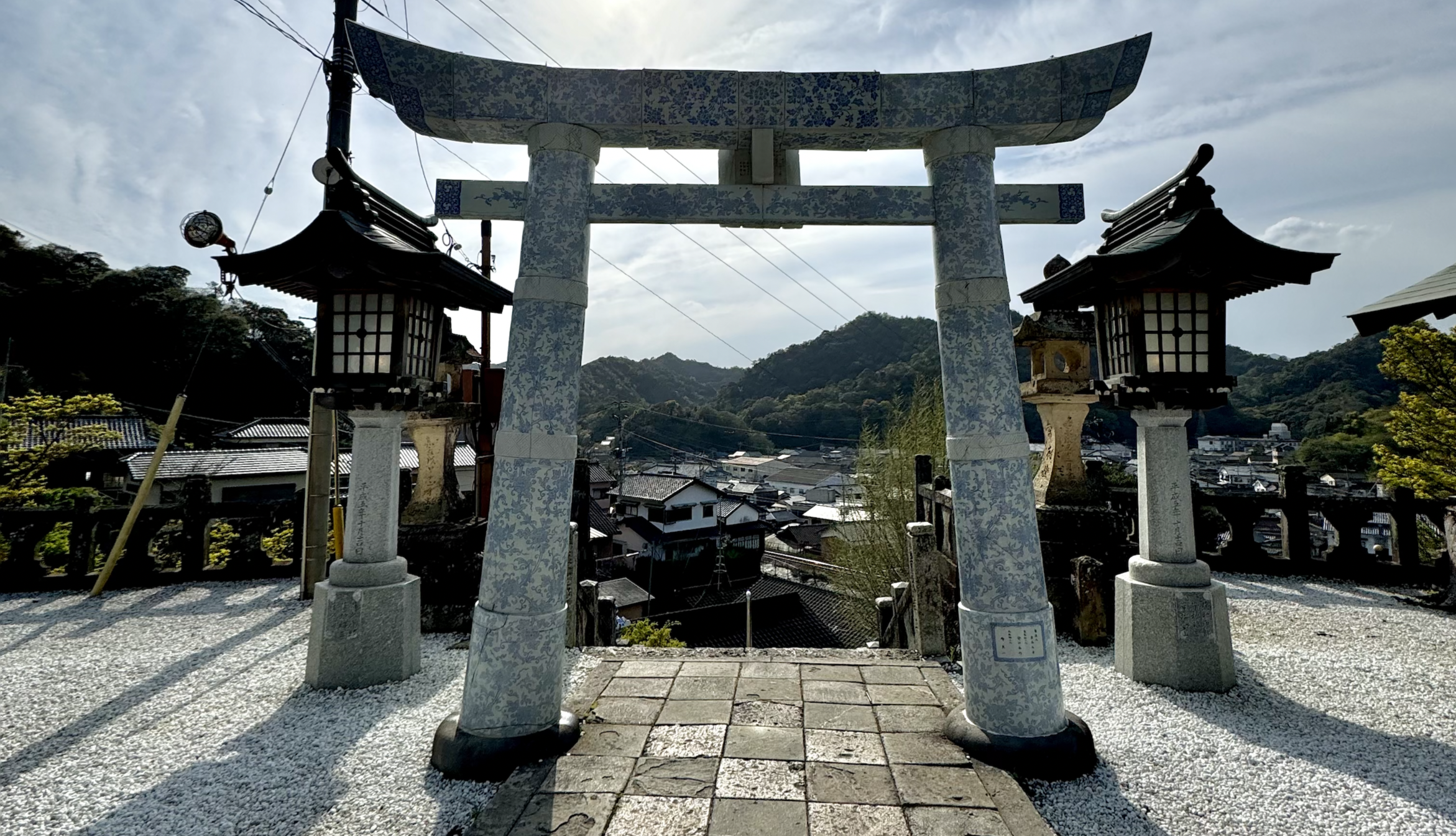
Tozan Shrine, located on the top of a small hill, is dedicated to a god of creating ceramics.
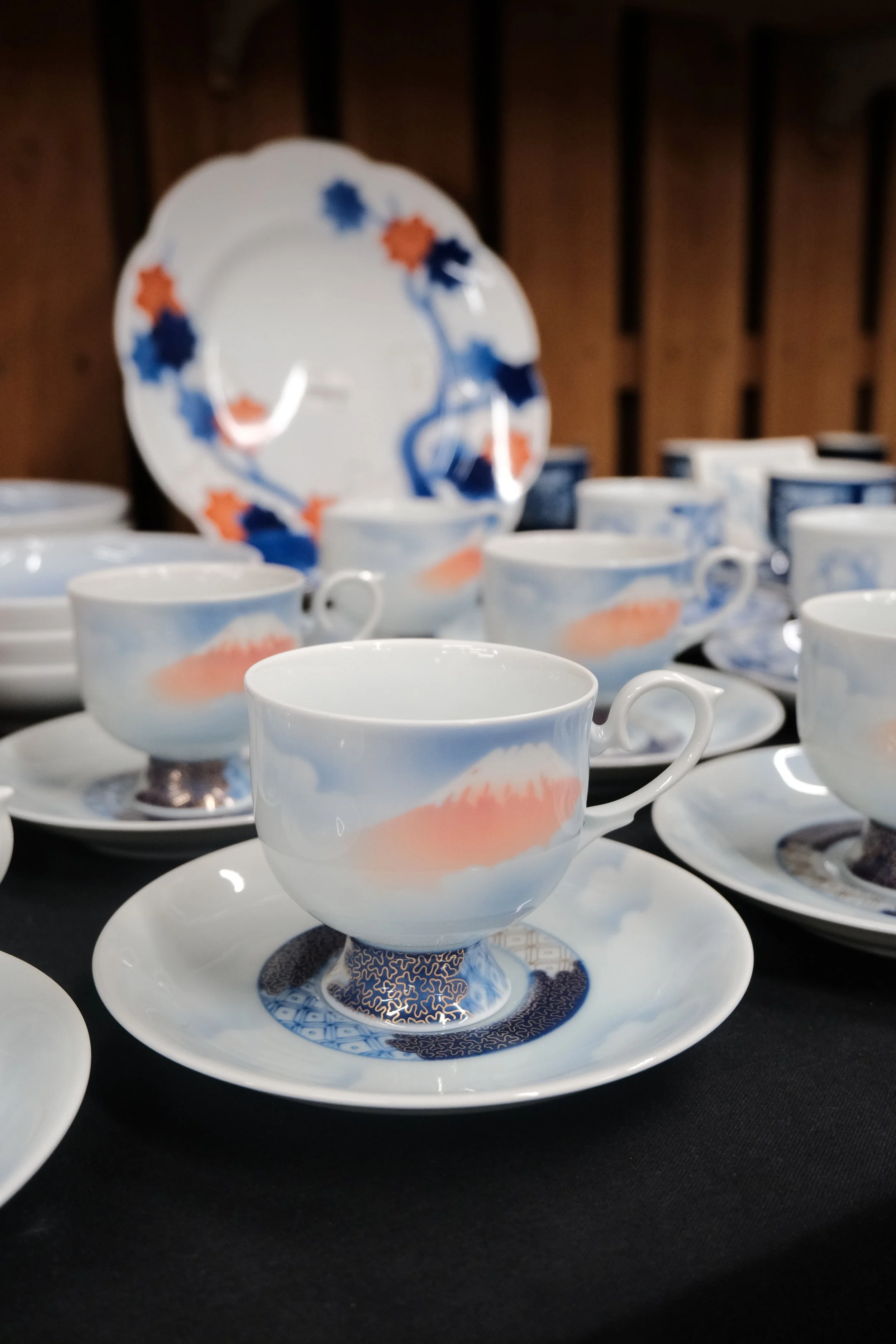
Arita is famous for porcelain, but the thing that makes it most interesting is that it still doesn’t feel completely designed around tourists.
Arita has all the ingredients of a polished tourism destination: more than 400 years of porcelain history, a preserved old town, working kilns, cafés, galleries, hands-on experiences, and even a shrine decorated with porcelain. With a little more coordination, it could probably become a much busier destination. But maybe the thing keeping it from becoming one is also what makes it special.
Outside of festival season, Arita still asks you to be a little flexible. Shops can have irregular business days, restaurants may be booked out or sell out, and places that look close together on a map can turn into a surprisingly long walk. This can be frustrating if you arrive with a rigid itinerary. If you come with a car, an open mind, and enough empty space in the schedule to change plans, however, Arita becomes much more fun.
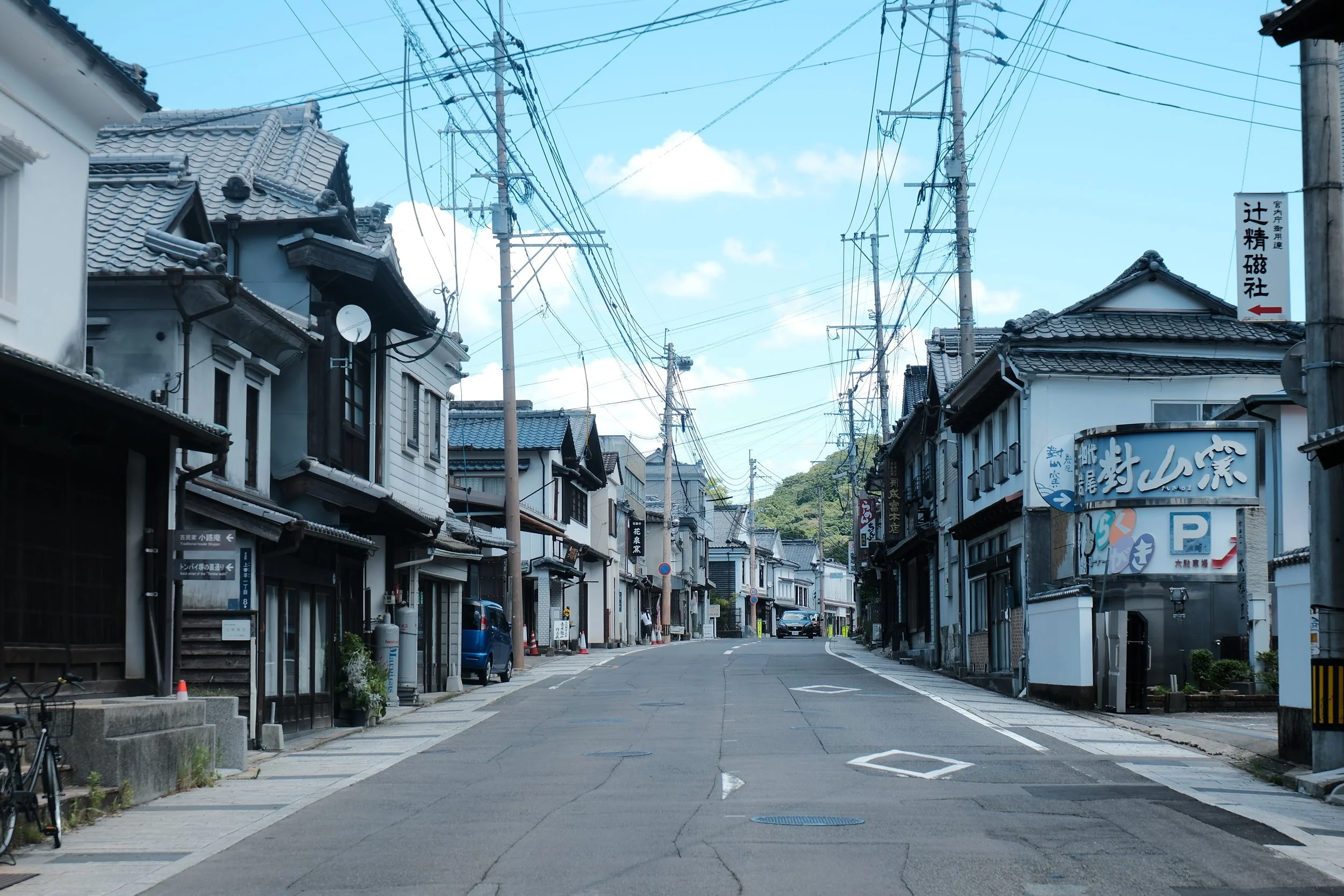
Just a quiet weekday in the town of Arita.
Start Around Tozan Shrine
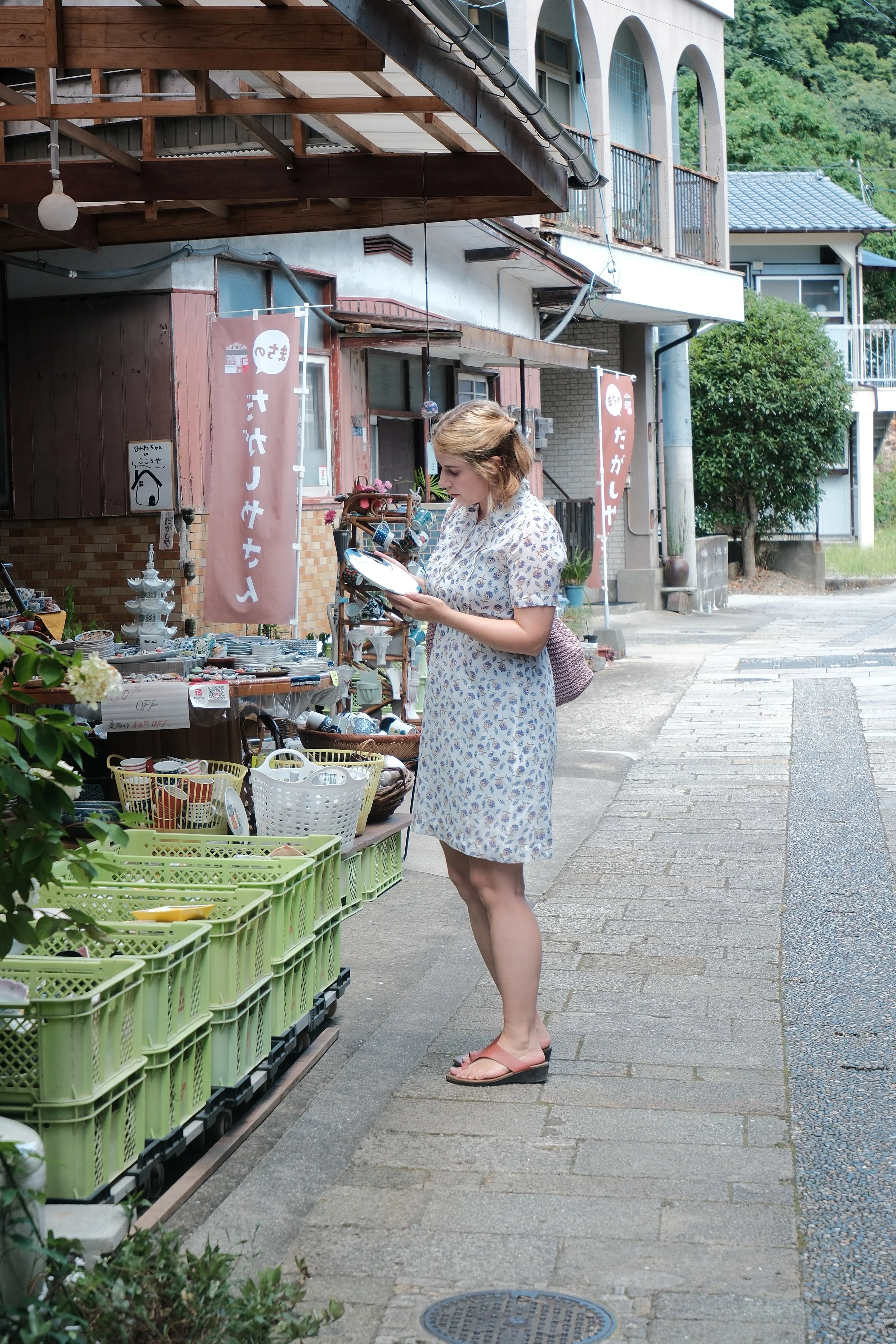
If you are driving, one of the most useful places to start is the free parking around Tozan Shrine. The official Arita tourism site currently lists roughly 20 free spaces there, available all day. It puts you directly into the Uchiyama historic district, where you can walk between old buildings, porcelain shops and some of the most photogenic streets in town.
From here, you can wander toward the Tonbai Wall alleys, built partly from discarded kiln bricks and ceramic tools, and continue through the old commercial streets. ARITA PORCELAIN LAB has its flagship store in this area, combining contemporary Arita ware with a gallery and café space, while kazaguruma curry is another small café worth having on your list.
(curry is a dish that takes on its own subculture within Japan, I could write an entire article on this - maybe I should someday…)
It took me a few trips to Arita to finally feel like I nailed my own itinerary, so I really mean it when I say that Arita works best with one or two certainties and the rest left to discovery.
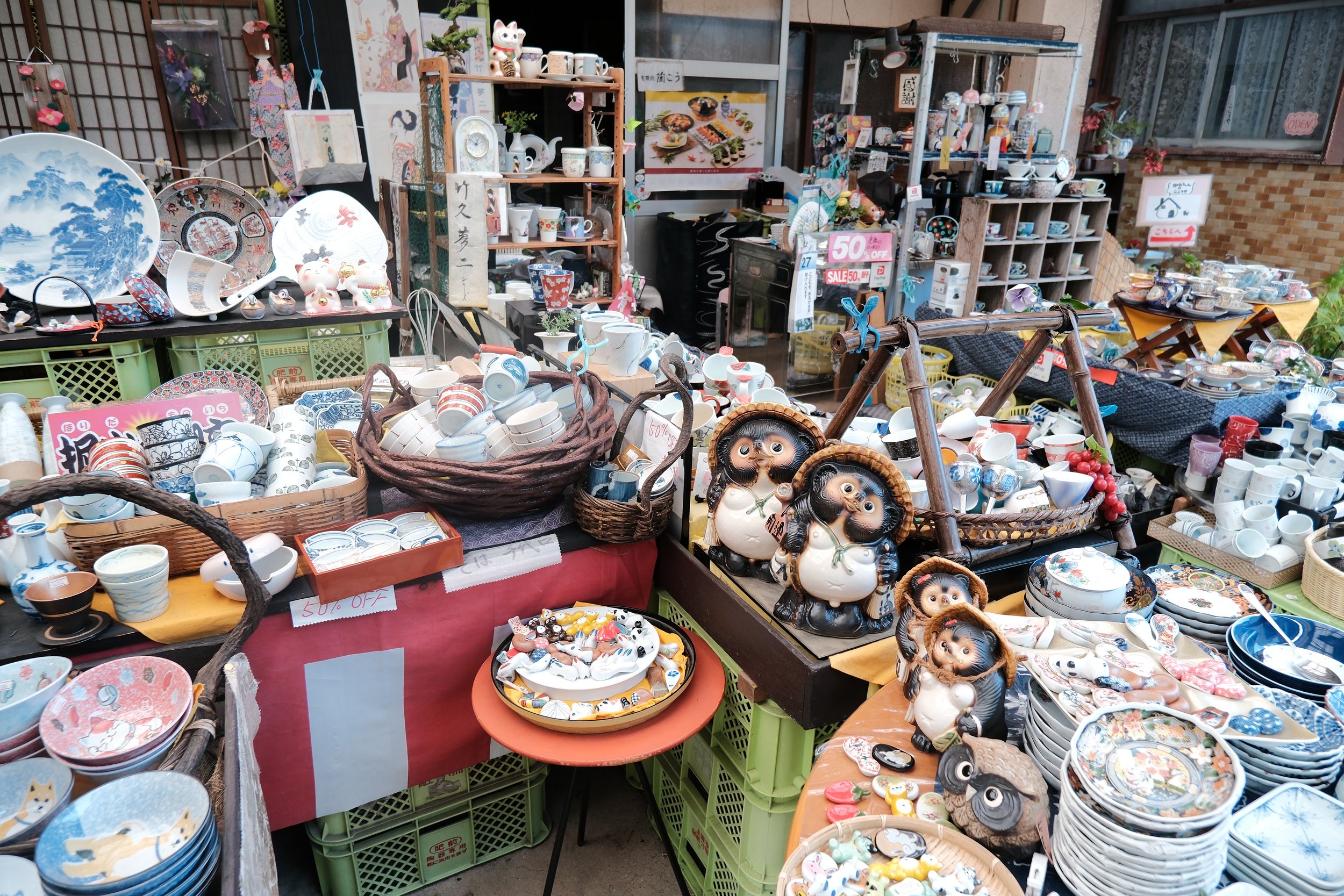
This streetside shop is located in Tonbei Alley just behind Arita Porcelain Lab.
If You Don’t Have a Car, Timing Matters
For visitors arriving by train or public transportation, I think the Arita Ceramic Fair during Golden Week is probably the easiest time to experience the town. The main spring fair traditionally runs from April 29 to May 5, when hundreds of shops and stalls spread along the streets between Arita and Kami-Arita stations.
During the fair, the town basically reorganises itself around visitors. Walking makes sense, shops are open, transportation is geared toward the crowds and there is something happening almost everywhere you go.
Outside of that period, public-transport sightseeing becomes more complicated. You can absolutely explore the historic district on foot, but trying to combine it with individual kilns, workshops and Arita Será can get exhausting quickly (especially in summer, when the humidity is heinous.)
If you are visiting without a car and want to go deeper than the main streets, I think hiring a guide is a very reasonable investment. A good guide can arrange kiln visits, introductions and behind-the-scenes experiences that most independent travellers would never know were available.
My Ideal Day in Arita
Personally, I wouldn’t build an Arita itinerary around shopping alone. I would include at least one hands-on experience, a long lunch or café stop, and enough time to browse several different kilns before deciding what you actually like.
Porcelain is extremely personal. You may need to walk through five shops before something resonates (personally, I steer away from some of the busier, traditional designs myself, and prefer more modern artwork with understated designs.)
Some workshop ideas include:
Ezuke painting at Kouraku Kiln — painting your own design onto porcelain.
Kiln and workshop tours— getting behind the scenes and watching pieces move through the production process. Some of the more interesting tours are much easier to arrange with a bilingual guide.
Pottery classes— useful if you want to actually make something rather than simply decorate a finished piece.
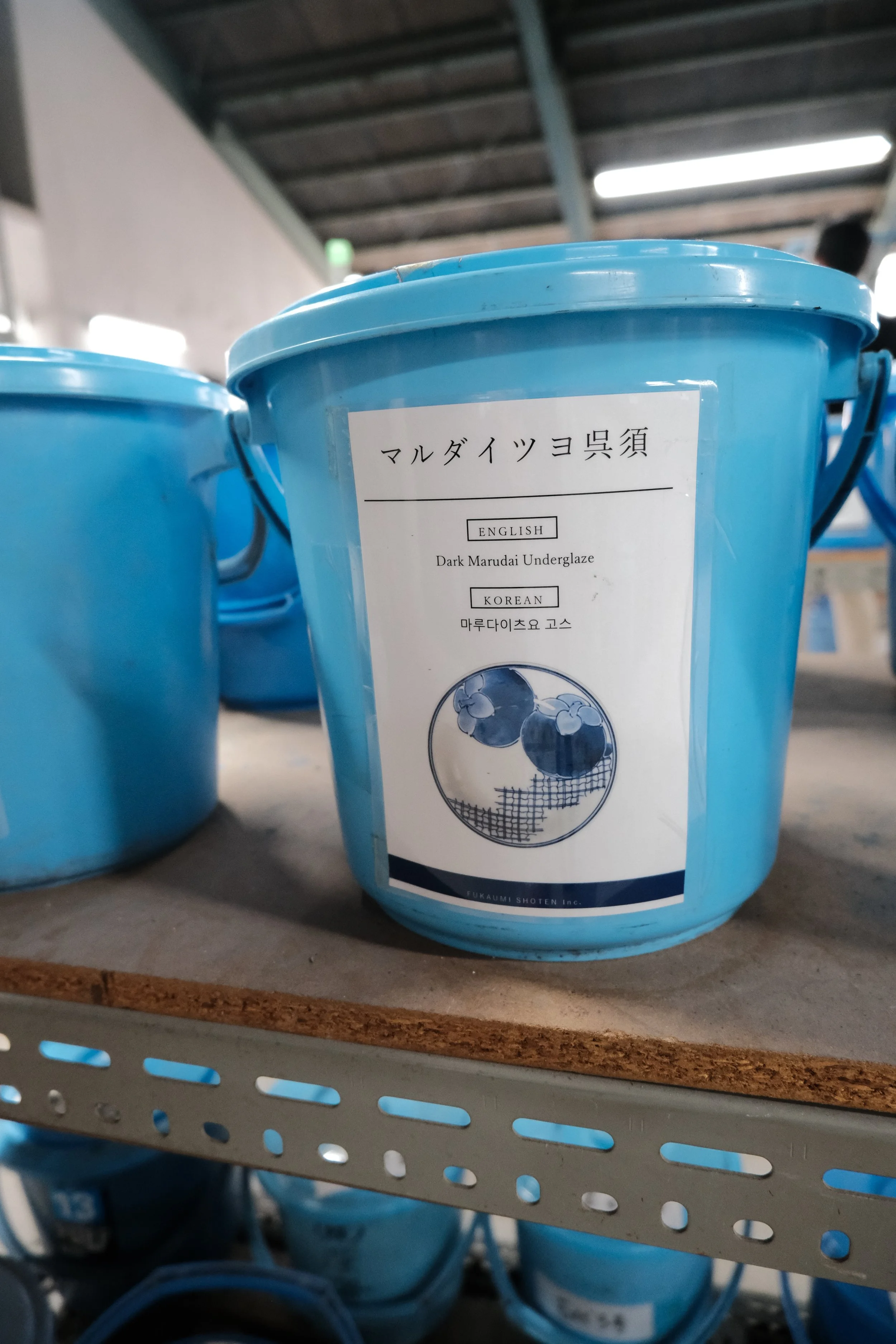
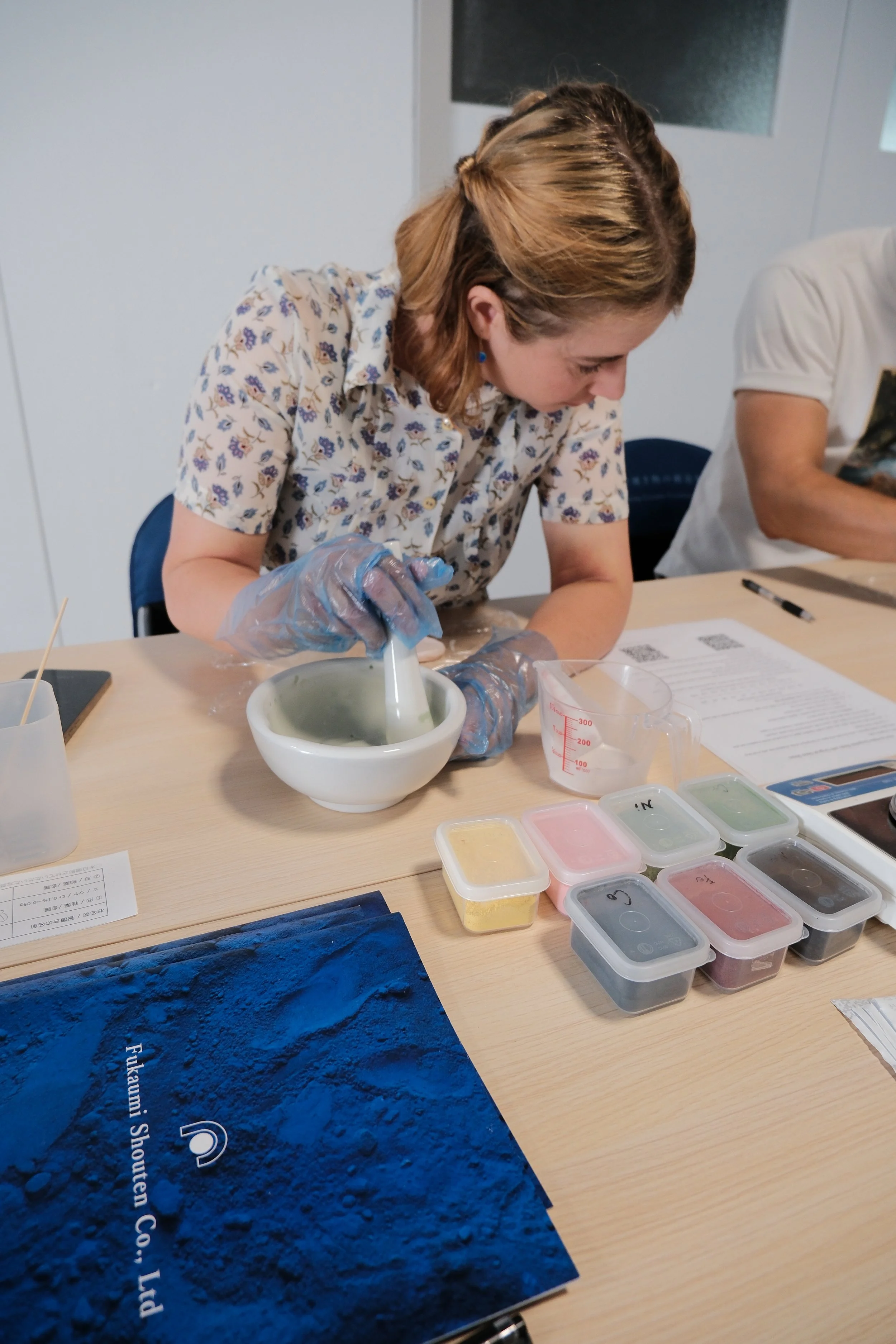
The gosu and glaze experience at Fukaumi Shoten — part science lesson, part hands-on workshop, and probably one of the more unusual ceramic experiences available in Arita.
Kouraku Kiln also runs factory tours and its popular porcelain “treasure hunting” experience, and has a long history of working with international visitors.
I’d combine the above with one of the following cafes for lunch (either before or after your activity):
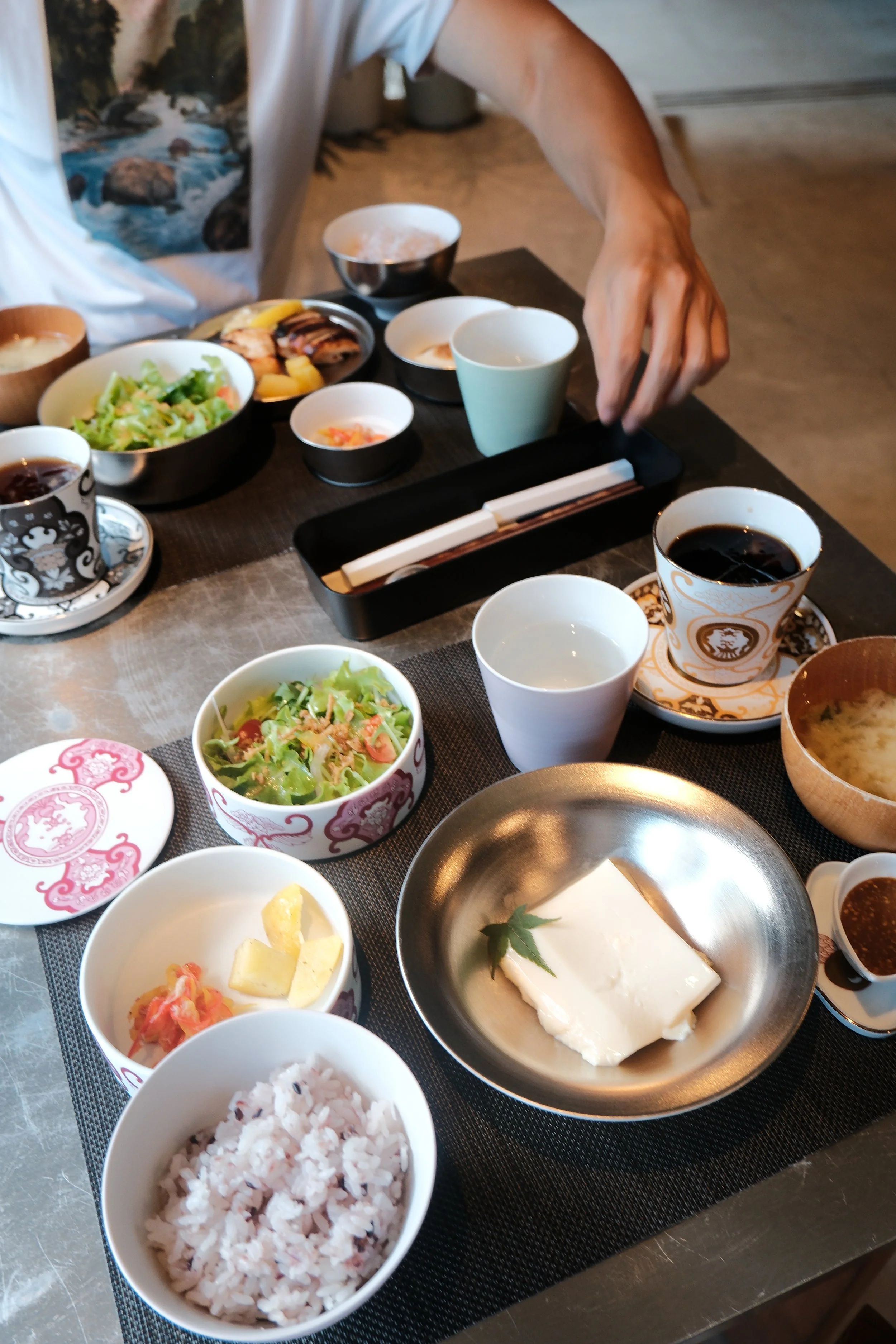
Gallery Arita — A reliable choice with reliable operating hours, you can enjoy lunch sets and desserts served in porcelain. Recommended for first time visitors.
Arita Porcelain Lab Cafe— A stylish cafe in the center of the Uchiyama district. Good option for exploring on foot. Their own flagship shop is attached to the cafe for browsing.
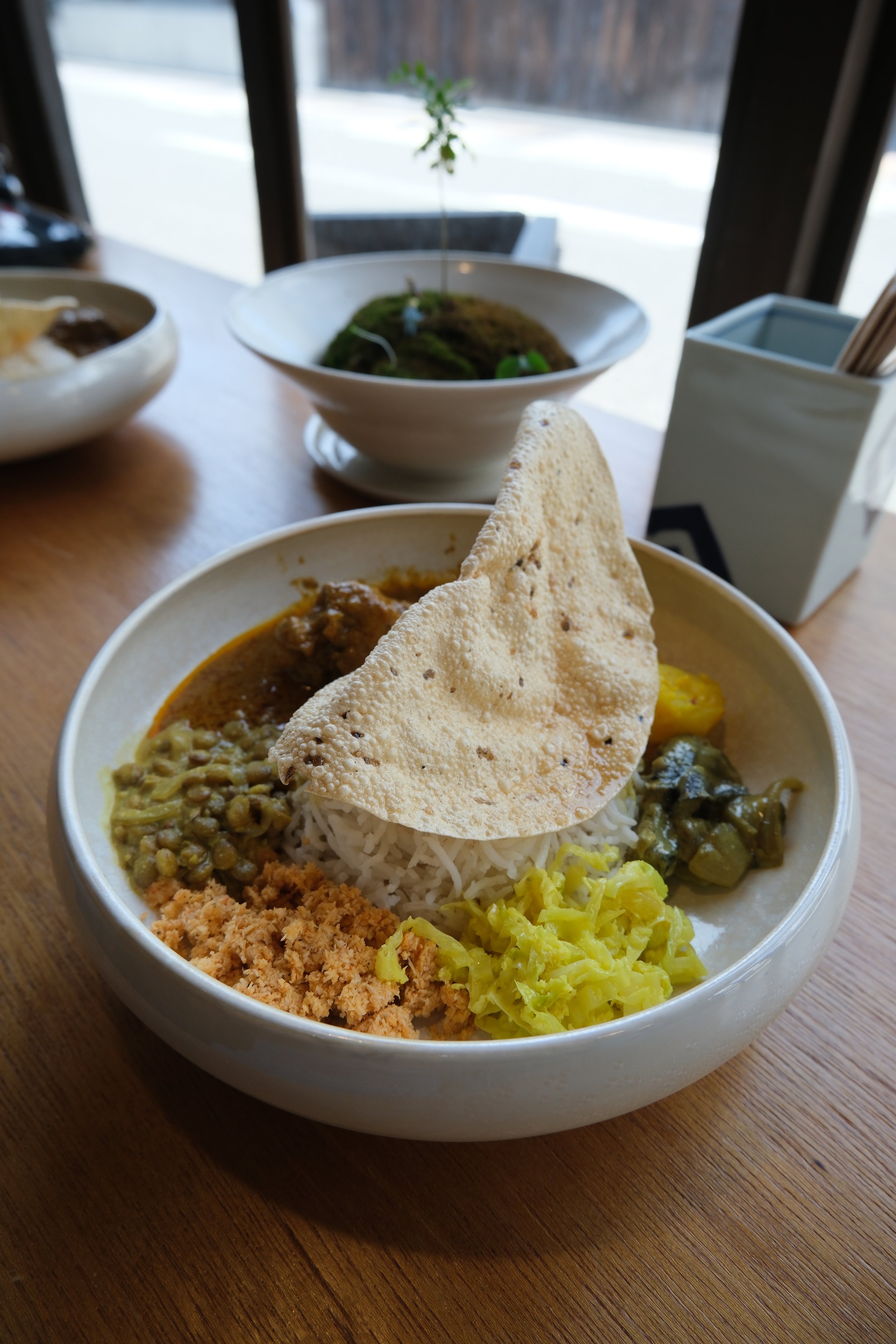
Kazaguruma (SPICE HOTARU) — Colorful curry plates served in stylish Arita porcelain, in a reformed 90 year old Japanese-style building. This is somewhere the locals would love.
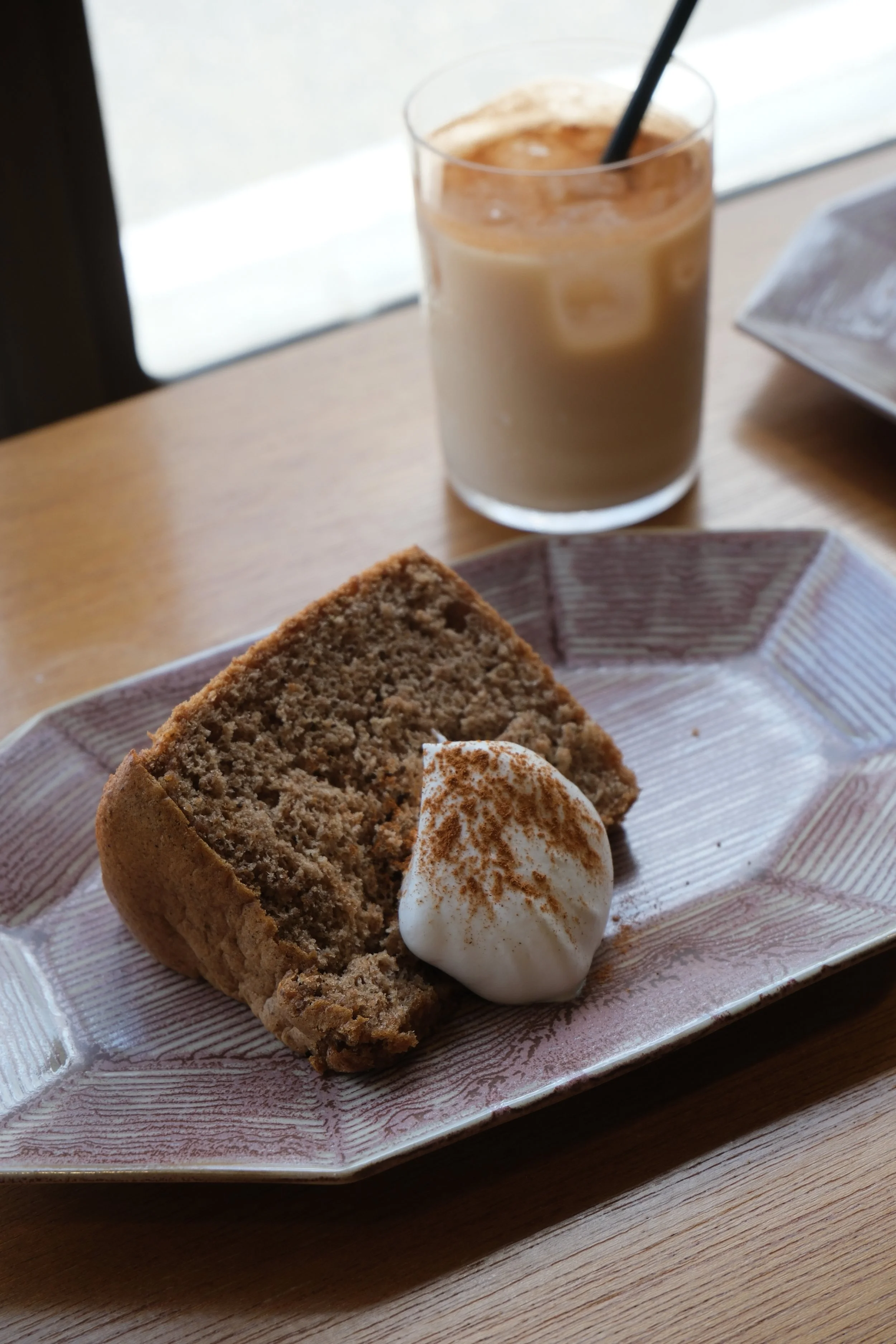
Kasane— Simple, light lunch sets and deserts in a cozy traditional Japanese cafe.
Arita Huis - A more upscale dining experience, located in Arita Sera. (Full disclosure, I haven’t been here. But it’s on my radar since they seem to use Riso Porcelain - more about that below.)
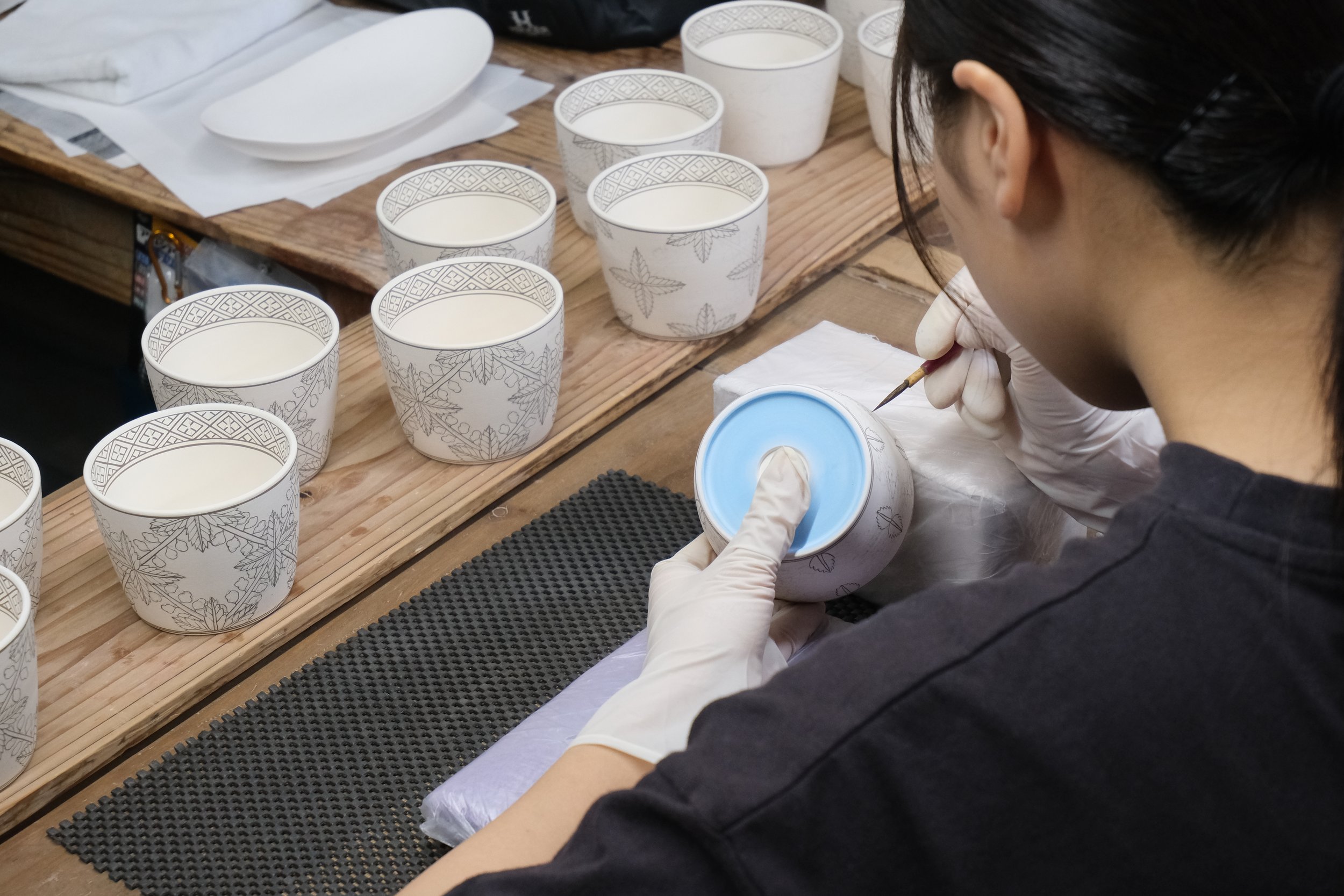
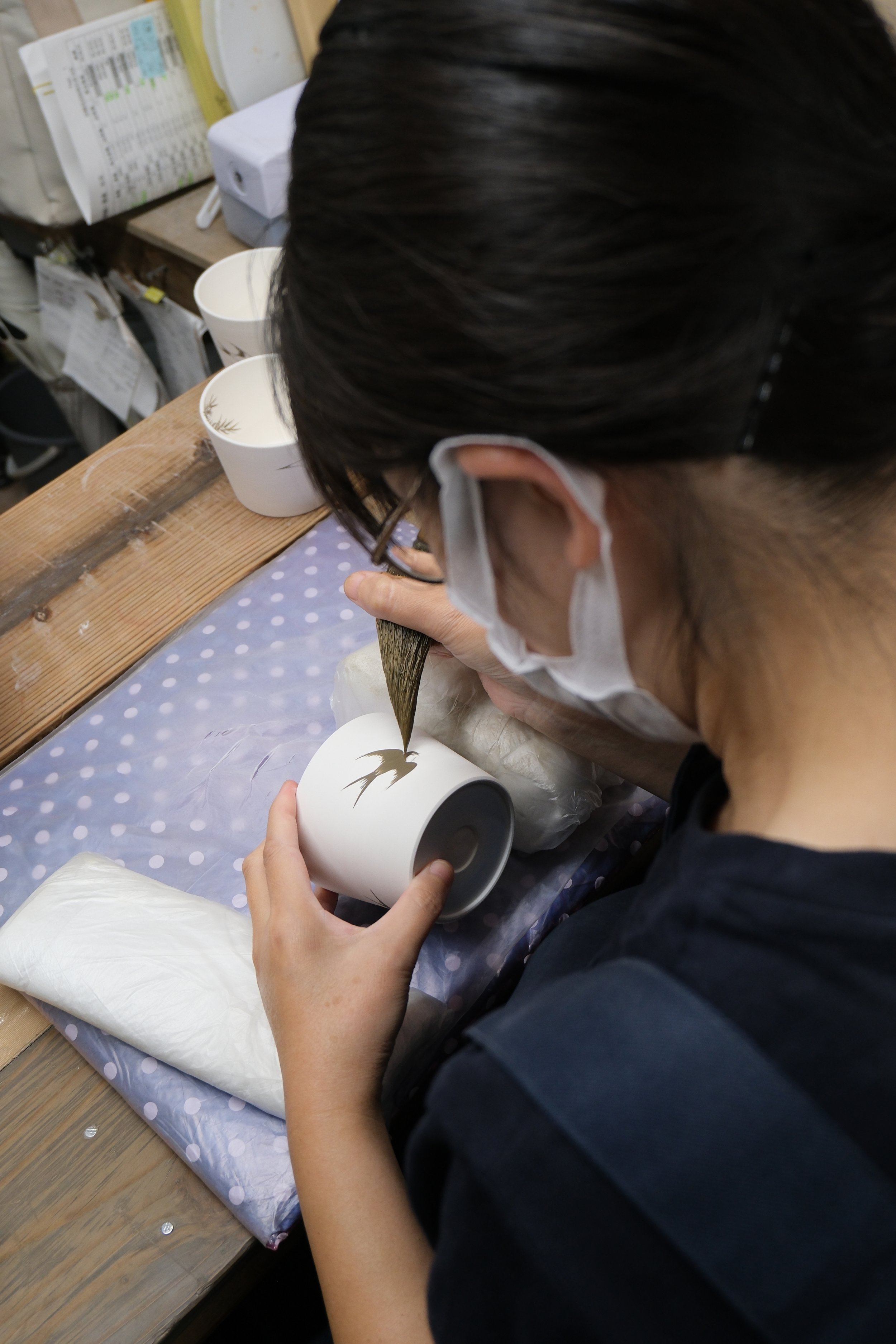
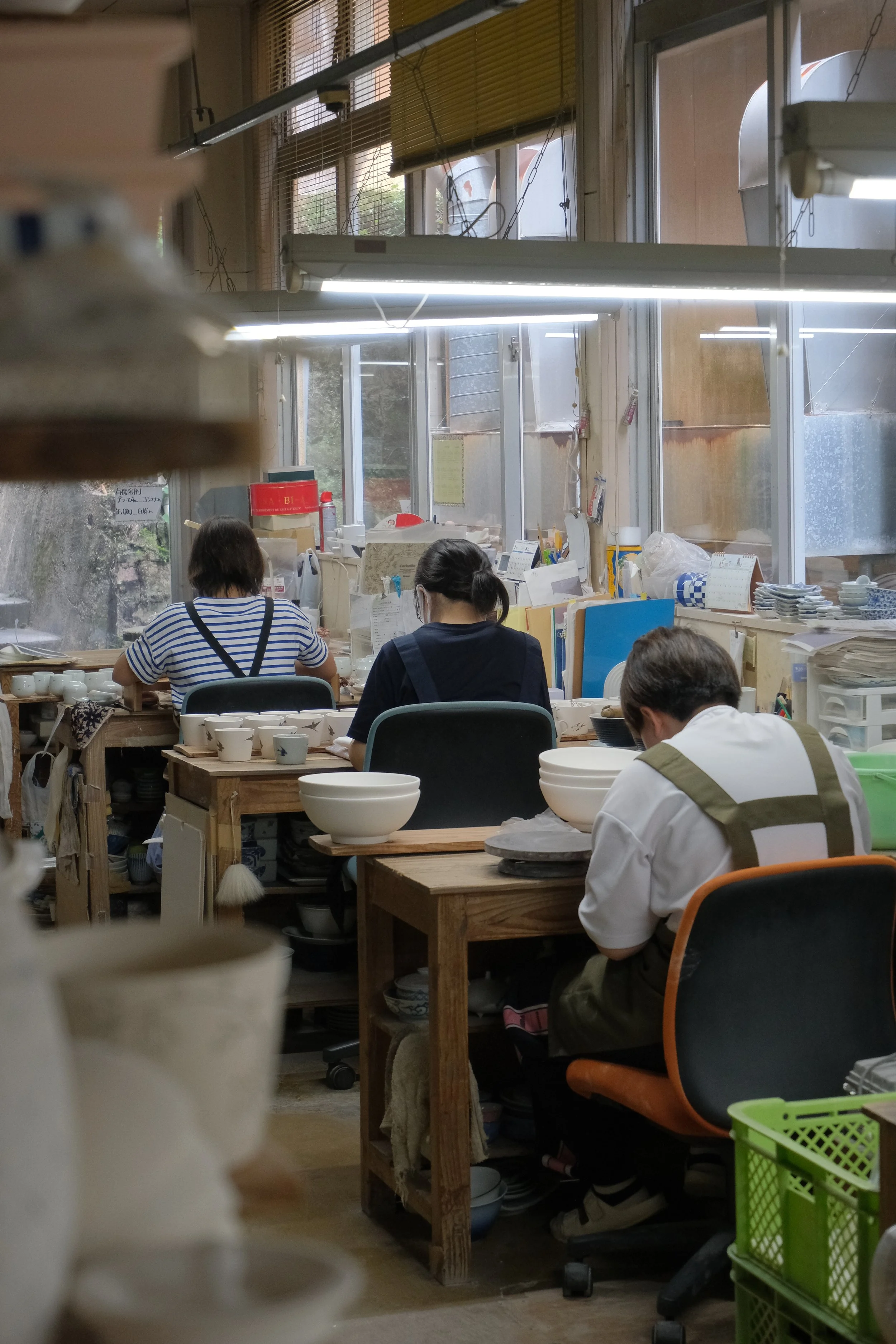
The backyard at Riso Porcelain kiln had many skilled artists painting works by hand. I was blown away by their precision.
The Shop Where I Spent ¥50,000 (hehe)
On my most recent trip, one of the places that completely captivated me was李荘窯 — Riso Porcelain.
They make tasteful patterns and pieces that make you immediately start thinking about what food you would put on them. The kiln itself has been operating since 1930 and today combines traditional techniques derived from Ko-Imari with contemporary design and digital methods.
After a short meeting with fourth-generation head Shinji Terauchi himself (!!), we were invited into the workshop, where we watched staff carefully work patterns into cups, plates and bowls. Terauchi is known for combining classical Arita techniques with more modern interpretations, and the kiln has also worked on pieces for restaurants and large commercial collaborations.
We also saw a few very top-secret projects for extremely famous brands which, unfortunately, I have been specifically told not to share, hehe.
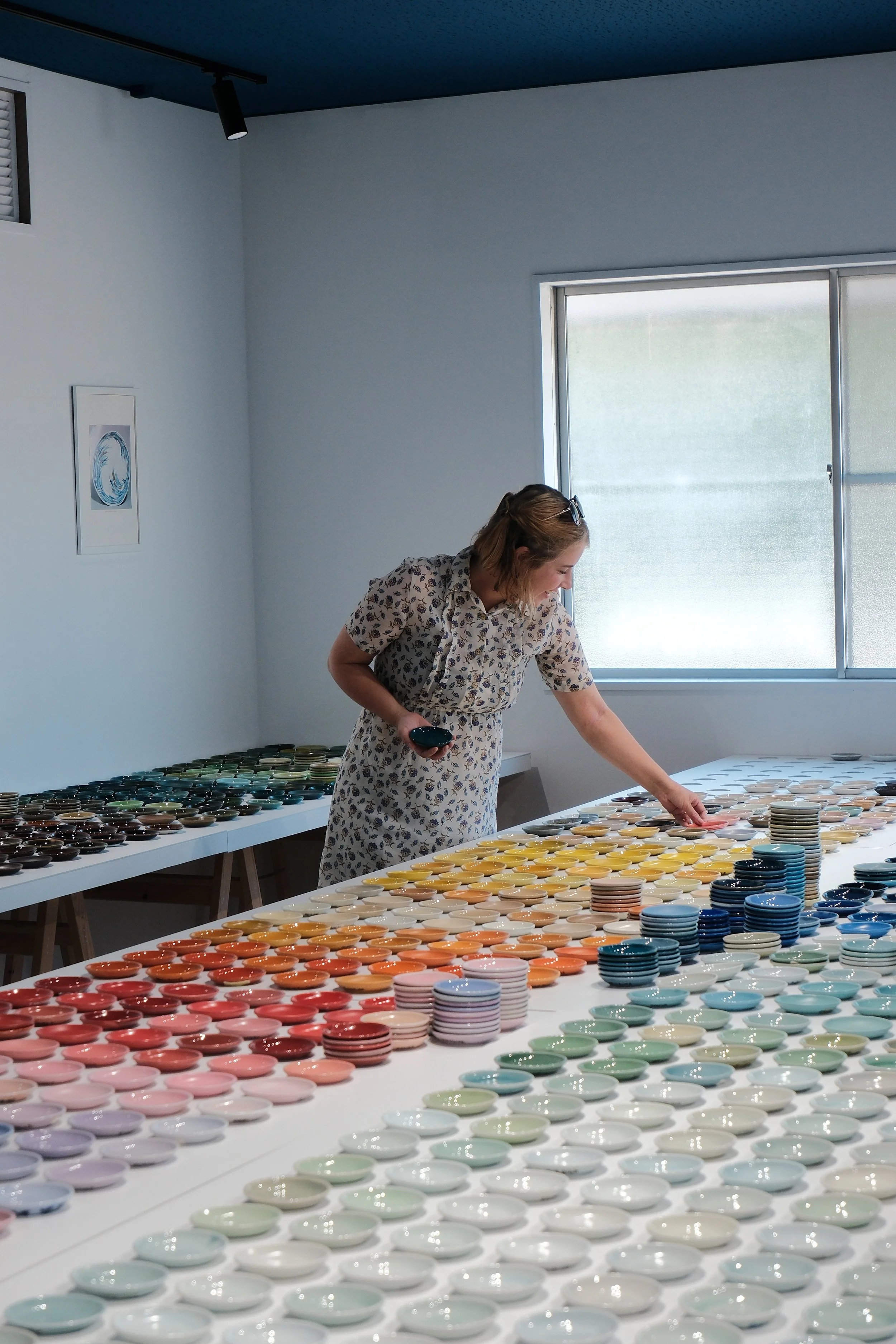
As someone who always notices the plates in fine-dining restaurants (and how much the right plate can change the way a dish looks!) I got into trouble here. I ended up spending around ¥50,000 on plates here, probably my biggest single Arita purchase to date ( we do cook a lot at home so I think its worth it for special occasion meals.)
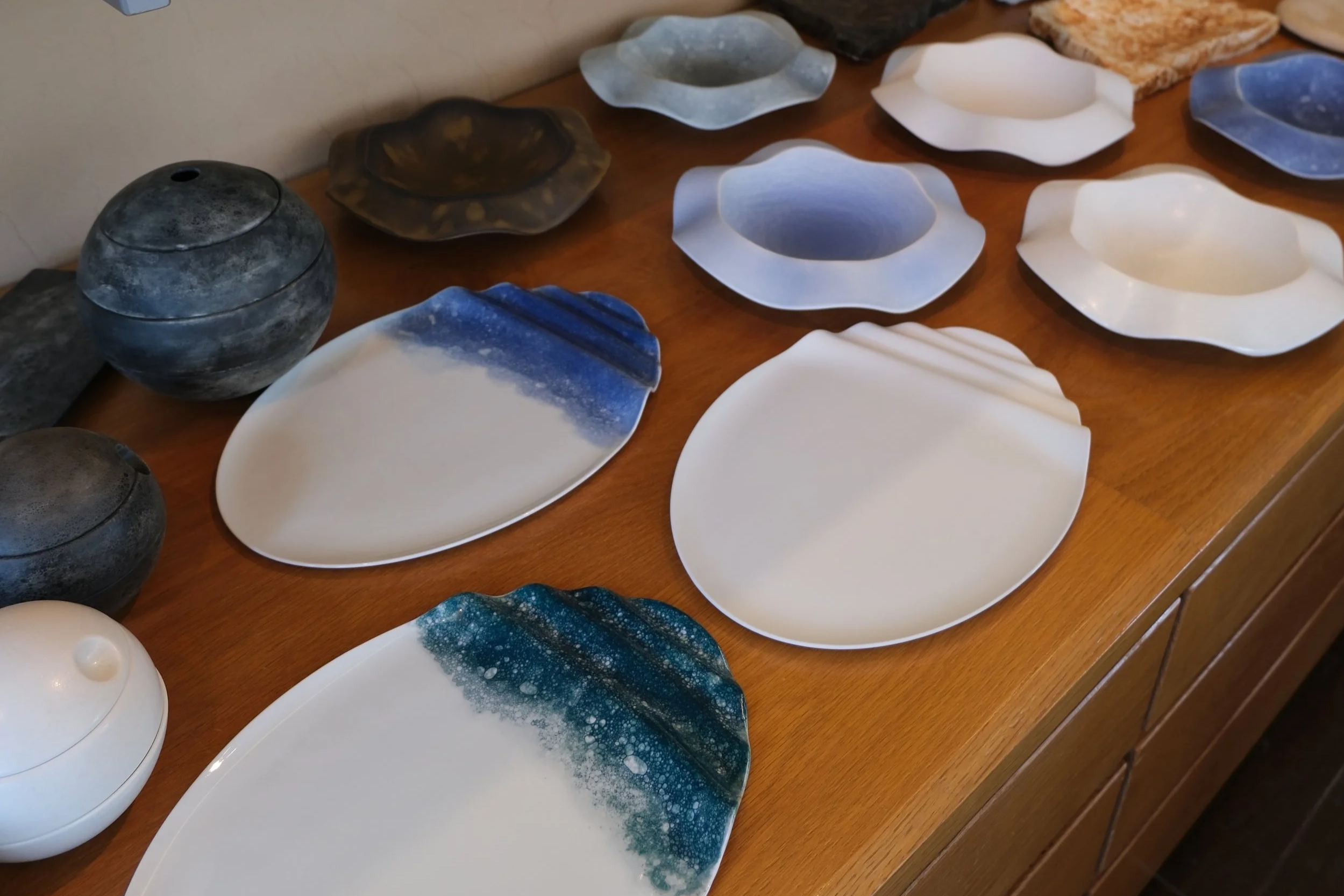
Can you guess which ones I bought? They’re in this picture hehe.
Learning Where Arita’s Colours Come From
Another stop that changed the way I looked at Arita ware was Fukaumi Shoten.
They manufacture gosu, the underglaze pigment traditionally responsible for the blue decoration associated with so much Japanese porcelain, as well as other ceramic pigments and glazes.
The experience is surprisingly scientific. We learned how raw mineral materials are crushed, mixed and fired to create different colours, and how incredibly small differences in composition can change the final result. At the end, we mixed our own colour and glazed small chopstick rests, which were fired and mailed back to us later. The current public workshop includes a gallery talk, factory tour and a hands-on glaze-mixing experience, takes around 90 minutes, and is listed at ¥5,500.
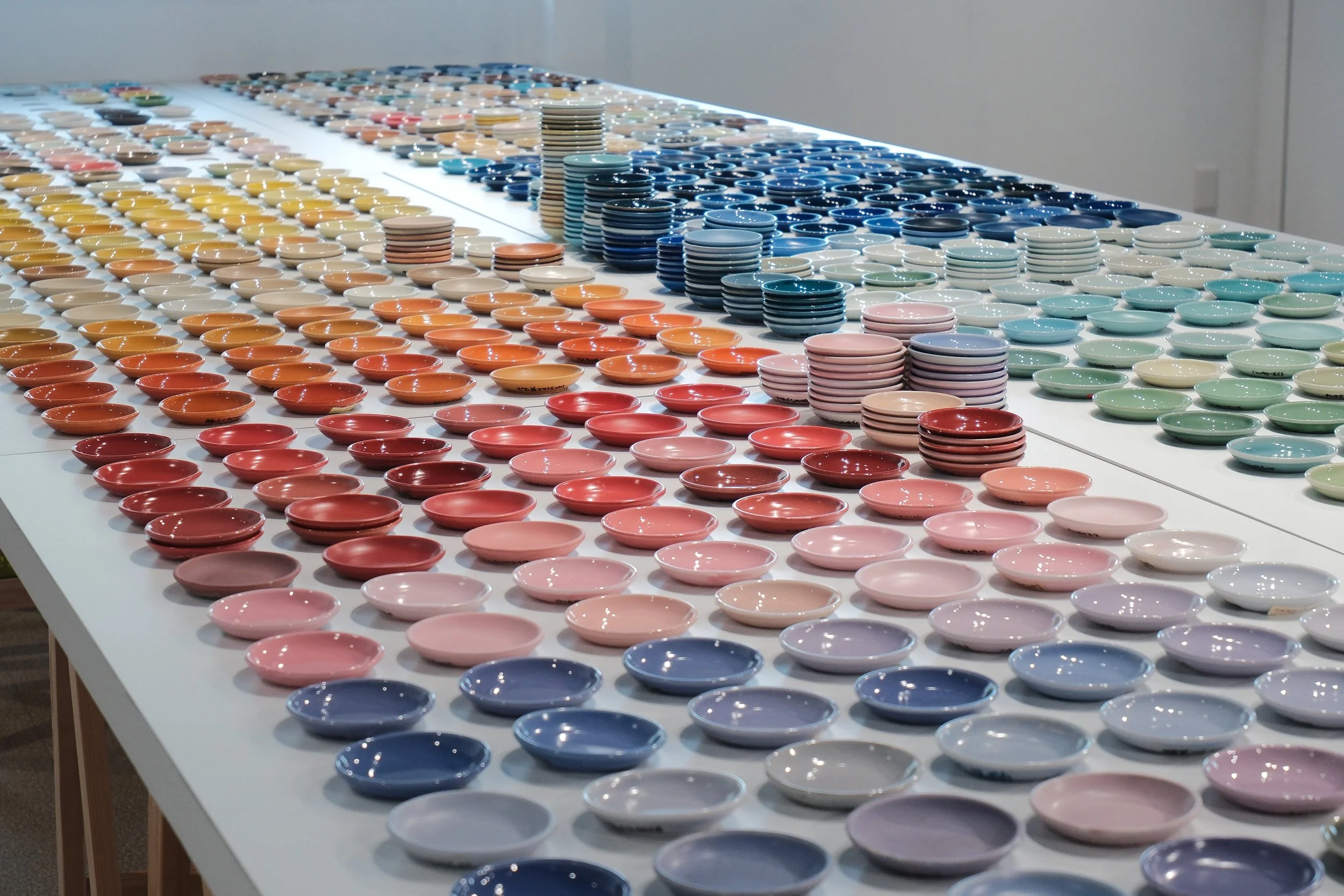
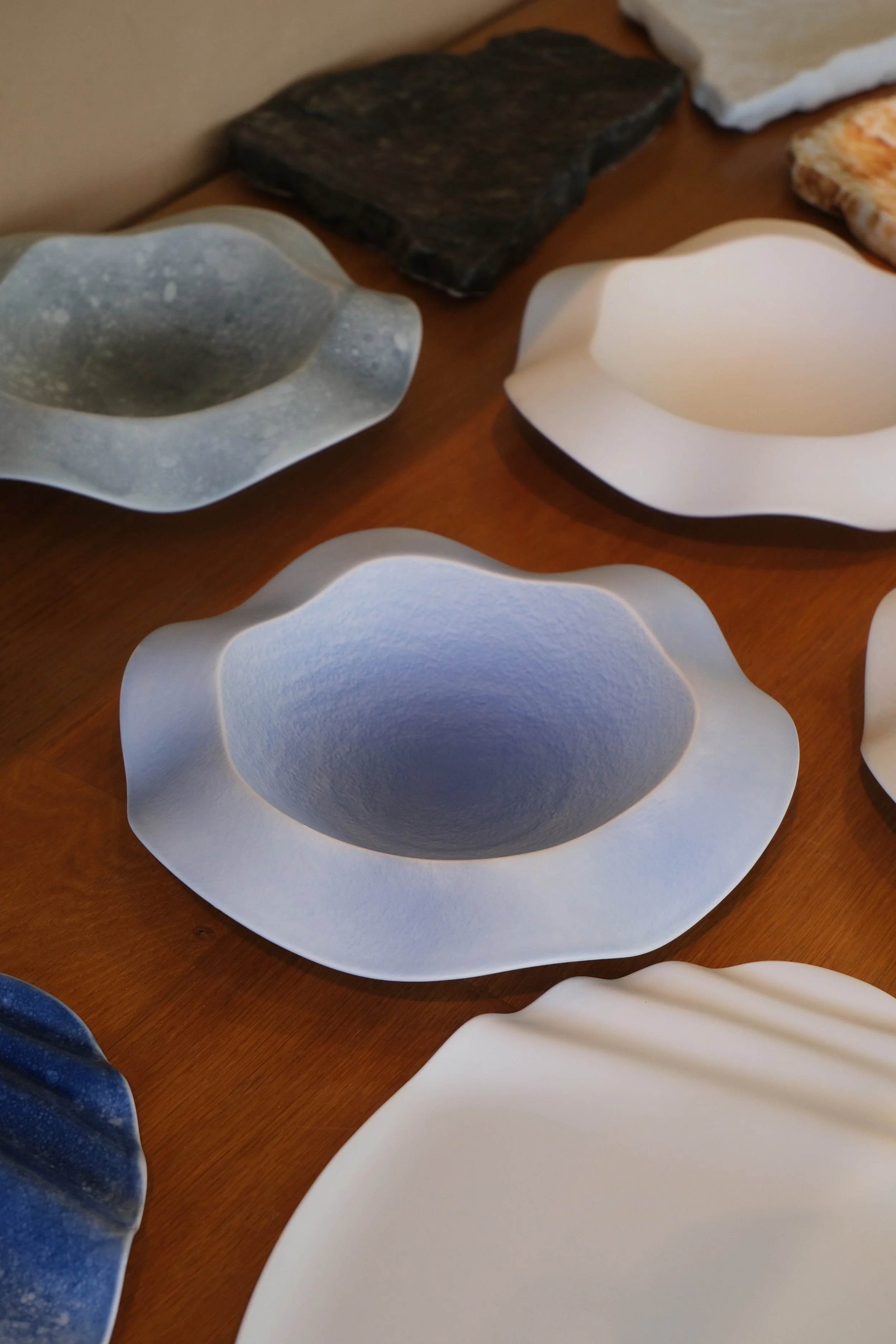
Just staring at the gradient of colored glazes is enough to boost your serotonin.
And If You Just Want to Shop…
There is also Arita Será.
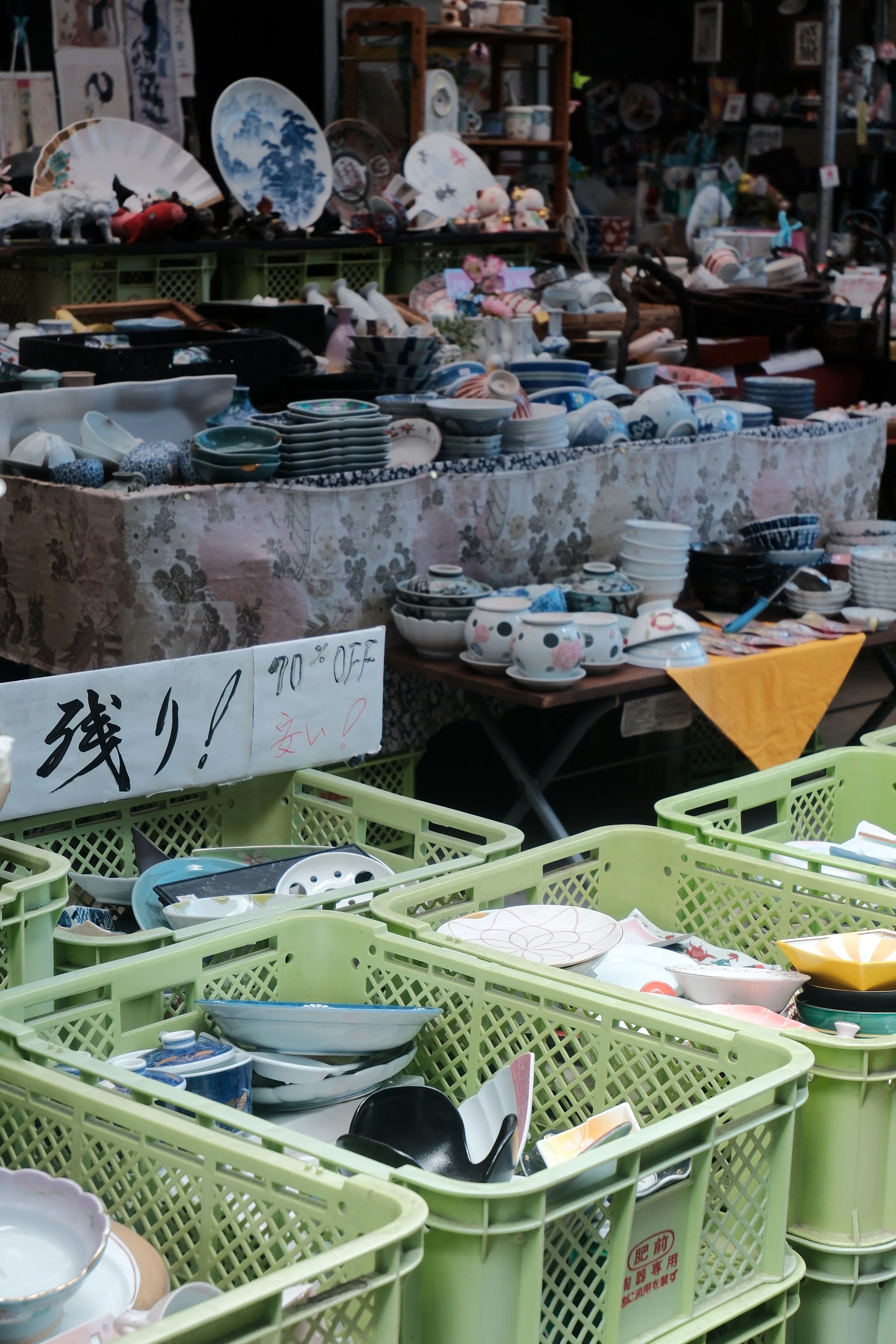
Arita Será is essentially the convenient answer to the question, “Where can I see a lot of Arita ware without driving all over town?” It brings together more than 20 specialist stores in one large complex, has around 800 free parking spaces and is open year-round. If your priority is simply buying ceramics, it is very efficient. You can walk between shops, see an enormous range of styles and leave with plenty of porcelain without having to research individual kilns.
But personally, I think you miss about 80% of the story this way.
The interesting part of Arita is seeing where things are made, meeting the people behind them, walking through the old neighbourhoods and slowly figuring out why one kiln looks completely different from the next. Arita Será shows you the finished product, but if you want context you gotta go see the town for yourself.
Arita Visitor Information
English Friendly: 3/5
Large facilities and some tourism experiences provide English information, but many independent kilns and small businesses still operate primarily in Japanese. A bilingual guide can significantly expand what you are able to access.
Access by Car:
Approximately 20 minutes from Takeo Onsen and around 1 hour 20–30 minutes from central Fukuoka City, depending on traffic. A car is the easiest way to combine the historic district with kilns and attractions elsewhere in Arita.
Access by Train:
JR Arita Station and JR Kami-Arita Station both serve the town. For exploring the historic Uchiyama area, Kami-Arita can actually be more convenient. Tozan Shrine is around a 10–15 minute walk from Kami-Arita Station.
Access by Bus:
N/A for general sightseeing. Local services exist, but I would not build a first-time Arita itinerary around buses.
Address in English:
Tozan Shrine
2-5-1 Odaru, Arita-cho, Nishi-Matsuura-gun, Saga 844-0004, Japan
Google Maps:
Tozan Shrine (Sueyama Shrine)
Opening Hours:
The historic streets and Tozan Shrine can be explored throughout the day. Individual shops, kilns and cafés set their own hours, and irregular closures are common. Check any place you absolutely want to visit before leaving.
Estimated Costs:
Walking around the historic district and visiting Tozan Shrine: Free.
Hands-on workshops: roughly ¥2,000–¥6,000+, depending on the experience.
Shopping: entirely dependent on your self-control. (Mine was apparently worth about ¥50,000 at Riso haha)
Parking:
Tozan Shrine has approximately 20 free parking spaces, available all day. Arita Será has approximately 800 free spaces.
Best Time for Public Transportation:
The spring Arita Ceramic Fair during Golden Week is the easiest time to visit without a car. Outside festival periods, I would recommend either driving or considering a guided tour.
