Ishigaki With Kids: Why We Keep Going Back To This Island in Okinawa
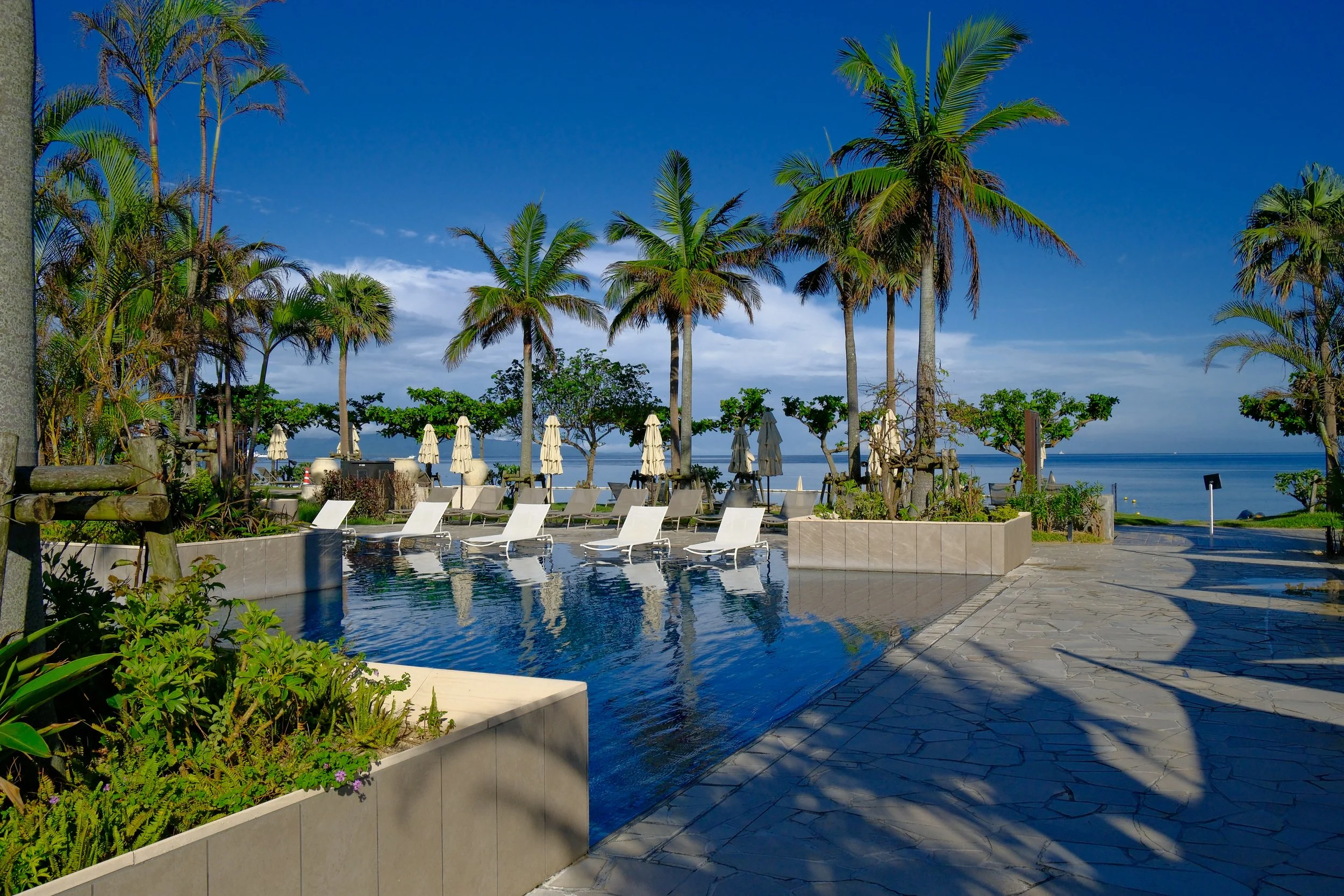
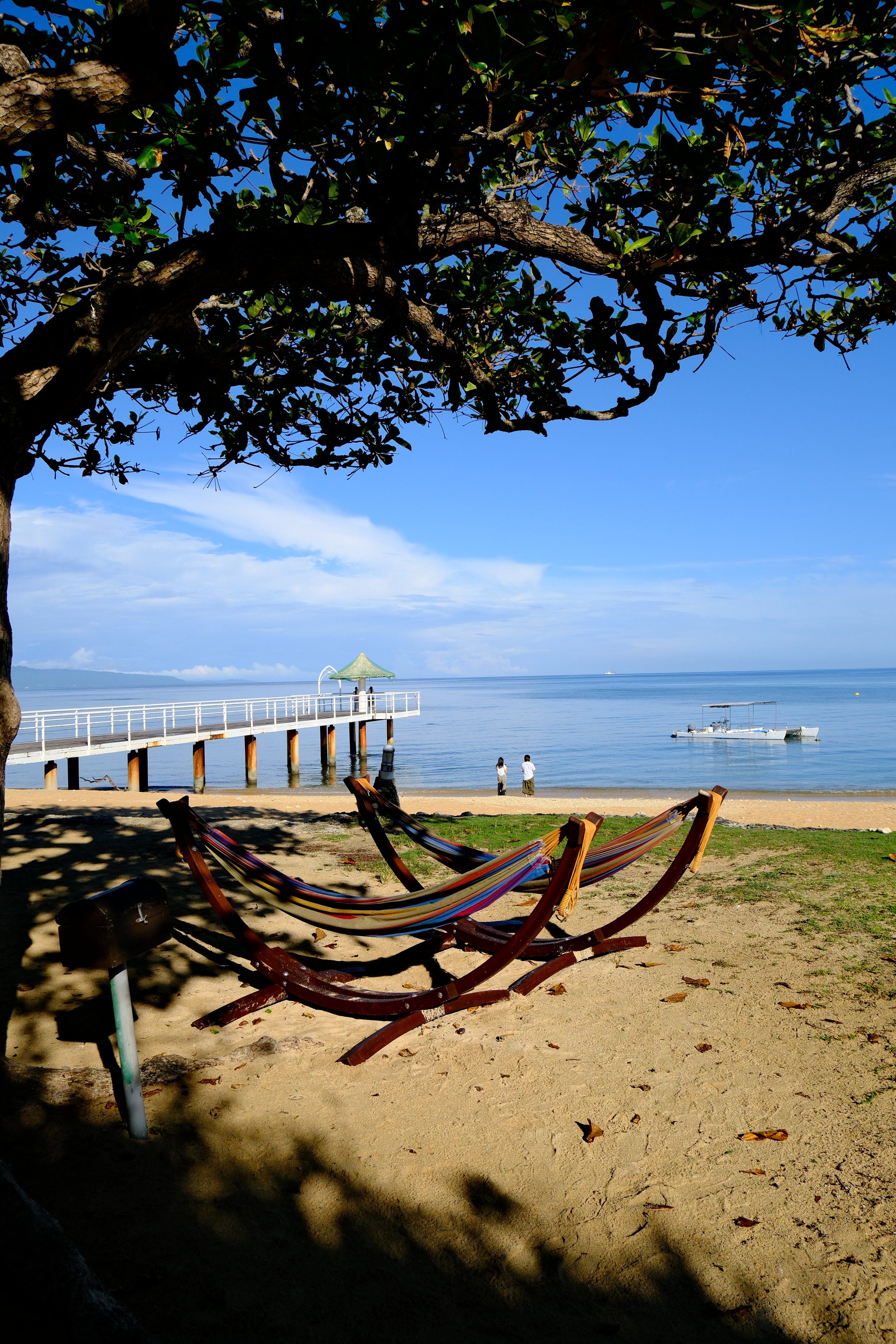
A warm summer morning walk before the pool officially opens for the day at Fusaki - both the beach and pools will be staffed with lifeguards.
Closer to Taiwan than mainland Japan, Ishigaki feels just far enough removed from everyday life to feel like an overseas trip while still being surprisingly easy to reach from Fukuoka.
Every year, we make a trip to Ishigaki Island. Sitting around 270km from Taiwan, Ishigaki has a culture, landscape and rhythm that feel very different from mainland Japan, and direct low-cost flights from Fukuoka make it a relatively easy escape from Kyushu. Peach currently operates the Fukuoka–Ishigaki route, as well as direct flights from Tokyo and Osaka, which is one of the reasons the island has become such a realistic family destination for us rather than a once-in-a-while splurge.
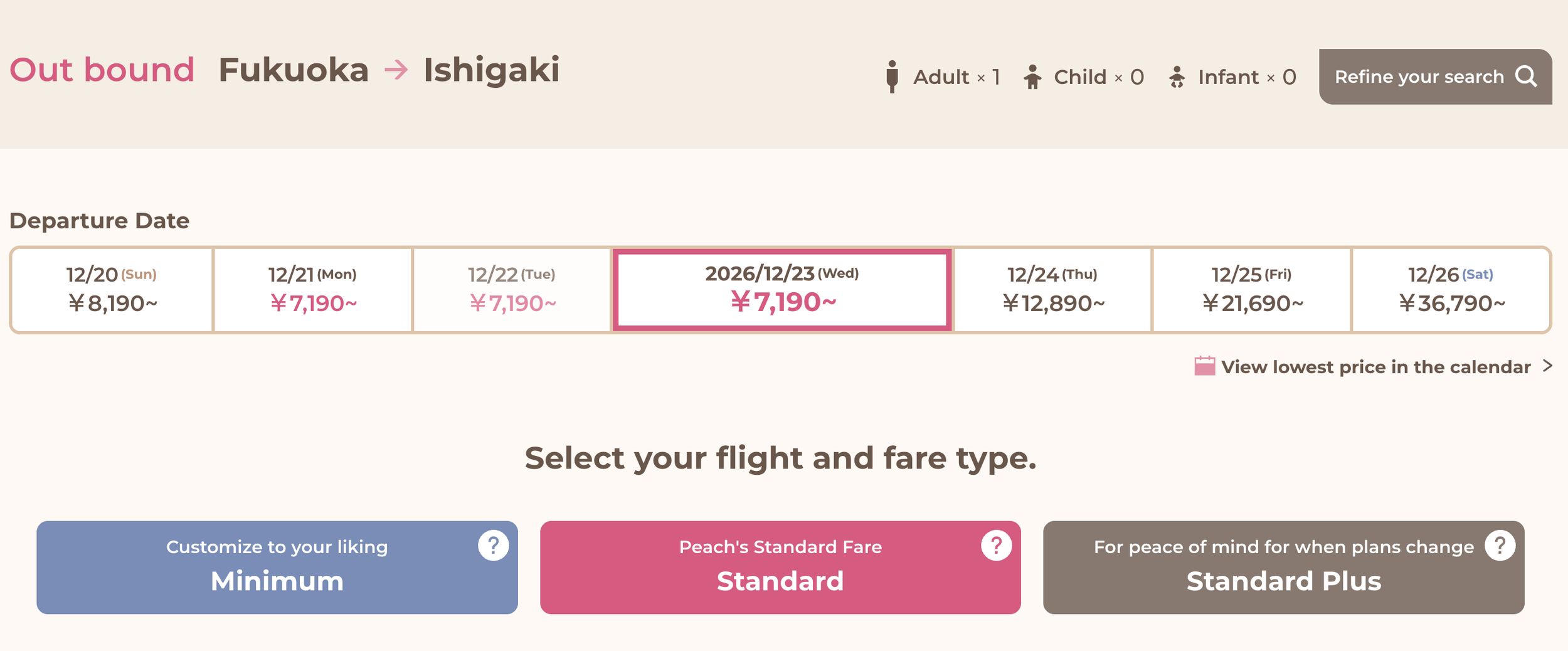
A real screenshot of prices with Peach Airline .At the time of writing this article, direct flights in December are as low as 7190 yen ($45 USD) one way per person (!!)
We have visited Ishigaki three times since my daughter was born: once in summer, and twice over Christmas. Every time, we have stayed at Fusaki Beach Resort Hotel & Villas, and at this point it has become our default family base on the island.
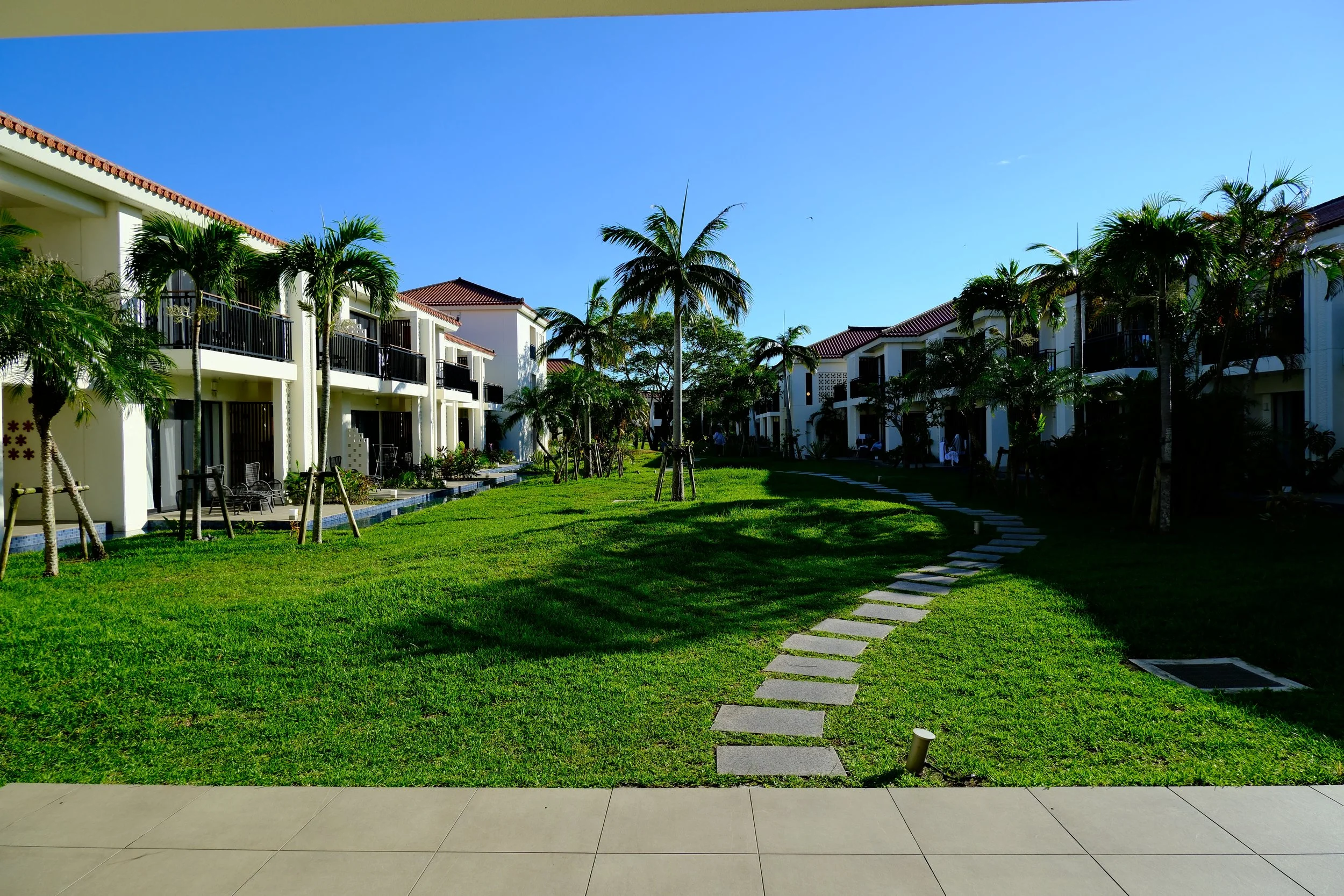
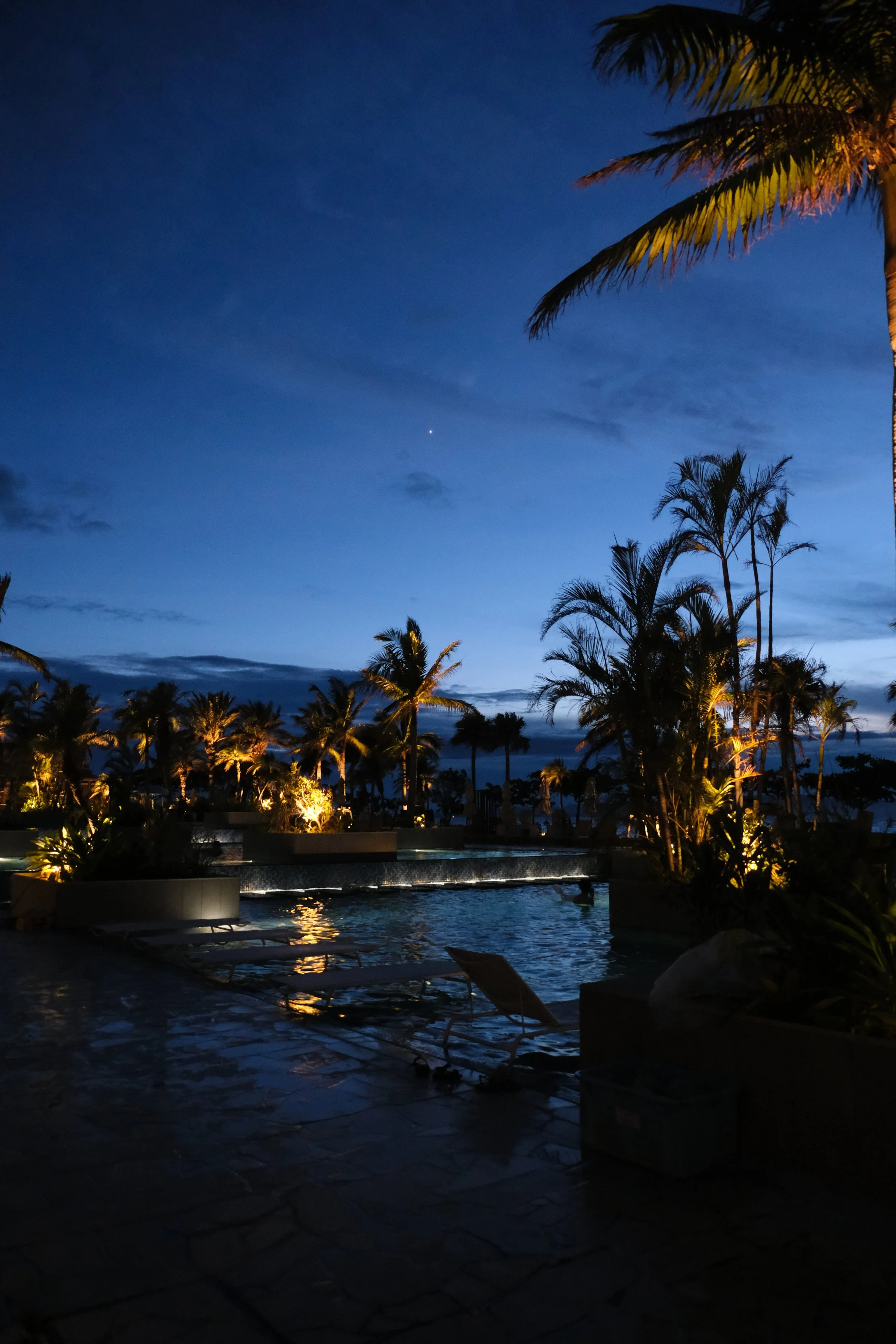
We usually choose to stay in this wing, on the first floor with access to the small pool. The square inner-facing shape of this division protects it from strong winds.
Why Fusaki Works So Well With Kids
Fusaki is huge, which in this case is part of the appeal. Once you arrive, you could realistically spend a large part of the trip without leaving the resort at all. There are multiple restaurants and cafés, a natural beach, marine activities, outdoor pools, an indoor pool, shops, a public bath, and childcare facilities. The beach has a designated swimming area with a protective net intended to reduce the risk from dangerous marine life such as box jellyfish, and marine activities can be arranged through the on-site Beach Station.
For families, the biggest advantage is simply having options. If the weather is good, you can go straight from breakfast to the beach or pool. If it rains, the indoor pool is open year-round and includes children's areas and a waterslide. There is also a staffed baby and kids room, AYAPANI, where qualified childcare staff can look after younger children, as well as children's programs that can be booked separately.
One thing worth knowing is that not every outdoor facility operates year-round. In 2026, the Splash Park runs from March 1 to November 15, while the beachside pool remains open throughout the year with some winter restrictions. During typhoon season, it isn’t unusual for the beach to be designated as “off limits” until the weather has subsided. The indoor pool stays open year-round. So if you visit over Christmas like we often do, you still have plenty to use, but you are not getting exactly the same resort experience as you would in July or August.
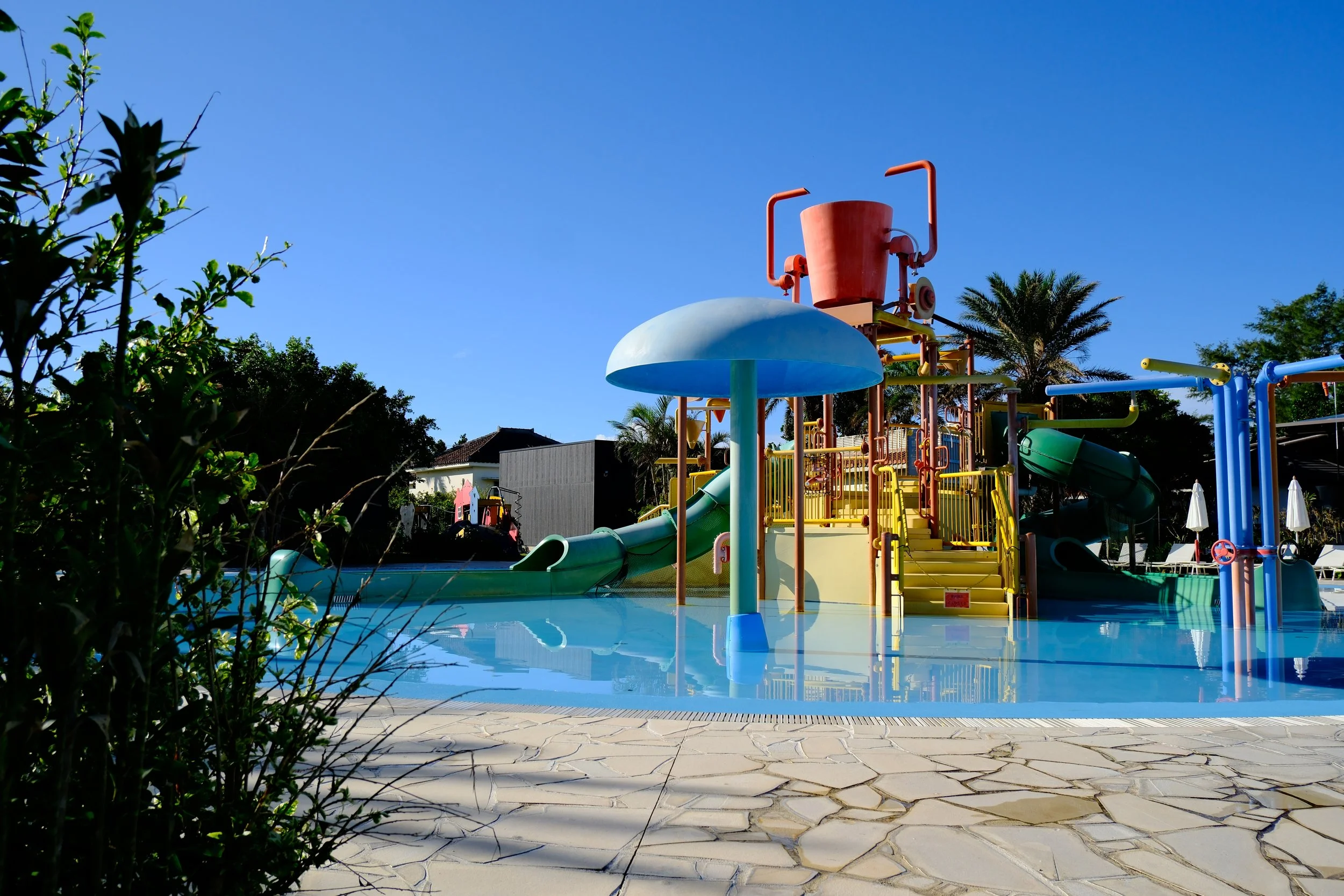
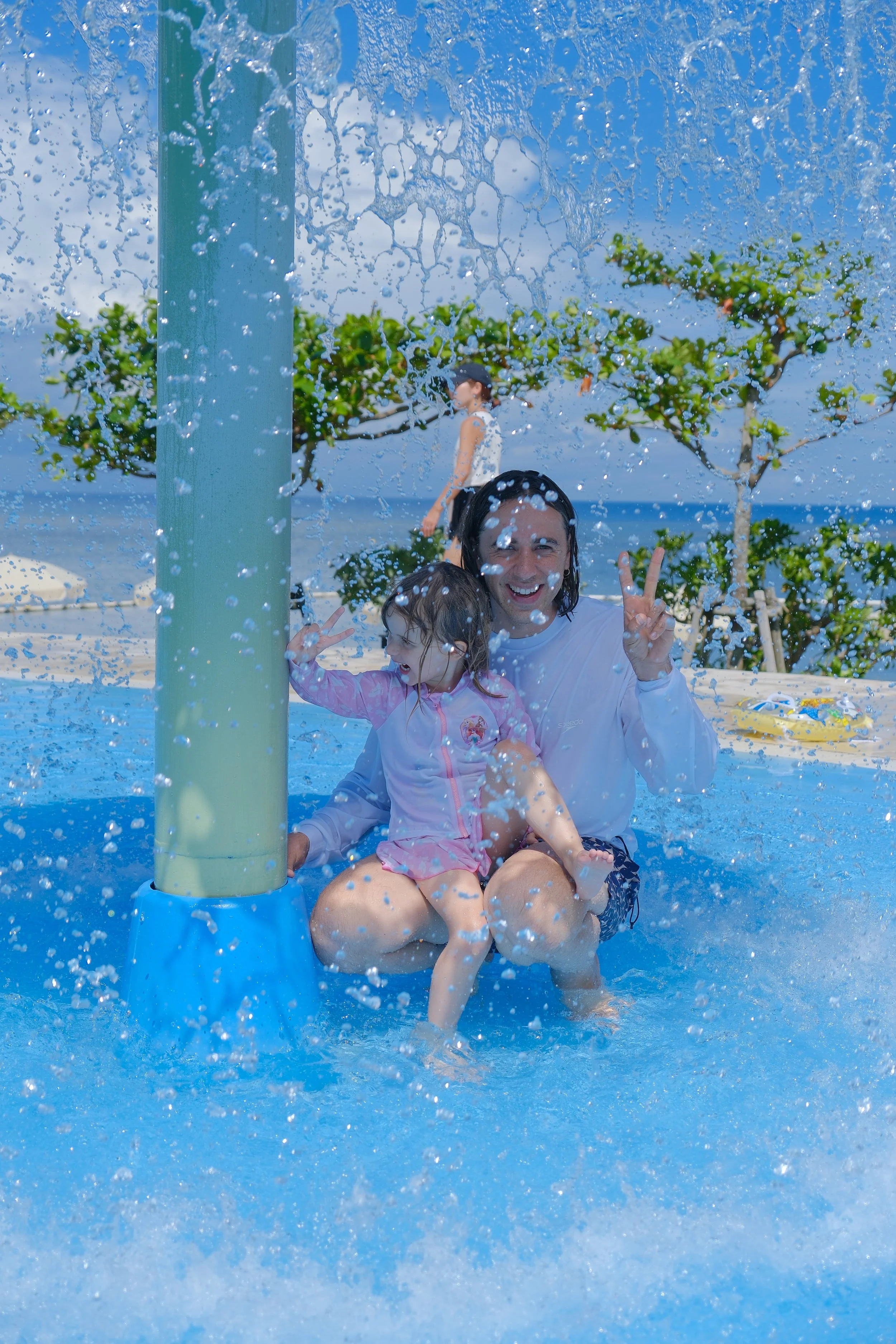
The water park is typically open from March to November, and includes shallow pools for smaller children to engage with water in a safe way as well.
Summer or Winter: When Is Better?
We have done both, and I actually prefer winter.
Winter is generally the quieter season in the Okinawan islands, and for independent travellers who do not mind less predictable weather, I think it offers very good value. December's average temperature on Ishigaki is around 20.5°C, so it is obviously not tropical swimming weather every single day, but it is hardly freezing either.
You can still kayak, snorkel, paddleboard and take boat trips during winter, although the sea is colder and a wetsuit starts to feel much more appealing. In the winter, I use a rash guard with long sleveves and leggings - in the summer shorts and a tank top. Some Fusaki marine activities also require advance reservations during the winter period rather than being booked casually on the day.
The trade-off is the weather. You may get grey skies, rain or wind, and if your entire image of an Ishigaki holiday involves blue skies and swimming in the ocean all day, winter can disappoint you (but then again, if weather is a deciding factor then so can summer with the abundance of typhoons.)
Summer is much easier if your main goal is to swim. The ocean is warm, water activities are everywhere, and all of the resort's outdoor facilities are operating. But Ishigaki summers are also hot and very humid. July's normal mean temperature is around 29.6°C, and the sun can drain your energy surprisingly quickly. Sunscreen, hats, water and realistic expectations about how much sightseeing you can fit into one day are essential.
For me, cheaper travel, fewer crowds and cooler temperatures outweigh the possibility of imperfect weather. I would rather put on a wetsuit and have the island feel quieter.
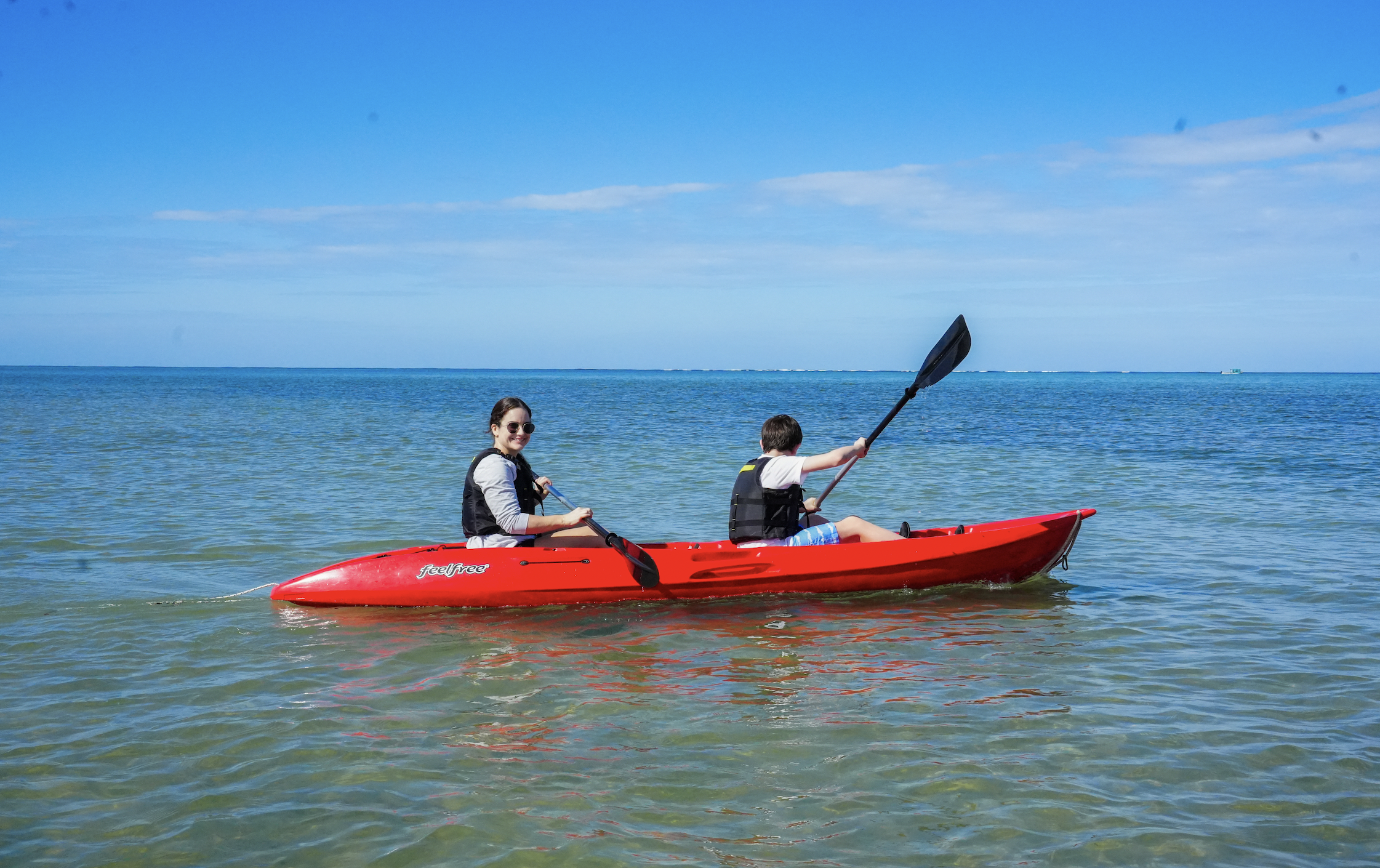
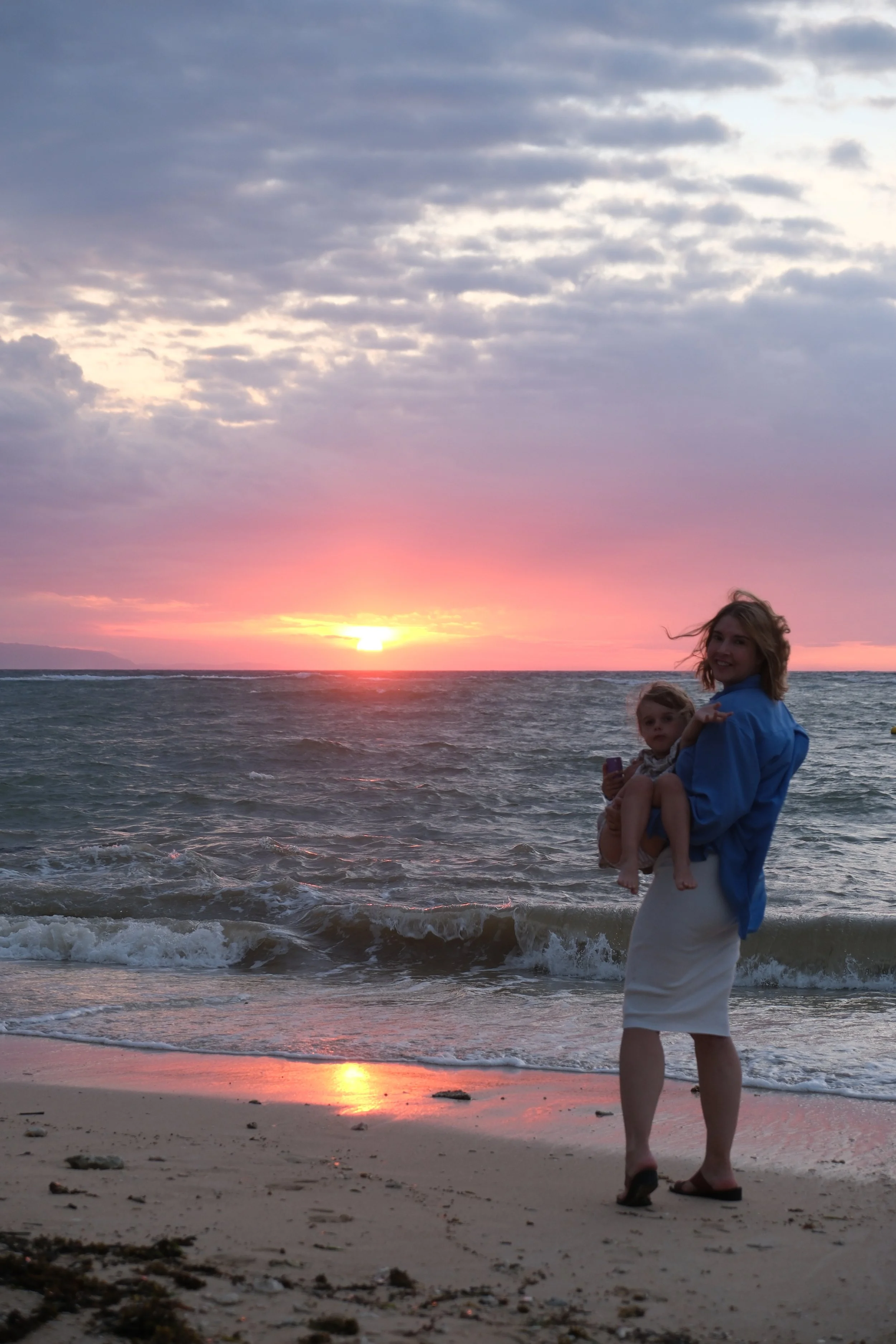
Believe it or not, this was actually December!
Rent a Car If You Can
I strongly recommend renting a car.
Ishigaki looks deceptively small on Google Maps. It is not. Ishigaki City's official tourism site estimates around three hours to drive around the island, and once you start adding stops, you can easily spend an entire day exploring one section. There are beaches, caves, cafés, farms, family-run restaurants, roadside shops and places that you simply would not come across if you only stayed around the city centre. Having a car also means that when the weather suddenly changes—which it regularly does—you can change direction without losing half your day.
That said, not having a car is not a deal breaker at Fusaki. The resort currently runs a free scheduled shuttle between Ishigaki Airport and the hotel for overnight guests, taking around 35 minutes. Many island tours can also arrange hotel pickup and drop-off, and Fusaki's tour desk can help arrange excursions.
I would still rent a car, but you can absolutely make the trip work without one.
Things We Have Done and Would Recommend:
Mangrove Kayaking
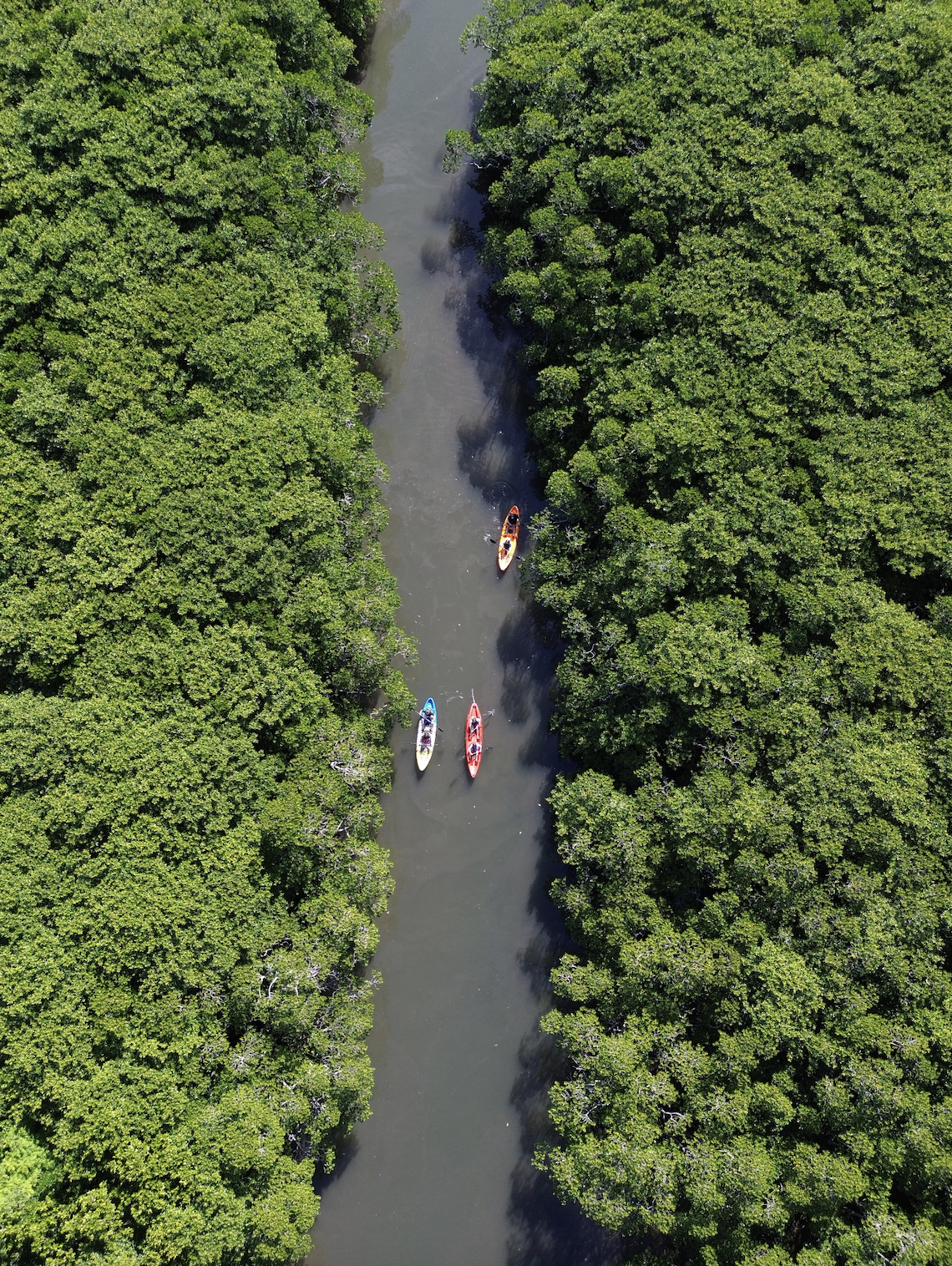
One of the highlights of our Christmas trip was a guided mangrove kayaking tour.
Our guide took high-resolution photos for us and also flew a drone, which ended up making a huge difference. As the person who is usually holding the camera, I am often missing from our family travel photos. Having someone else document the experience meant that we actually came home with proper photographs of the three of us together rather than another folder full of everyone except me.
The kayaking itself was calm enough to enjoy as a family, and winter turned out to be a completely reasonable time to do it. I would absolutely choose a tour with photography again.
I used GetYourGuide to find the tour.
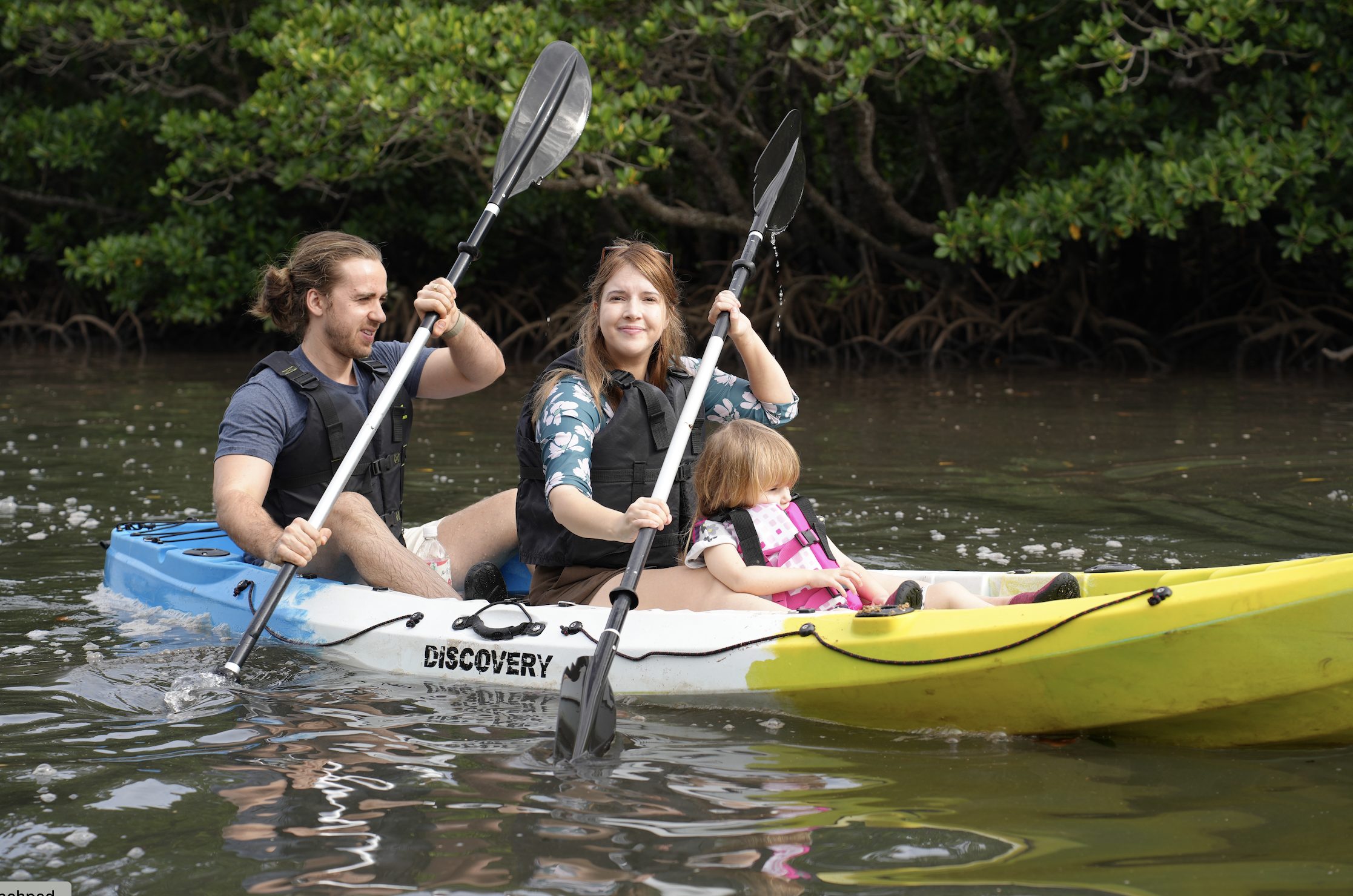
December mangrove expedition. Child friendly (E was falling asleep at the front), educational, and not too cold!
Yoneko Yaki Shisa Farm
Yoneko Yaki Kobo is one of those stops that barely requires any planning.
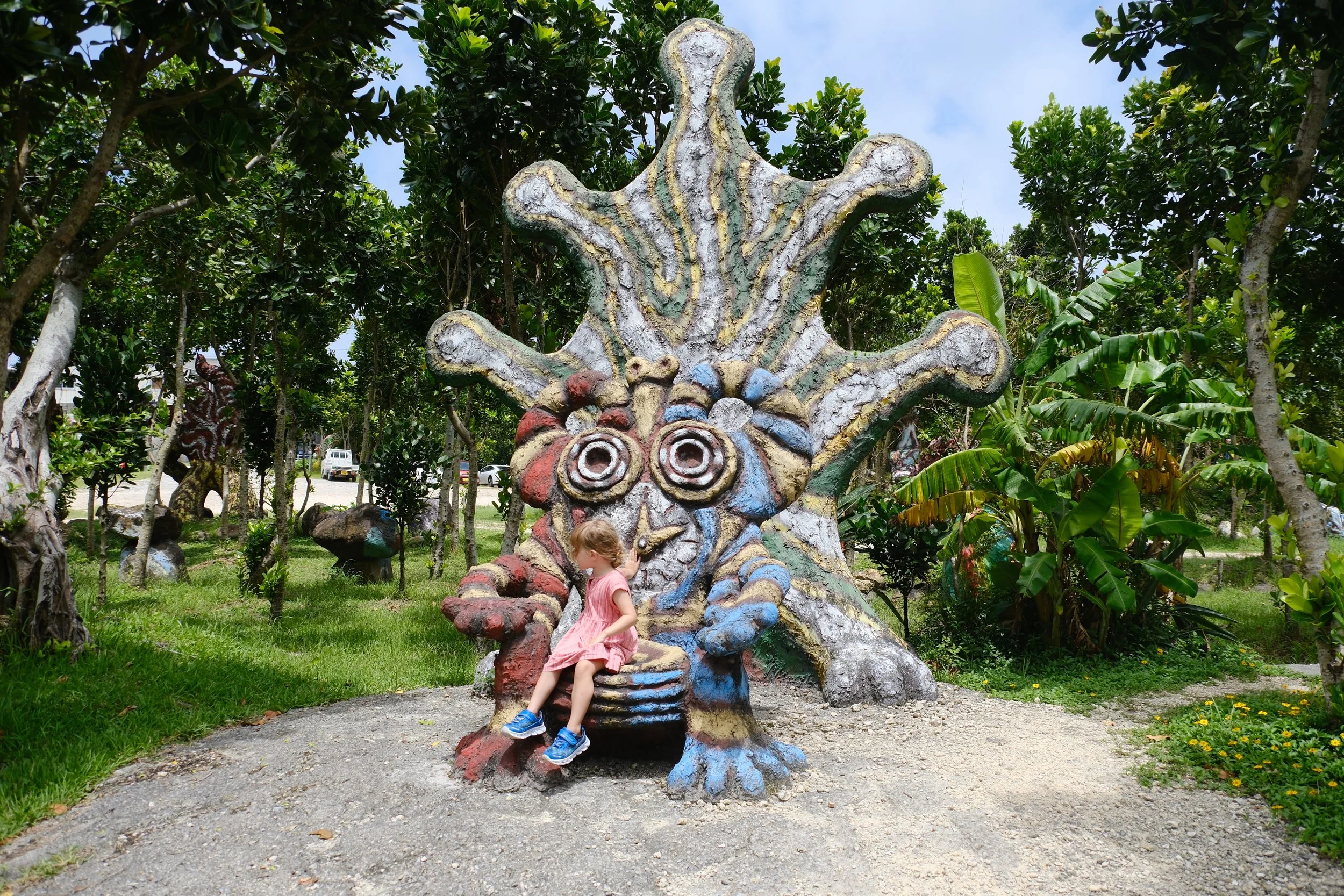
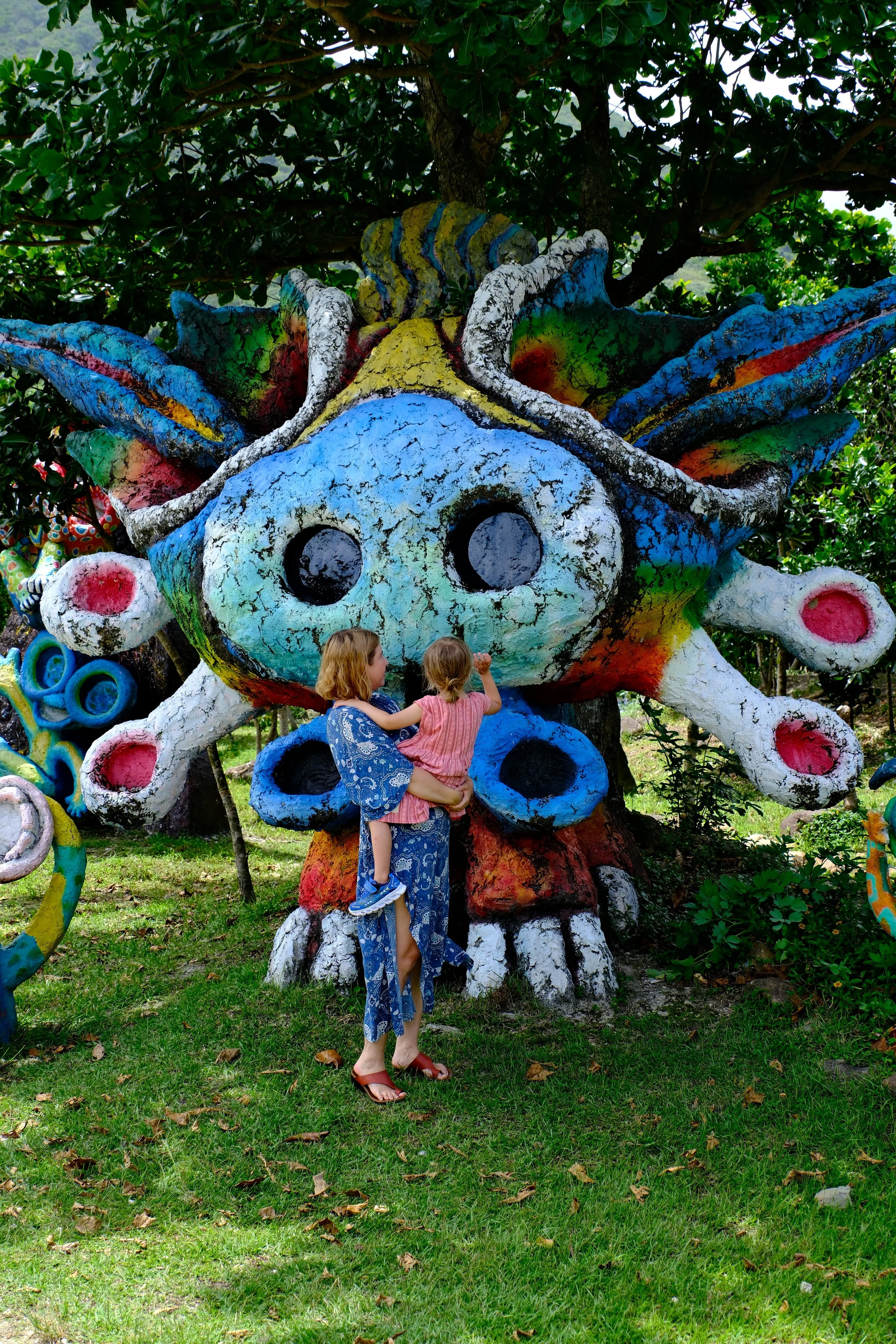
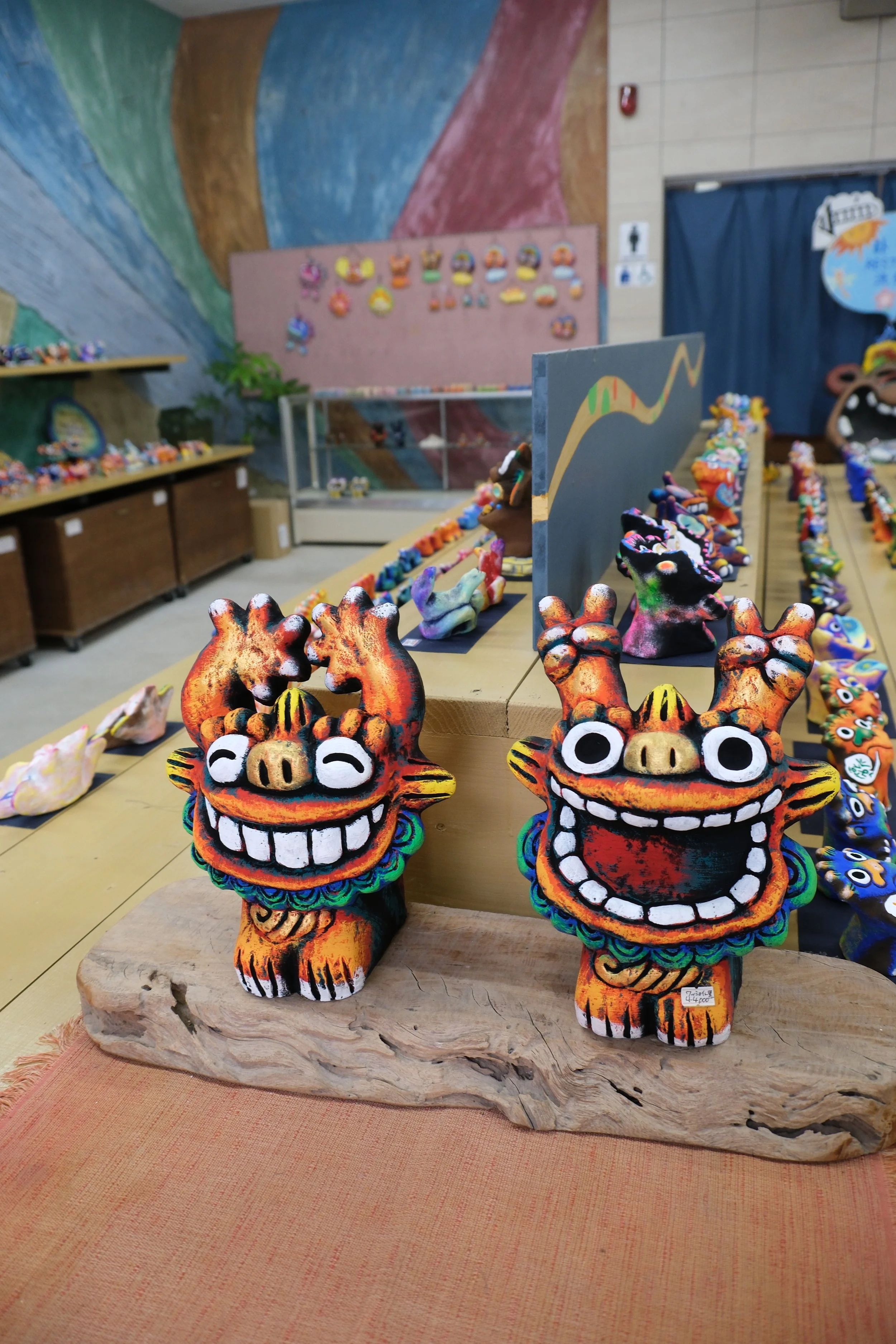
Outside the workshop is a colourful park filled with enormous, brightly painted shisa sculptures in every imaginable shape. It is slightly bizarre, extremely photogenic, and works surprisingly well in bad weather because the colours still pop under grey skies.
Entry to the shisa garden is free, and the attached workshop and shop sell the studio's original shisa in a huge range of sizes and combinations. It is also officially listed as English-friendly. Yaeyama
If you need an easy 30–60 minute stop between bigger plans, this is a good one.
Ishigaki Sabichi Cave
Sabichi Cave is a much more physical stop than I expected.
You enter through a limestone cave and follow the path until it eventually opens directly onto the sea. There are bats inside, strange rock formations, and a beach waiting at the far end. The tourism association describes it as Japan's only limestone cave that opens directly onto the ocean.
The walk itself is not terribly long, but the return journey feels much harder because you are climbing back uphill. We visited with a child and managed it perfectly well, but I would not describe it as an effortless little stroll. The dampness of the cave makes you feel a bit sticky and sweaty by the end of it all.
In summer, the cave is a nice break from the heat. It is also a useful rainy-day option, although the outdoor section obviously depends on conditions. Current admission is ¥1,200 for adults and ¥600 for children aged four through junior high school.
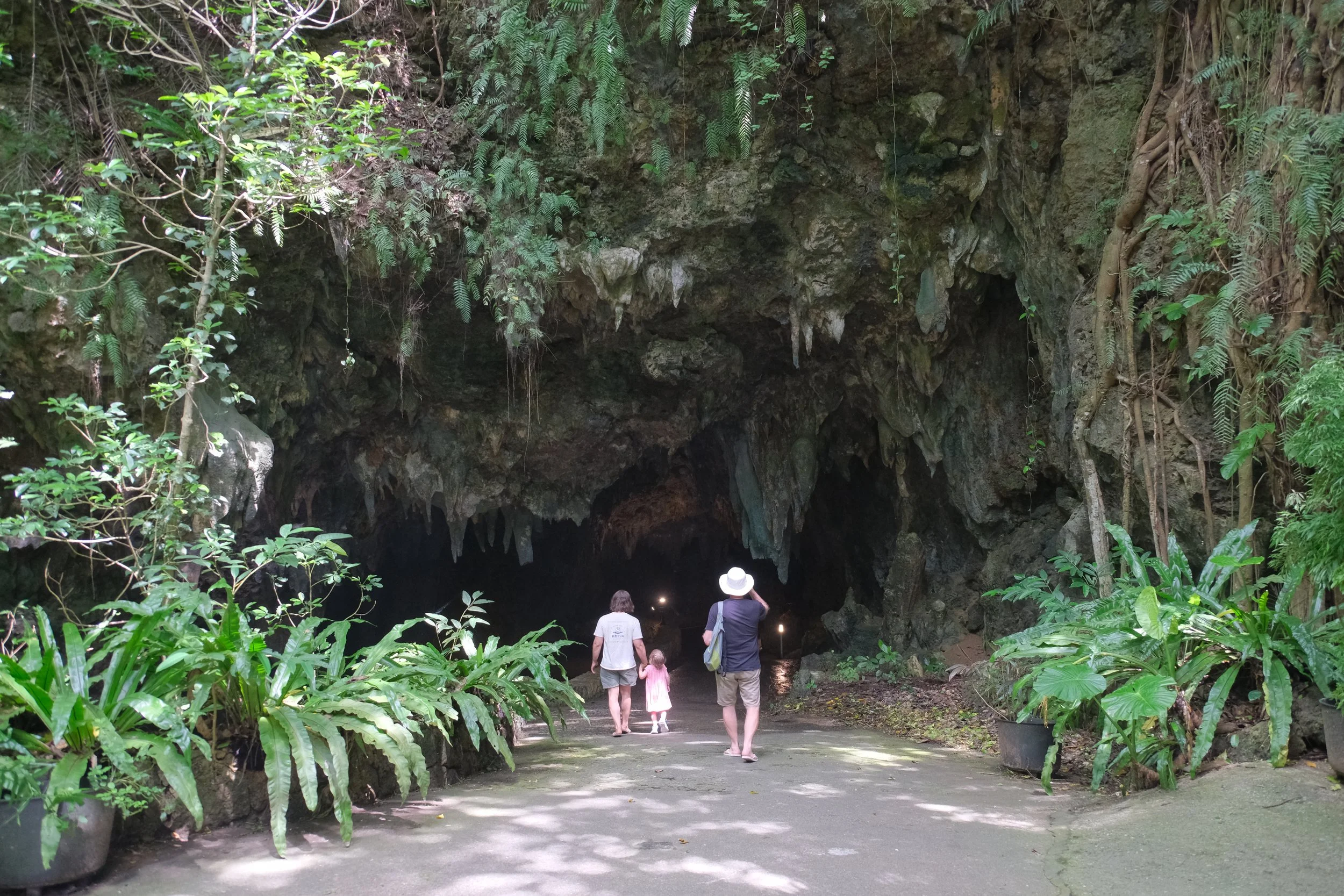
The entrance alone is exciting, lush and tropical.
Taketomi Island
We have done the Taketomi Island day trip three times now, three different ways, and it is one of the easiest add-ons to an Ishigaki trip.
The island is reached by ferry from Ishigaki Port, and once you arrive, local operators are generally waiting near the terminal offering transport toward bicycle rentals, water-buffalo cart rides and accommodation. Taketomi is small enough that you can comfortably explore a large portion of it in a day.
In winter, we found it particularly easy to be spontaneous. We simply arrived at the ferry terminal, bought tickets and decided what we wanted to do after reaching the island.
We have tried the famous water-buffalo carts, and I think they are worth doing once. They are certainly part of the Taketomi experience.
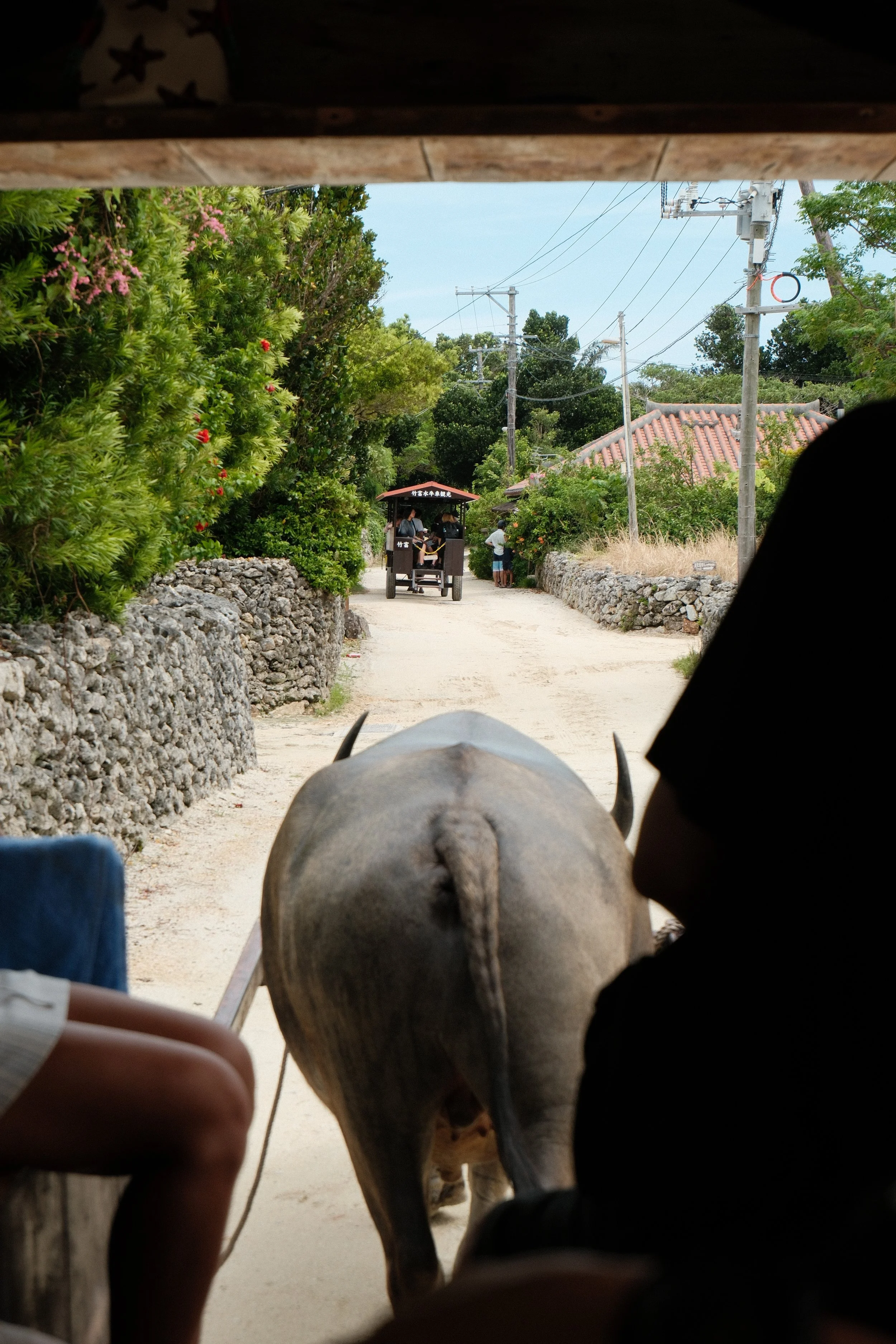
But I have to say: the actual route is quite short, and you do spend an impressive amount of time staring directly at the backside of a buffalo.
I much preferred bicycles.
On our most recent visit, we rented electric bicycles, including one with a child seat. It gave us far more freedom to explore the traditional village, beaches and quieter roads at our own pace.
At one point, we actually punctured one of the tires on our way to the beach. We called the rental shop expecting this to become a major problem, and within about ten minutes someone came by in a kei-truck with a replacement bicycle and took the damaged one away. It was such an efficient response that the puncture barely interrupted the day.
Cycling also gives you the advantage of seeing the water-buffalo carts from the front rather than from directly behind them, which, personally, I think is the superior viewing angle.
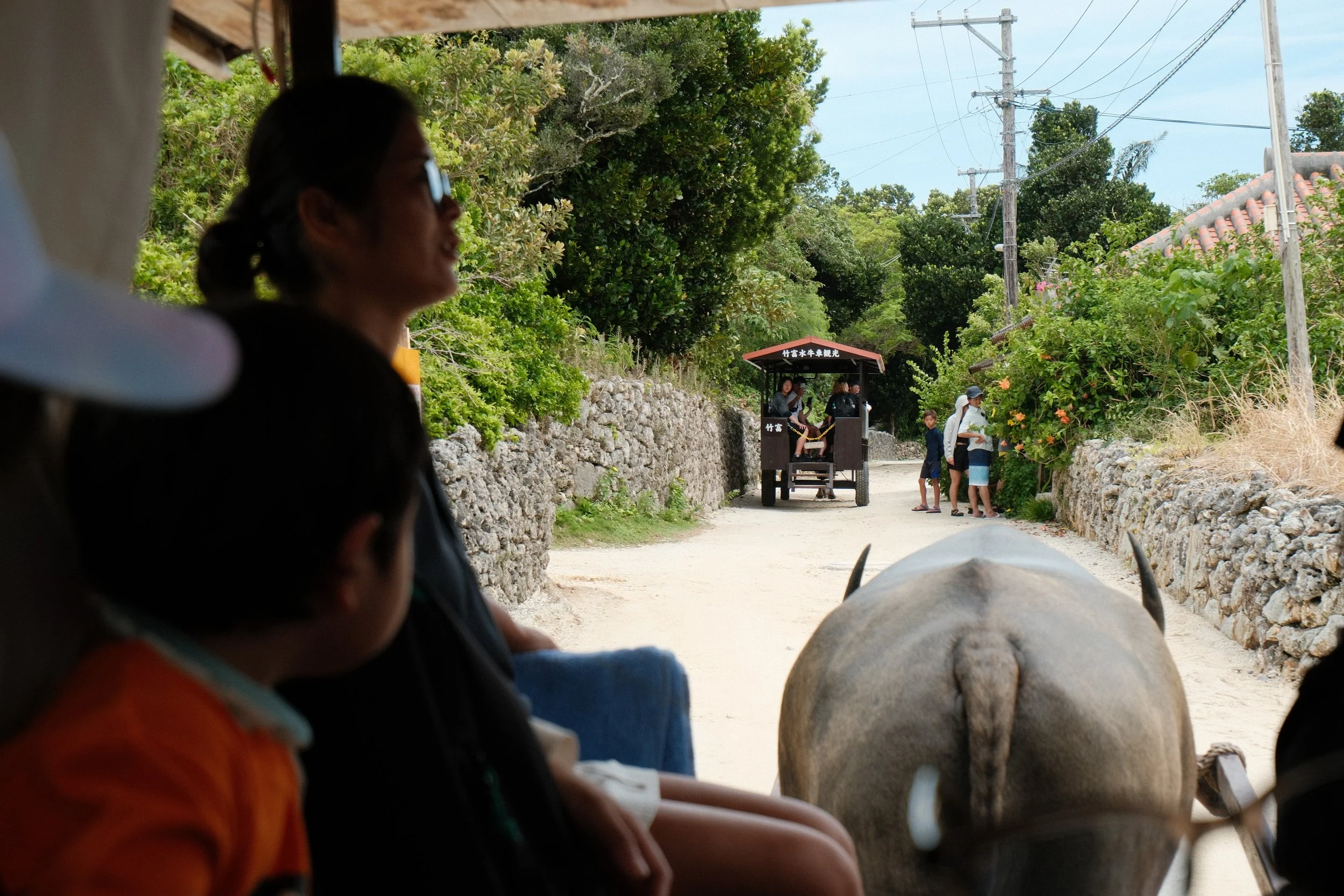
The ox-carts proceed at their own pace, meaning you may be stuck on a bit of road for a while while your guide strikes up a chat.
Kabira Bay
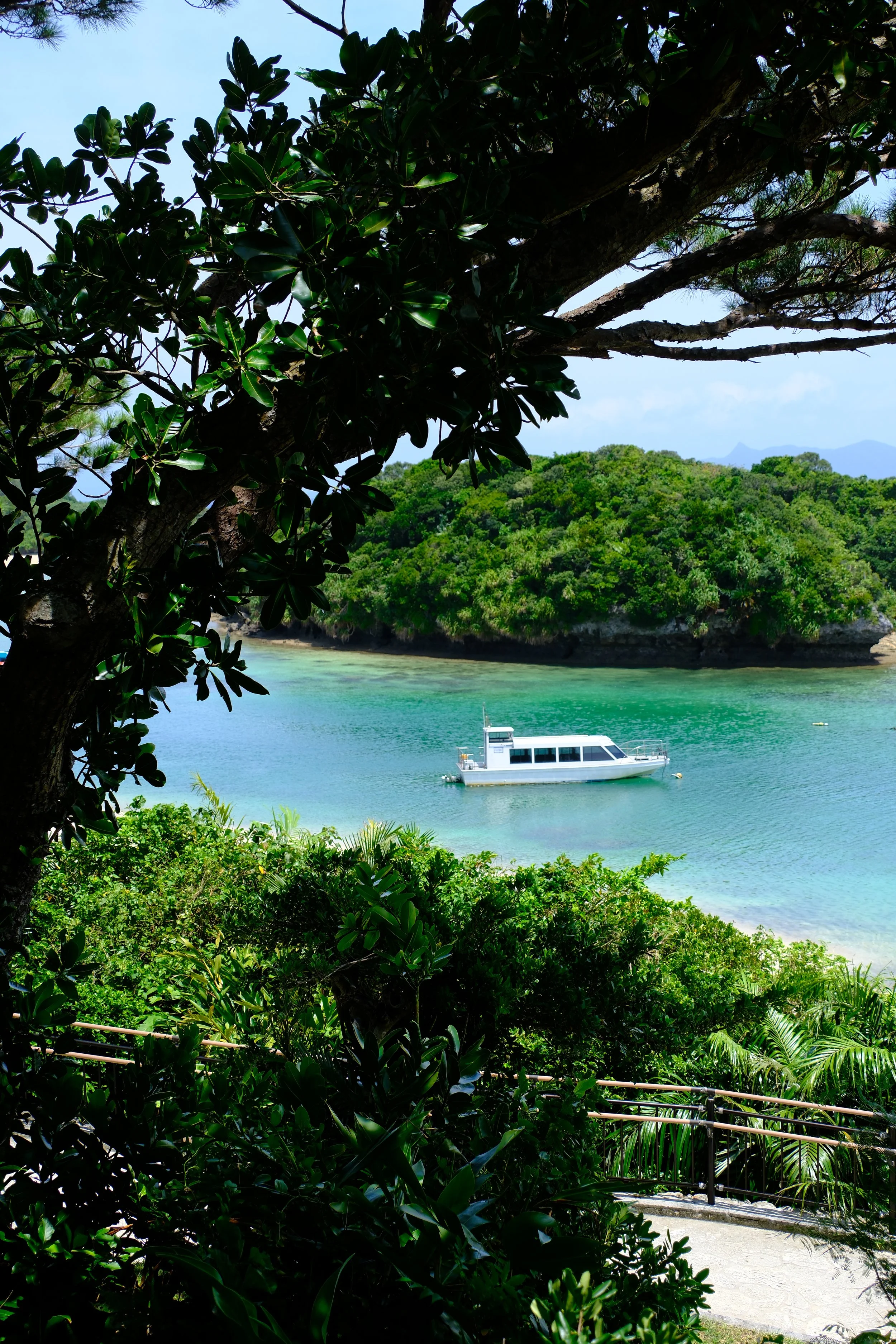
Kabira Bay is one of the easiest scenic stops to add to a drive around Ishigaki. The bay itself is beautiful, and on a clear day the colour of the water really does live up to the photos. You do not necessarily need to spend hours here either—even stopping at the viewing platform near the parking area is enough to get a good look before continuing around the island.
If you have a little more time, the glass-bottom boats are worth considering. The rides usually take around 30 minutes and give you a chance to see coral, tropical fish and, depending on conditions and luck, sea turtles without actually getting into the water. Several operators run directly from the bay, although services can be cancelled in bad weather.
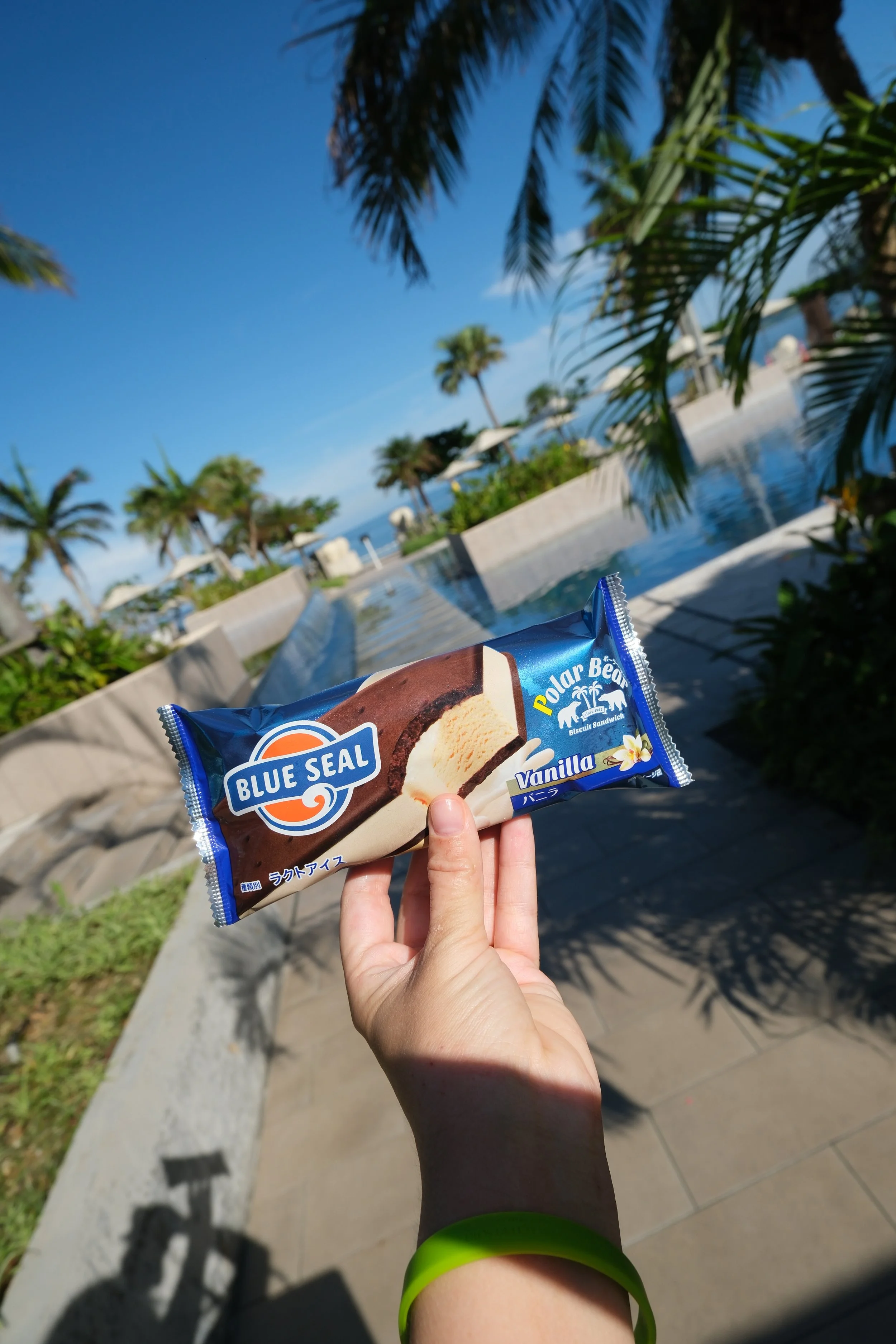
The area around the main parking lot is also an easy place to take a break during a road trip. There are souvenir shops, food stalls and places to pick up ice cream or a quick snack, so even if you skip the boat entirely, Kabira Bay still works well as a short stop between other destinations.
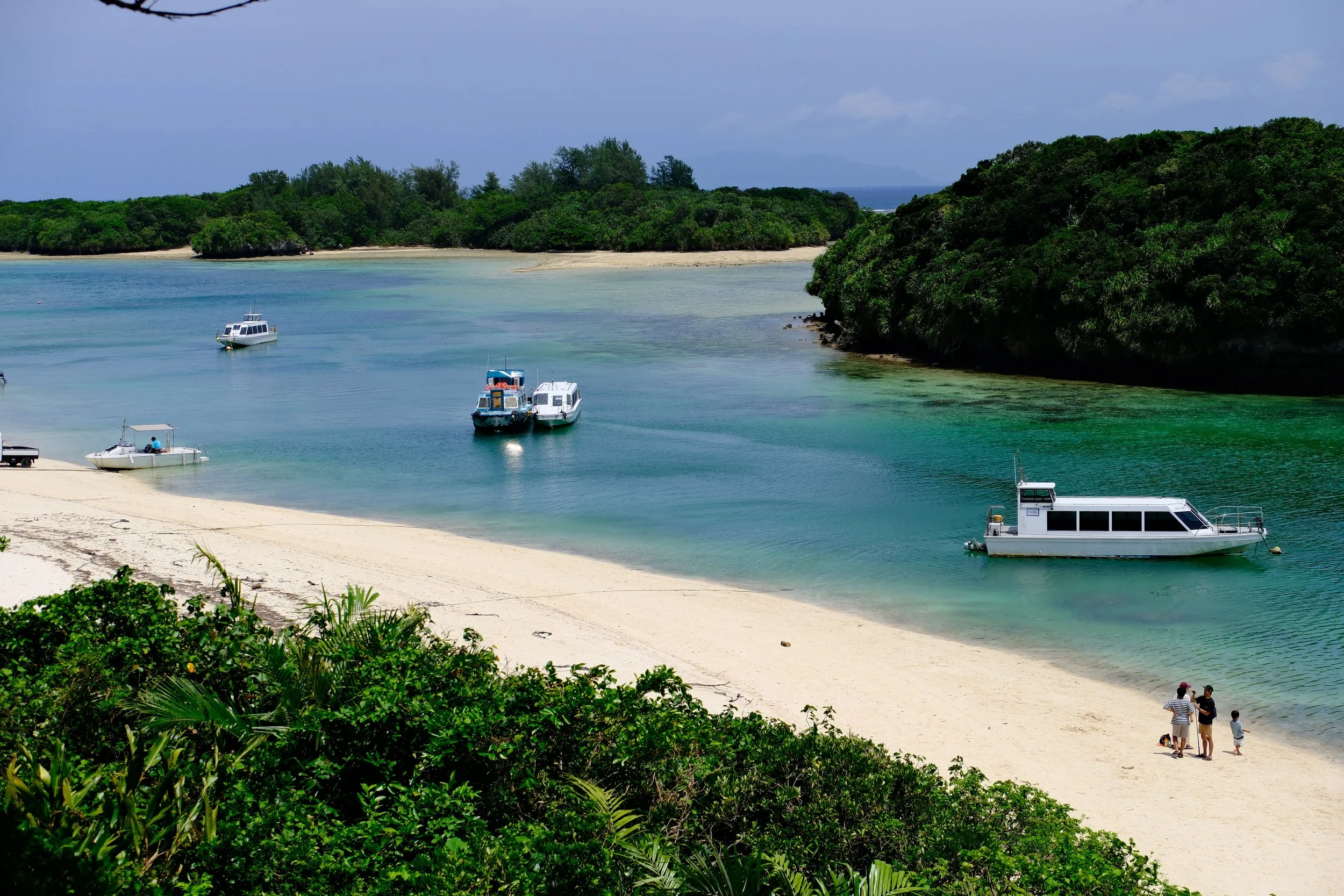
The bay is a good place to see the beautiful Ishigaki blue water. On this day, an approaching typhoon meant fewer boats were on the water.
Dinner and Island Music at Usagiya
Every trip, we go to Usagiya.
There are now multiple Usagiya locations in central Ishigaki, and both the original restaurant and newer branch hold regular sanshin performances. The official site currently lists live music every day, ranging from traditional island songs to Okinawan pop.
This is one of my favourite introductions to local culture because it is not remotely intimidating with children. The atmosphere is loud and casual, kids are encouraged to participate, and you can sit with drinks and izakaya-style island food while the whole room gradually gets pulled into the music.
Our daughter was given little maracas to shake, people got up to dance, and nobody seemed particularly concerned about children behaving like children.
It has become one of those things we automatically add to every Ishigaki trip.
Note: You will need to be able to phone call to make a reservation. Ask the hotel concierge for help if you cannot speak Japanese.
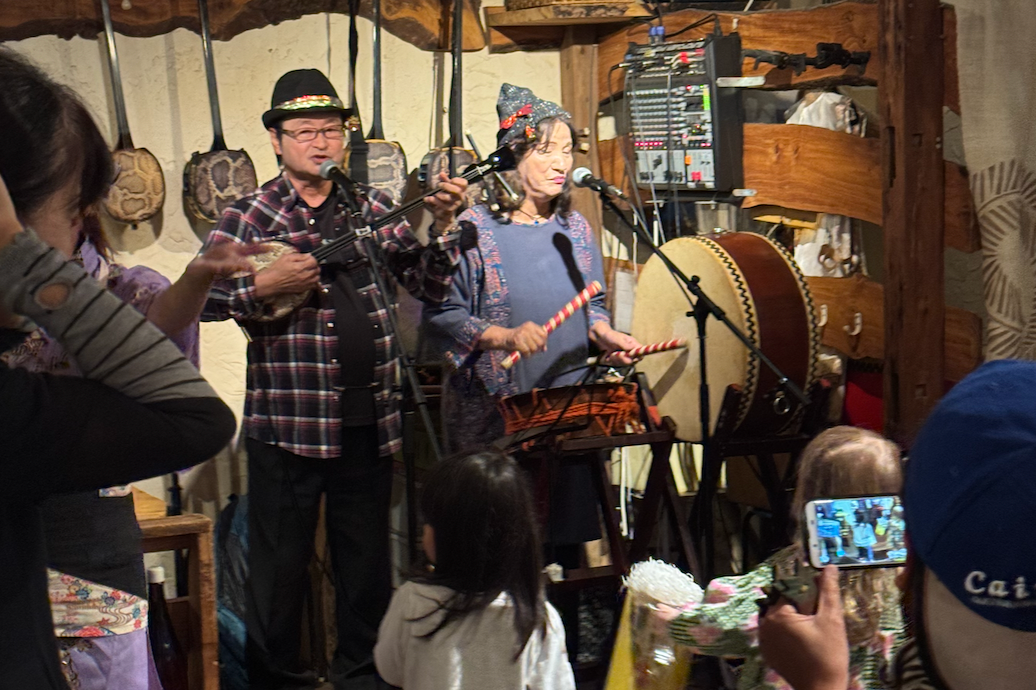
I wish I had a high-res photo, but all I have are vertical videos of the performances themselves.
Hey, Is Okinawa Part of Kyushu?
Technically, Okinawa is not part of Kyushu proper. Ishigaki belongs to Okinawa Prefecture and the Yaeyama Islands, with its own very distinct historical and cultural background.
But from Fukuoka, I often think of Ishigaki as one of the easiest extensions to a longer southern Japan trip. It feels much farther away culturally than the flight time suggests.
Okinawa reminds me a little of Hokkaido in that sense: both are obviously part of Japan, but neither feels like simply another version of the regions around it. They have their own history, food, climate and identities that deserve more than being reduced to "Japan, but tropical" or "Japan, but snowy."
If you are spending a long time exploring Kyushu and eventually start wondering what happens if you keep going south, Ishigaki is a trip I strongly recommend.
And after three visits with a small child, Ishigaki remains the place we keep going back to.
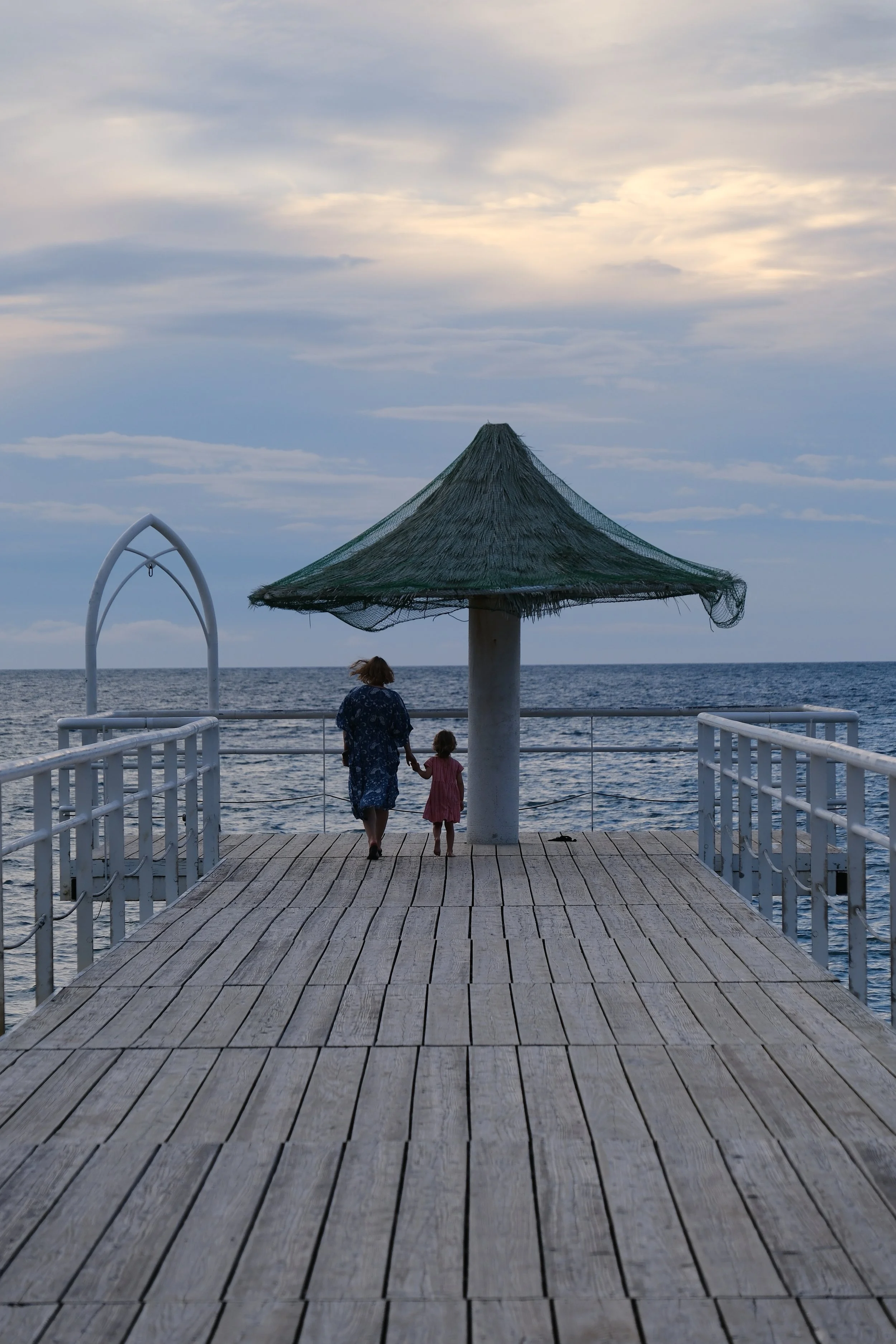
Fusaki Beach Resort Visitor Information
English Friendly: 4/5
Fusaki has a full English-language website, multilingual booking information and facilities designed for international resort travellers. Independent businesses elsewhere on Ishigaki may have more variable English support.
Access by Car:
Approximately 15 minutes from Ishigaki Port Remote Island Terminal or about 35 minutes from Painushima Ishigaki Airport.
Access by Train:
N/A. There are no trains on Ishigaki Island.
Access by Bus:
Local buses connect the resort with central Ishigaki, and the journey between Fusaki and the Ishigaki Port area takes approximately 20 minutes. Hotel guests can also use the resort's scheduled airport shuttle, which takes approximately 35 minutes and is currently free!
Address in English:
Fusaki Beach Resort Hotel & Villas
1625 Arakawa, Ishigaki, Okinawa 907-0024, Japan
Google Maps:
Fusaki Beach Resort on Google Maps
Check-in / Check-out:
Check-in from 3:00 p.m. / Check-out by 11:00 a.m.
Estimated Costs:
Accommodation prices vary considerably by season, room type and package, so I would check live rates rather than plan around a fixed nightly price. Many resort facilities—including the indoor pool, seasonal outdoor pools, public bath and airport shuttle—are included for overnight guests, while childcare, marine activities, some tours and restaurants cost extra.
Best Season:
Winter: quieter, often cheaper, cooler and better for sightseeing; accept the possibility of cloudy or rainy weather and colder water.
Summer: better for swimming and full use of the outdoor resort facilities, but hotter, busier and generally more expensive.
Do You Need a Rental Car?
Not strictly. Fusaki works surprisingly well without one because of the airport shuttle and tour pickup options. But if you want to properly explore Ishigaki rather than treating the resort as the destination, yes—I would rent one.
