Returning to My Roots in Miyazaki Prefecture
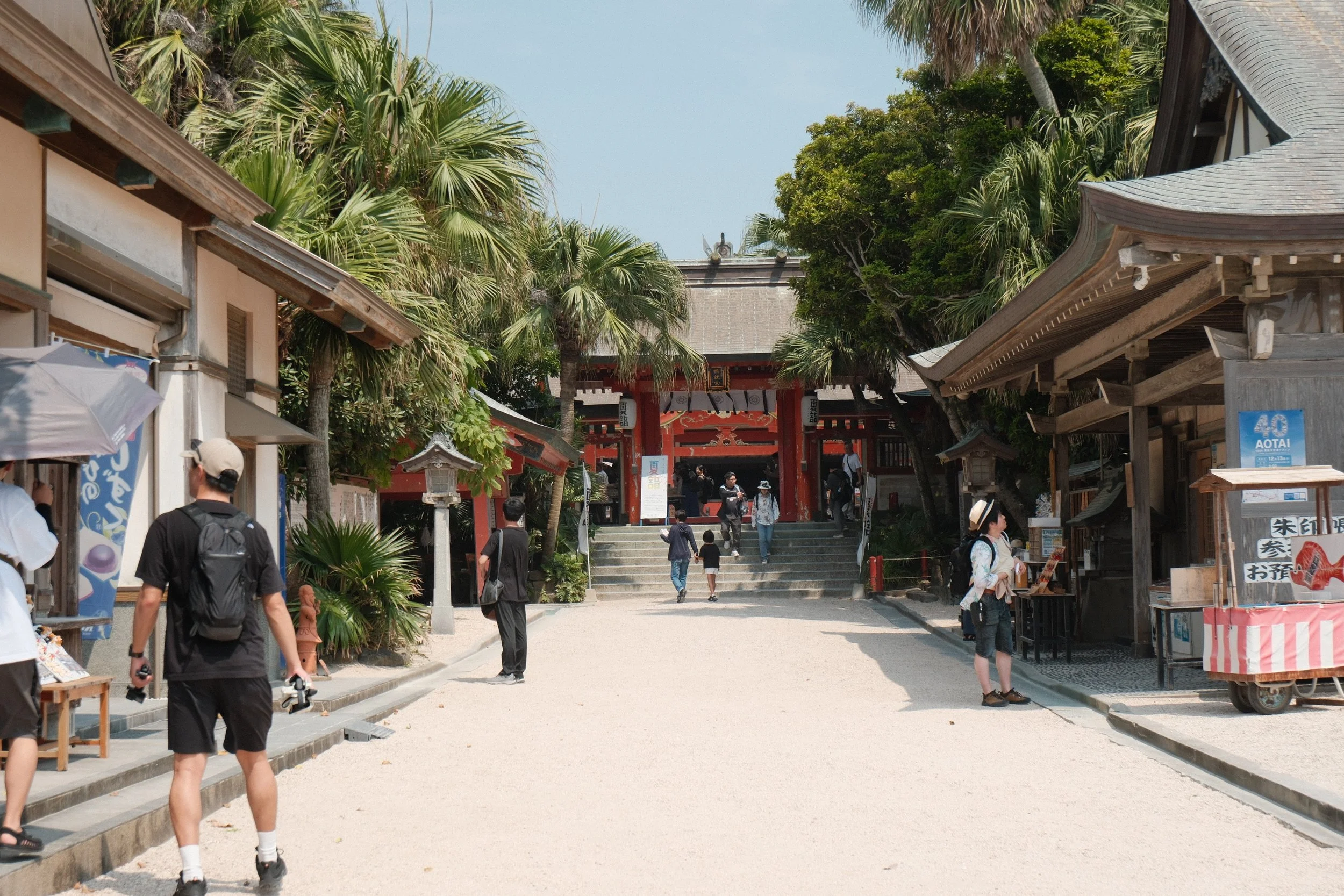
With its subtropical coastline, laid-back cities, regional food and long scenic drives, Miyazaki rewards travellers willing to slow down and explore beyond Kyushu’s best-known routes.
You may not know this, but my entire journey in Japan began in Miyazaki.
In 2005, I arrived as a fresh-off-the-plane exchange student in my third year of high school and was placed with a host family in Miyazaki City. It was my first real introduction to Japan—and a huge wake-up call when I realized that not all of the country looked or felt like the Tokyo I had seen on television.
In fact, Miyazaki could hardly be farther from that image. Its hot, humid climate, palm-lined roads, surfing culture and slower pace give it an identity of its own. Even compared with neighbouring prefectures, life seems to move differently here. Nearly everything I now understand about Japan began with this first experience. Returning with my own family felt like bringing them back to the starting point of a very long story.
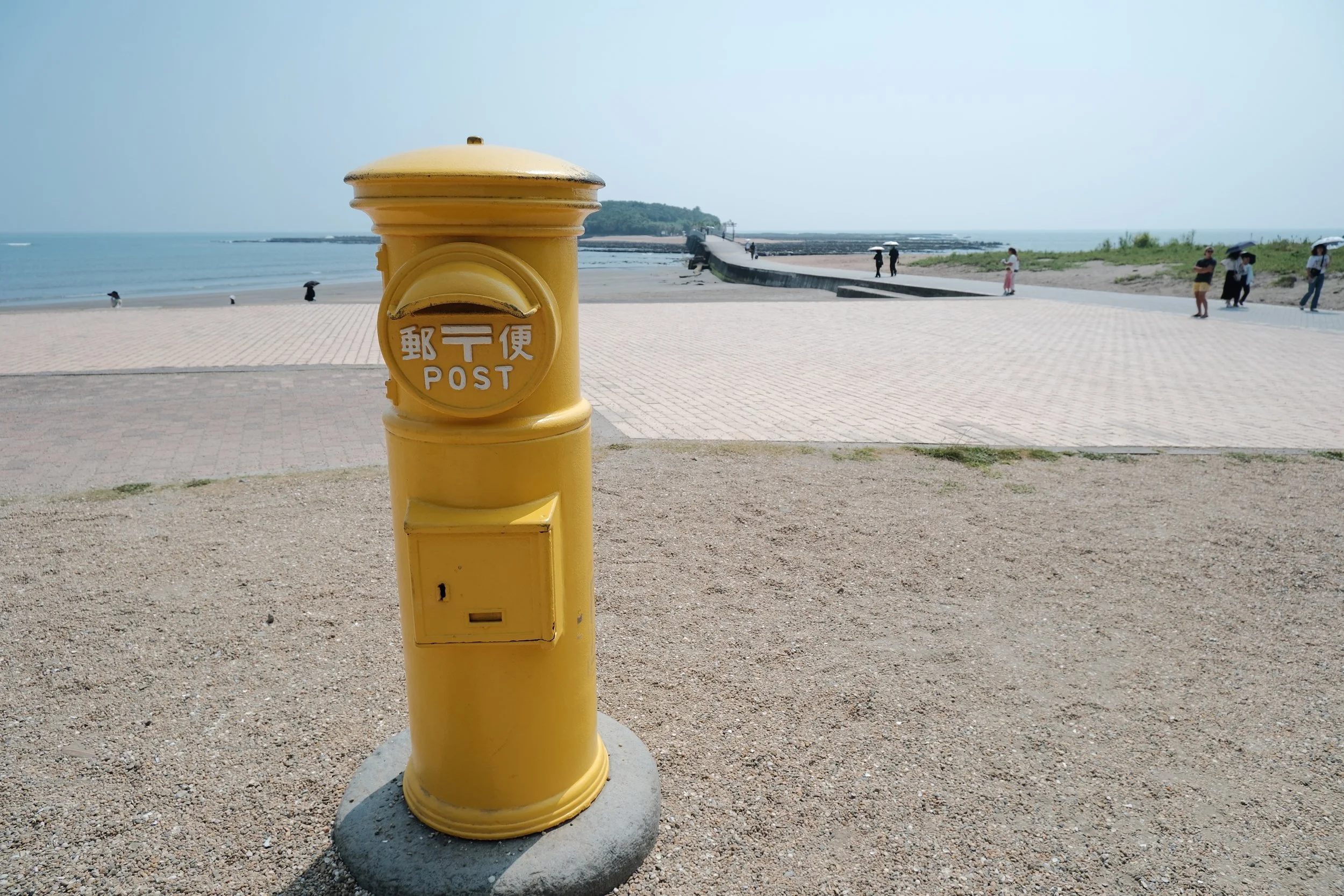
A rare yellow postbox stands solo on the beach in Aoshima, Miyazaki.
Japan’s Subtropical South
Miyazaki is sometimes described as Japan’s nangoku, or southern country. The word suggests more than geography: it evokes warm weather, tropical plants, bright sunlight and a lifestyle shaped by the Pacific Ocean.
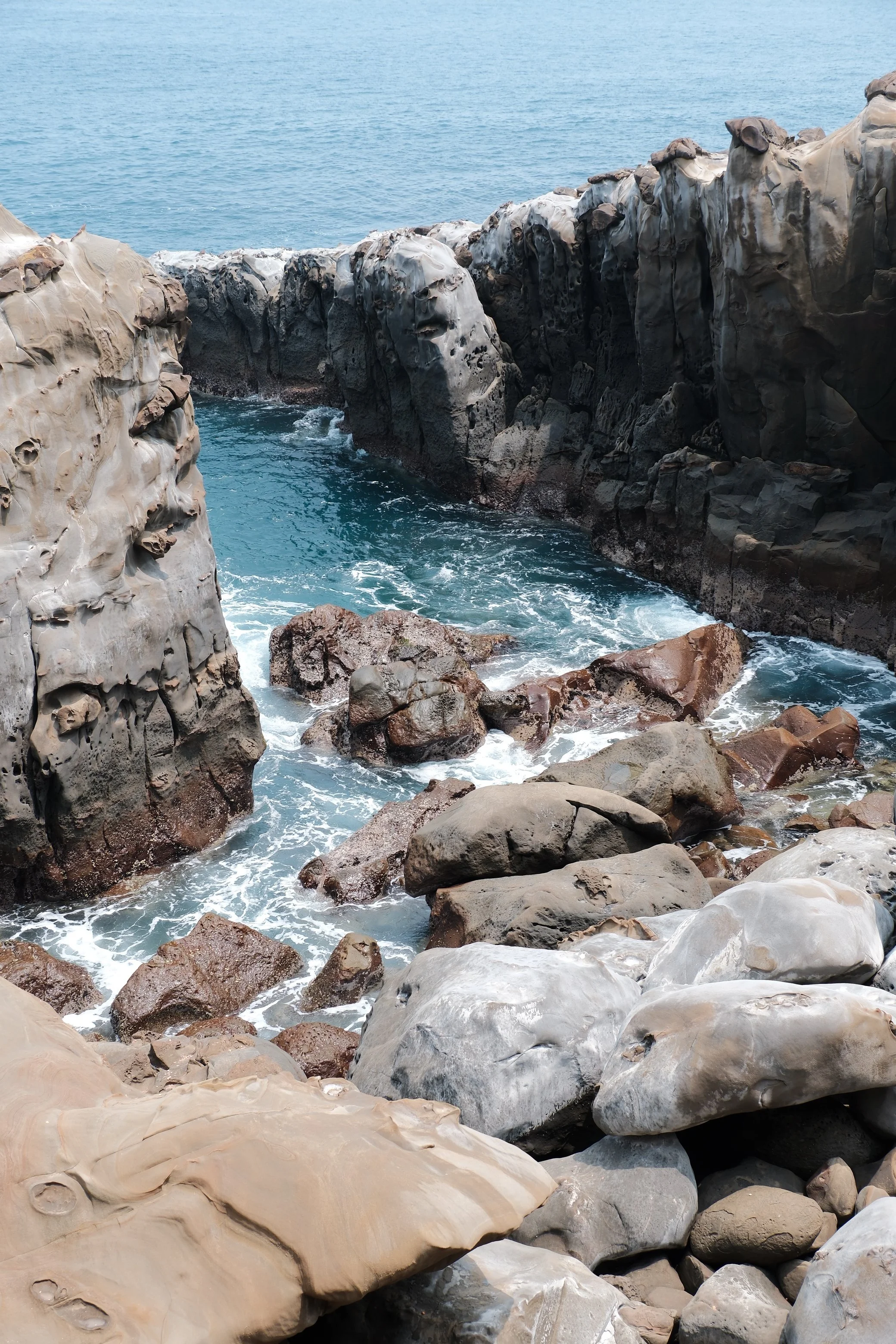
The Nichinan Coast captures this image particularly well. Canary Island date palms line sections of the road, waves break against unusual rock formations and the Pacific seems to remain beside you for much of the drive. Miyazaki is also one of Japan’s established surfing destinations, with beaches around Aoshima and farther along the coast attracting surfers throughout the year.
This does not mean that every part of the prefecture is tropical. Miyazaki also contains mountains, deep forest, farming communities and the mythological landscapes around Takachiho. However, the city and southern coastline have an openness and warmth that feel very different from Japan’s denser urban centres. The pace is slower too. Roads are relatively straightforward, the coastline rarely feels busy and there is usually room to pause when something catches your attention.
Driving from Fukuoka to Miyazaki
Miyazaki is not especially easy to reach from Fukuoka, which may be one reason it remains underrated among visitors to Kyushu. True that you can take a short 45 minute propeller plane flight from Fukuoka airport, but flights are quite expensive, and subject to the weather, which can be unpredictable if booked far in advance.
Official estimates place the drive from Fukuoka at around three and a half hours under good conditions. In reality, travelling with a family and stopping for food, toilets and small discoveries can easily turn it into a four-to-five-hour journey. We rented a car and allowed approximately four and a half hours in each direction.
It is a long drive for a short getaway, but having a car once you arrive changes the experience completely. Many of Miyazaki’s best-known attractions are spread along the coast or outside the city, and public transportation can require careful planning. Driving gives you the freedom to stop at roadside stations, beaches, small harbour towns and restaurants along the way.
For my family, the journey was their first introduction to the place where my own life in Japan began (so dramatic.)
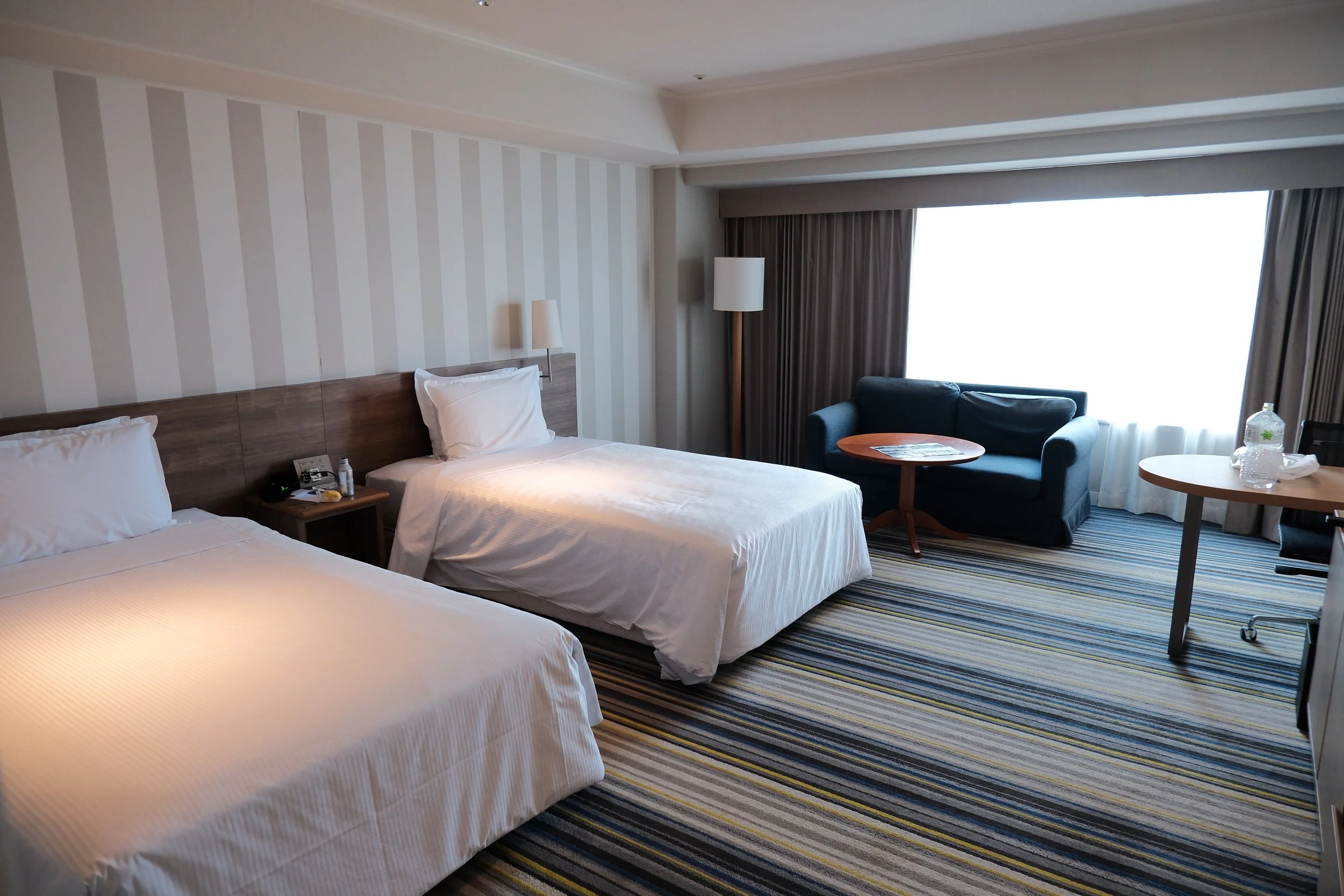
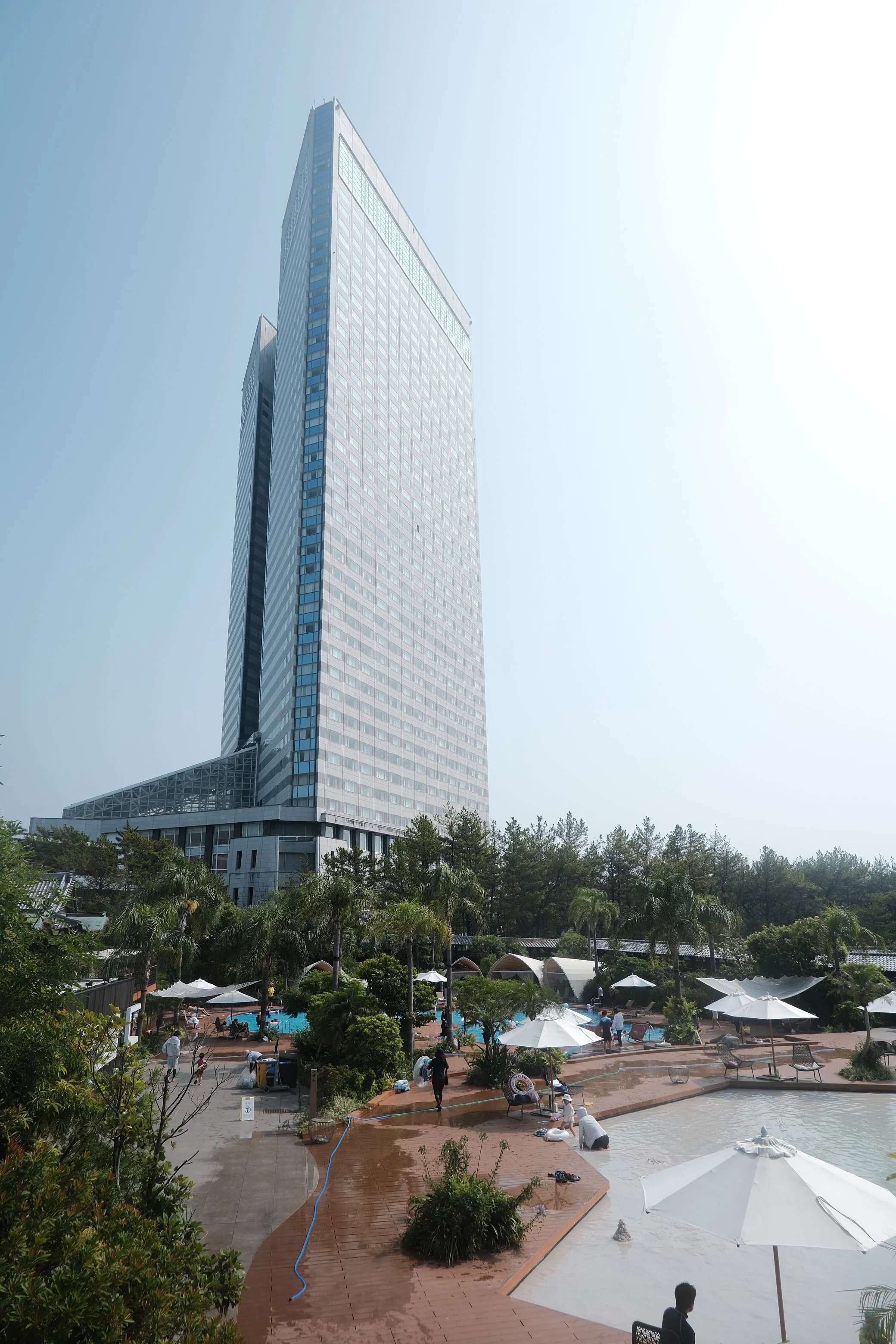
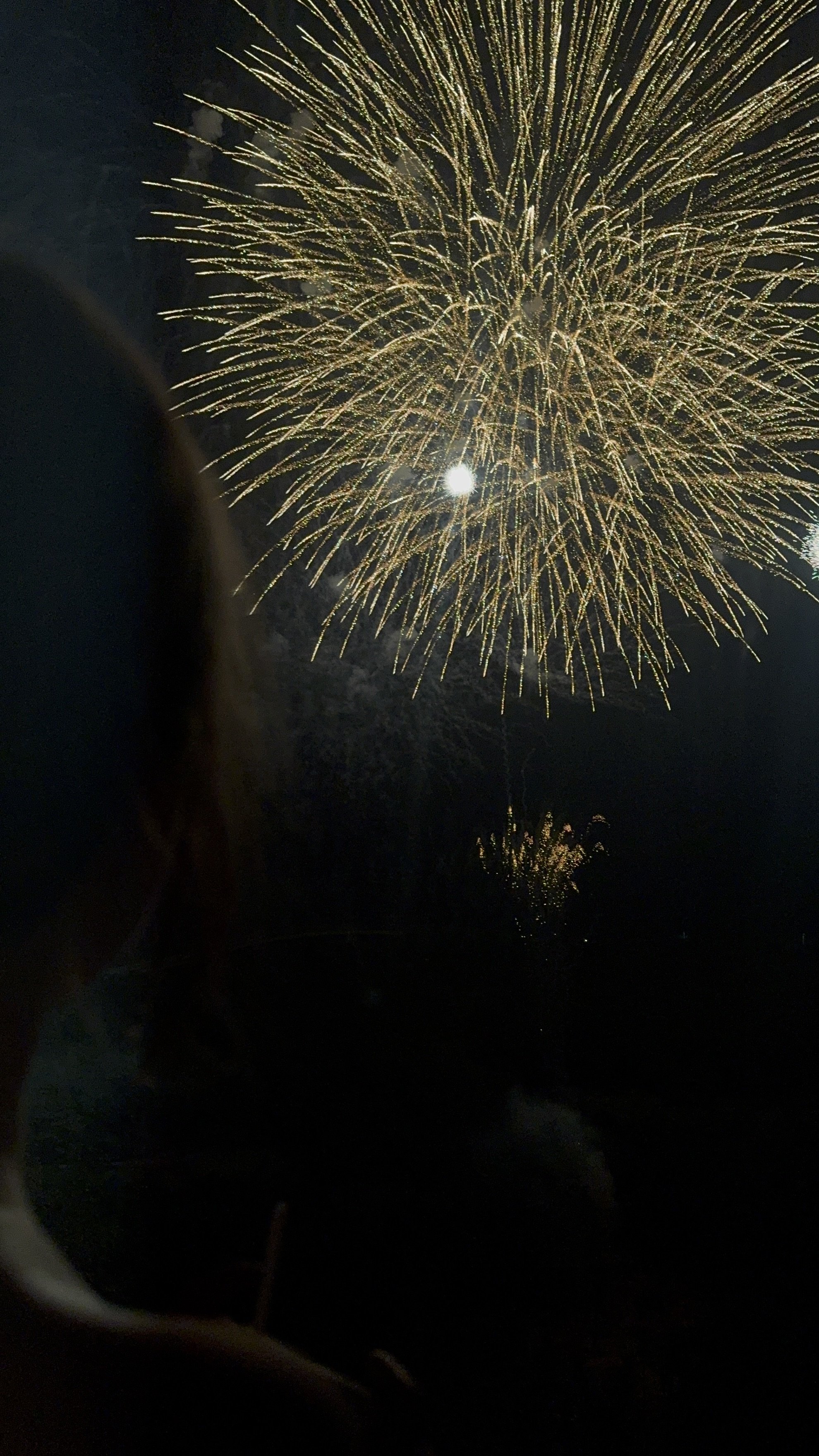
Our room on the 28th floor, each room overlooks the forest below and the coastline beyond it. In the summer, nightly fireworks can be viewed from the comfort of your hotel room.
Returning to Phoenix Seagaia Resort
Our destination was the newly relaunched Phoenix Seagaia Resort, an iconic property that has been part of Miyazaki’s coastline since the 1990s.
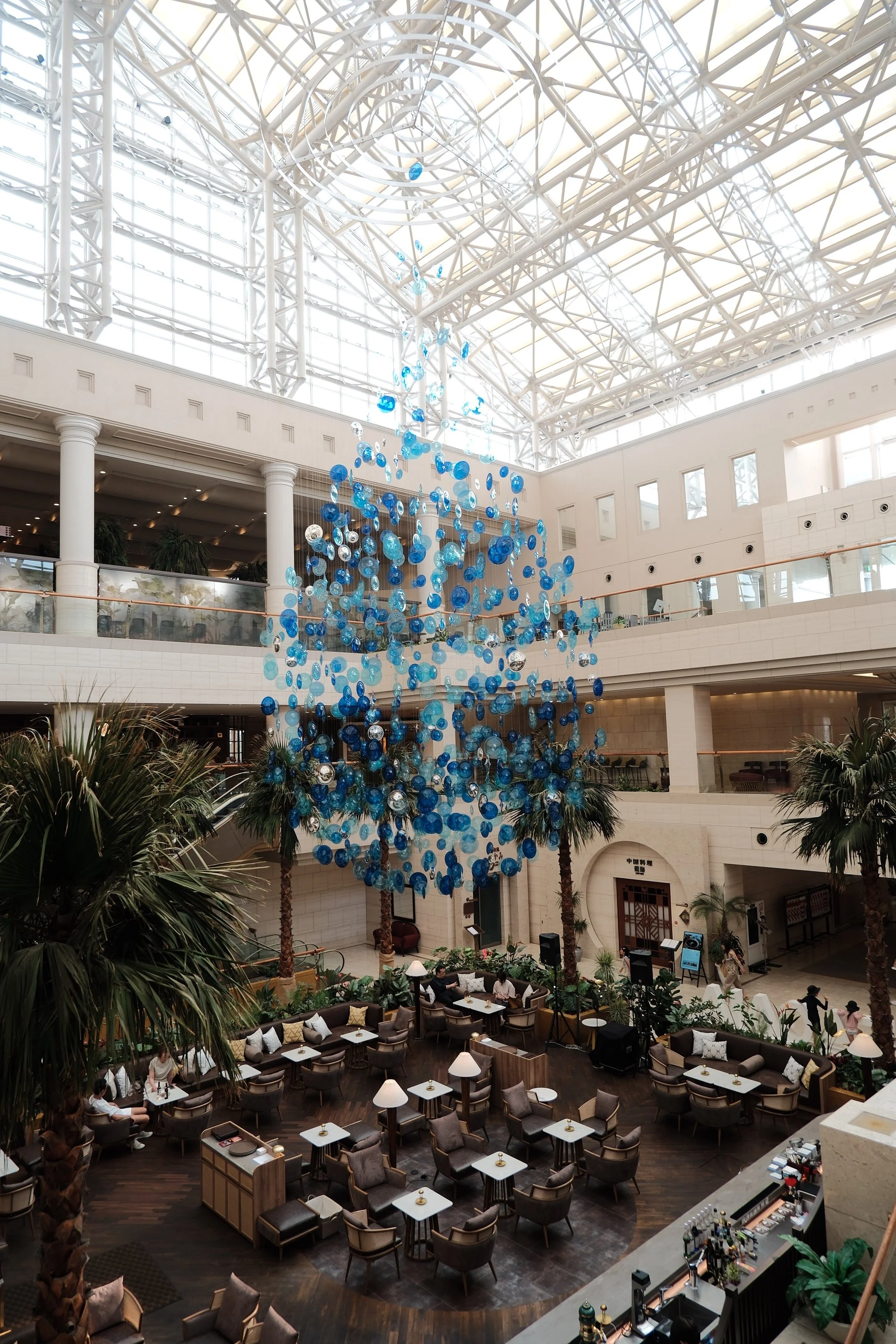
Almost everyone who grew up in Miyazaki knows Seagaia. Even across Kyushu, it remains one of the region’s most recognisable resort destinations. The wider complex sits within an enormous coastal pine forest and includes a high-rise hotel, convention centre, golf courses, hot springs, restaurants, cottages and condominium-style accommodation.
The flagship property was formerly known as the Sheraton Grande Ocean Resort. It has since been renamed Phoenix Seagaia Ocean Tower. (From June 2025, Iconia Hospitality has been managing the resort alongside a large portfolio of hotels and resorts across Japan, including the Kamenoi Hotel brand mentioned in the Aso Boy! Article previously, and my favorite resort, Fusaki on Ishigaki Island.)
The 154-metre Ocean Tower contains more than 700 rooms, all facing either the Pacific Ocean or the surrounding golf courses. The scale can be difficult to understand until you arrive: this is not simply a hotel beside the beach, but a self-contained resort complex designed to accommodate holidays, conferences, weddings, golf trips and other large events. It’s MASSIVE.
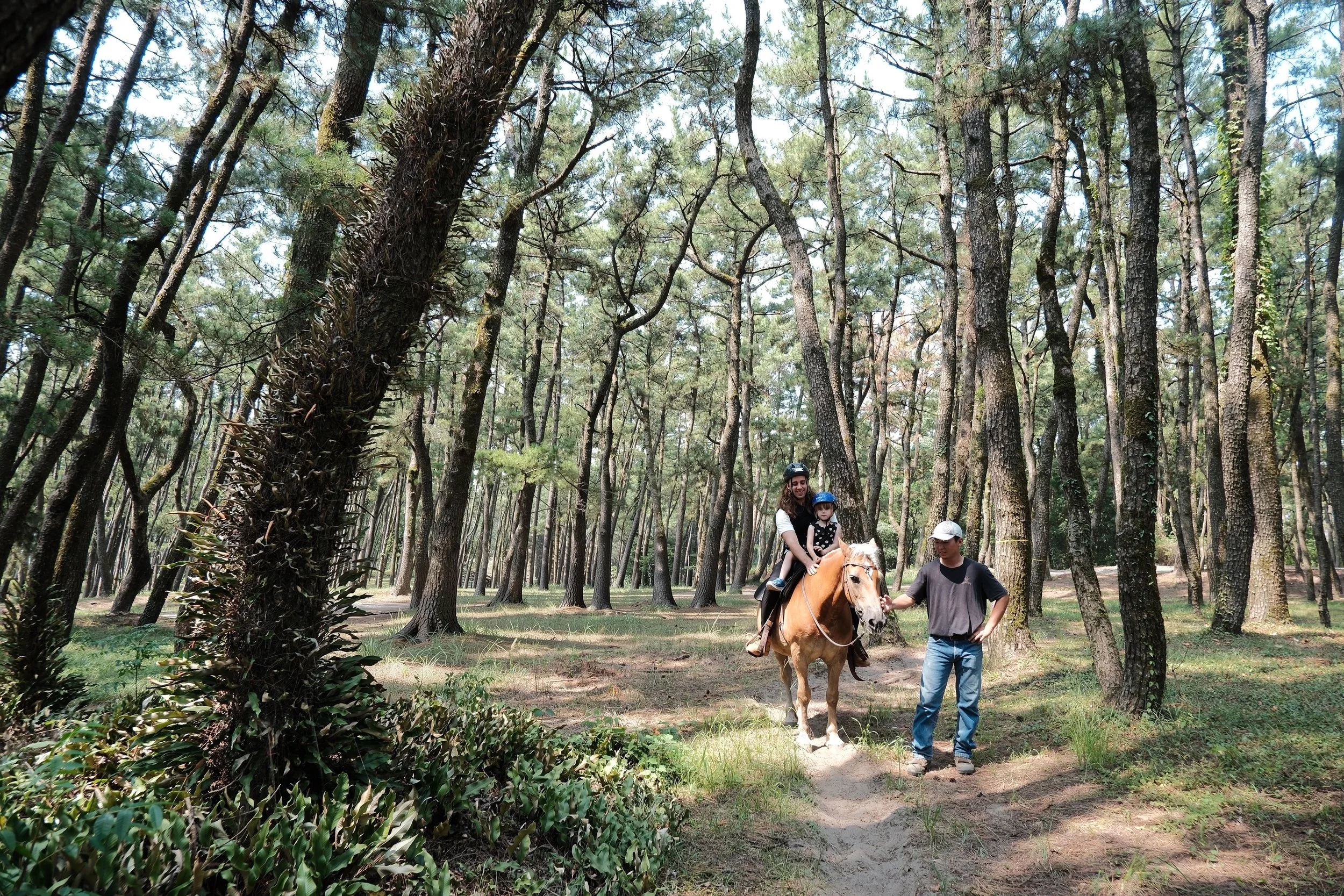
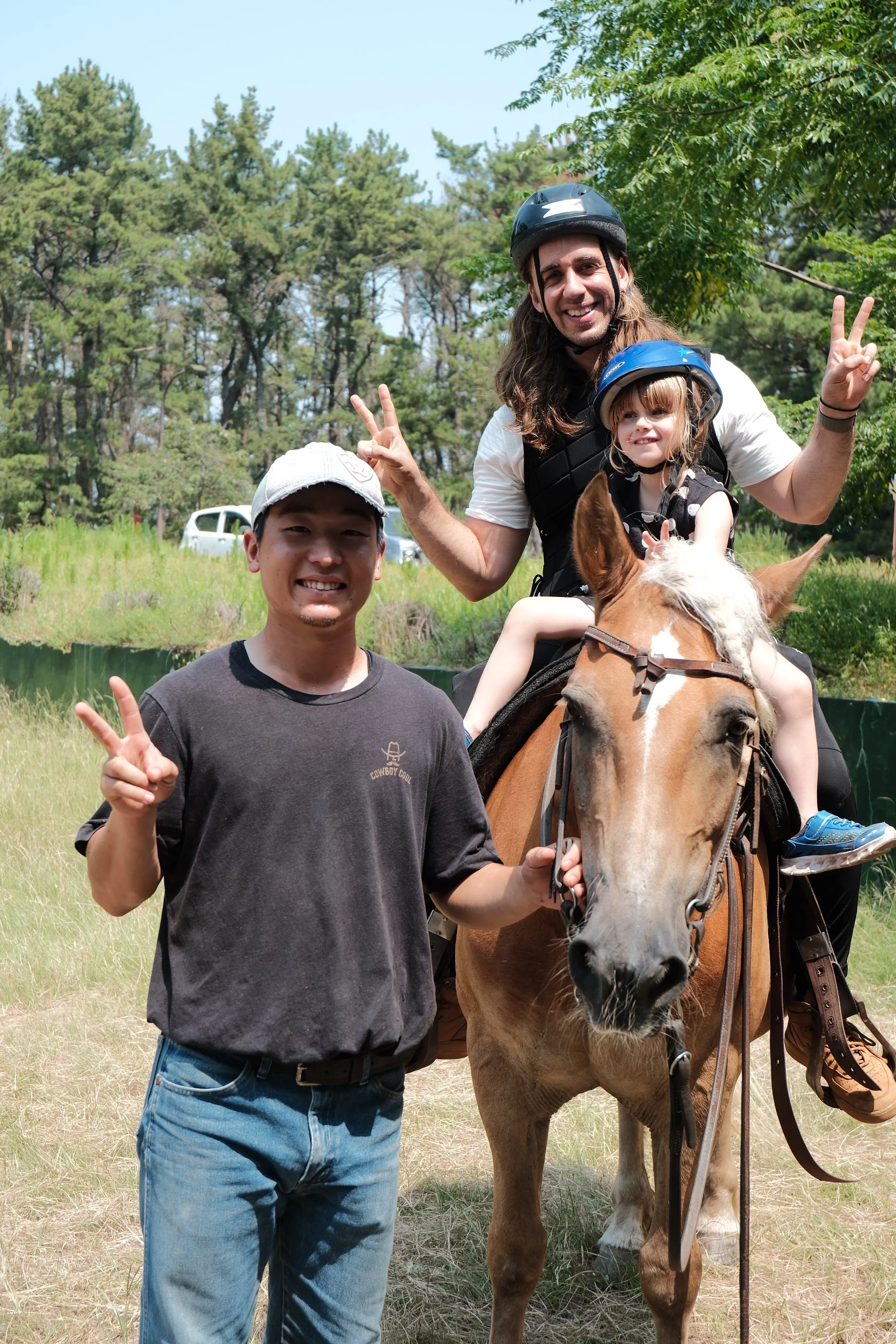
Horseback riding is one of many activities that can be booked at the hotel’s activity center. For our daughter, who is just under 4, a 15 minute ride through the pine forest was enough for her to talk about it all day.
Seagaia’s New Focus on Families
The resort has recently undergone a substantial renewal, with a clearer focus on families travelling with children.
An indoor play park called KIDS OASIS opened in April 2026, with large wooden play equipment, a rope swing, block art, a library and a separate area for babies and toddlers. The neighbouring indoor pool was also renewed with colourful slides, giving families an option during rain or extreme heat.
A new outdoor Splash Area opened on July 18, 2026. It includes two slides emerging through a waterfall, a rounded Bubble Hill water-play structure and shaded areas where families can rest. These additions give younger children somewhere to play without requiring a full day trip away from the resort.
Seagaia is clearly aiming to position itself as one of Kyushu’s leading family resorts. While there were still a few operational details that felt as though they needed to be ironed out during our stay***, the direction is promising. The resort already has the space, scenery and recognition; the new family facilities make it much easier to imagine staying for several nights rather than using the hotel simply as a base.
***On busy days, the wait for breakfast can be more than an hour. However, they have established a QR code system where you can check your status in line once you’ve put in your request.
This gives you time to wait in your room or explore other parts of the hotel.
***Elevator wait times during rush hours (especially check-in, and check-out) can easily add another 5-10 minutes of wait time.
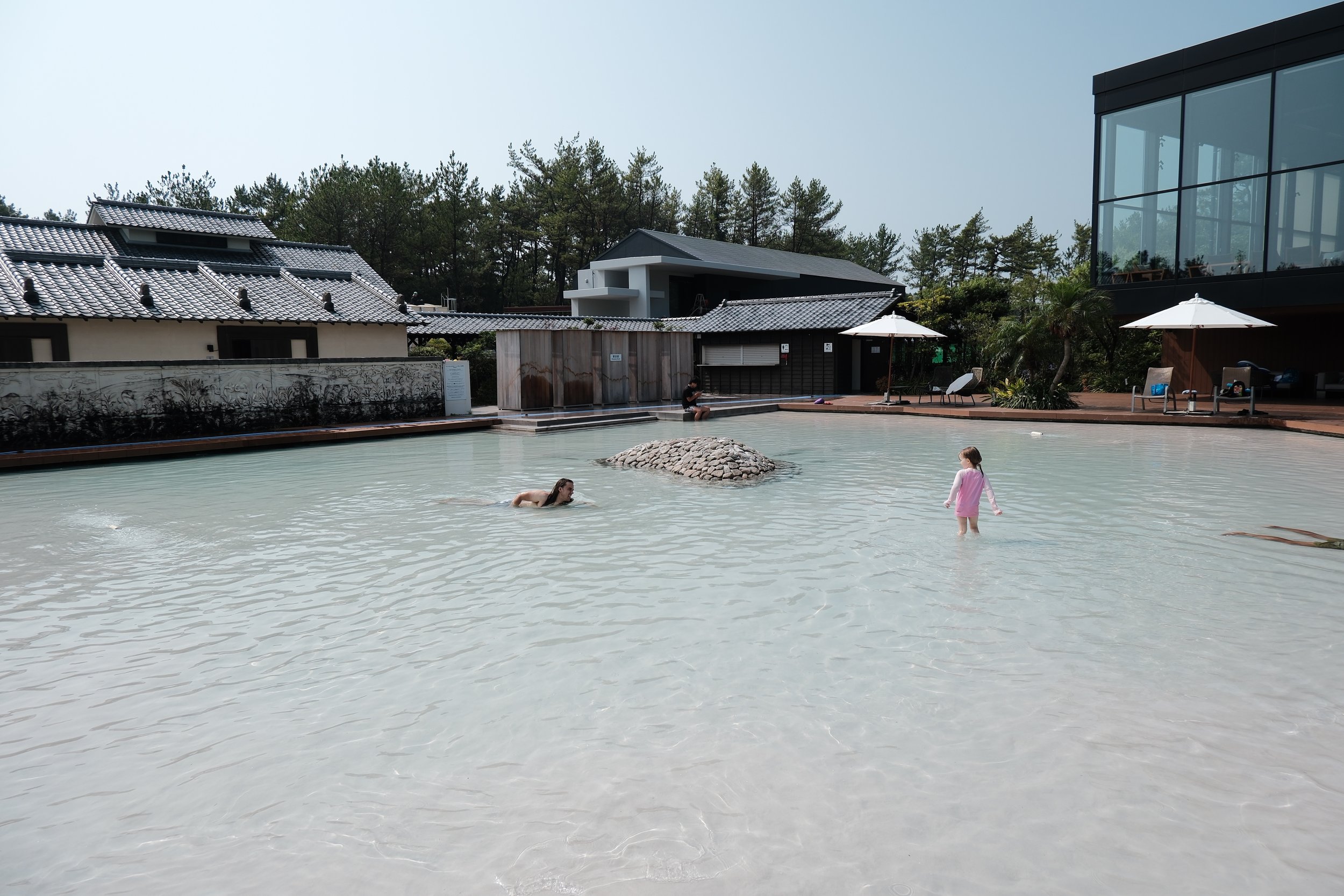
There is a heated beach pool with sand at the bottom, that is shallow enough for kids 3 and under to play safely. This ended up being my daughter’s favorite area because it was the least crowded, and it is open late so kids can play after dinner, and enjoy the evening fireworks.
Day Trips Along the Nichinan Coast
Miyazaki is a destination that strongly rewards travellers who hold a driver’s licence.
The Nichinan Coast stretches south from Miyazaki City toward Cape Toi, offering roughly 100 kilometres of coastal scenery. Along the way, you can visit Aoshima, Udo Shrine, Sun Messe Nichinan and several smaller towns, beaches and roadside viewpoints
Aoshima
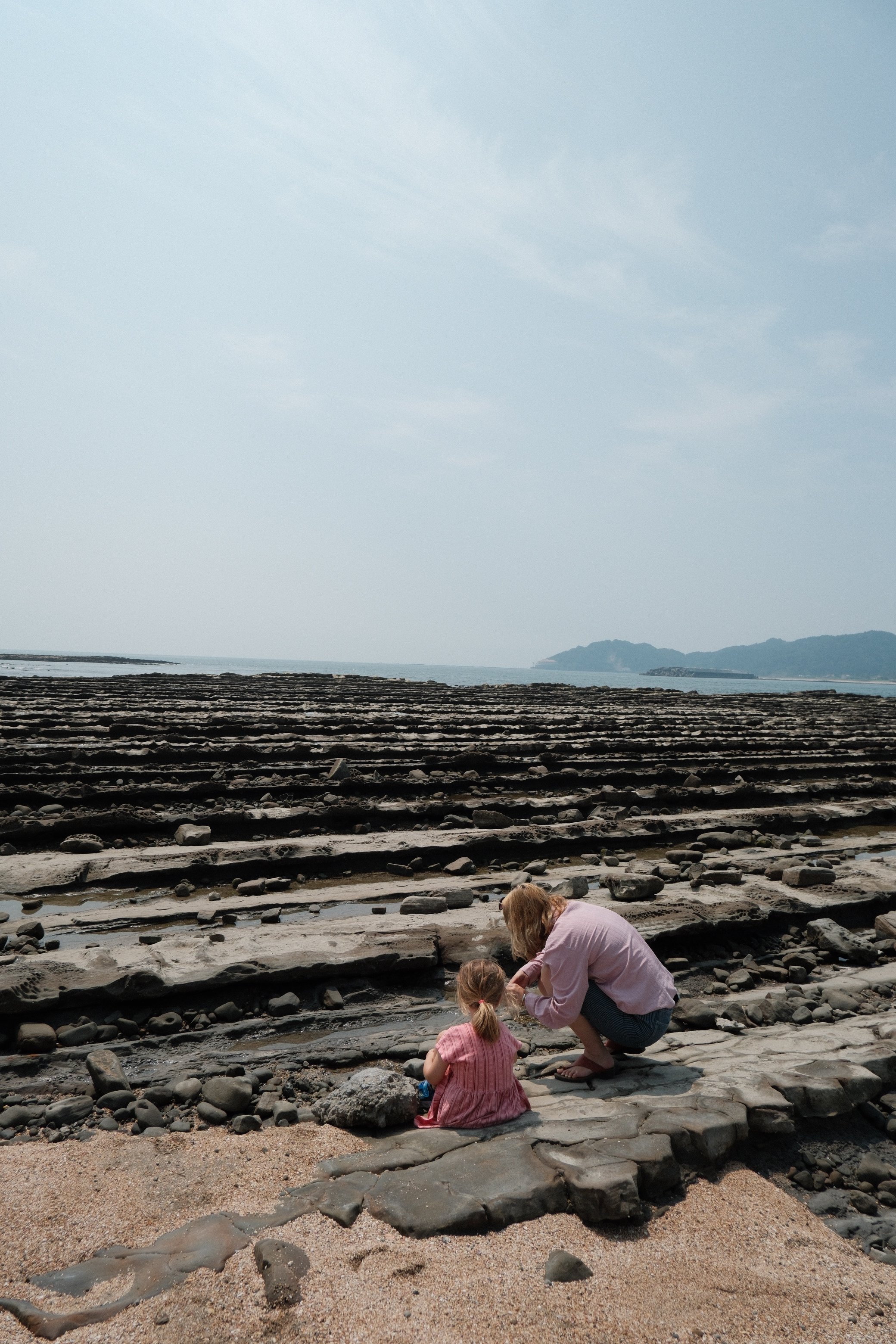
Aoshima is the easiest coastal excursion from Miyazaki City. The small island is connected to the mainland by a bridge and surrounded by unusual rock formations known as the Devil’s Washboard.
The surrounding neighbourhood has developed a relaxed beach-town atmosphere, with cafés, surf shops and seasonal outdoor spaces near the shore. It is an easy place to spend a slow morning without committing to a full day of sightseeing. During the summer, the direct sun can be quite hot and there is not a lot of shade/cover, so bring a hat and sunscreen. Sometimes, a tuktuk driver will make round trip circuits to the island. He operates by donation, so if you see him - hop on and enjoy the ride!
Udo Shrine
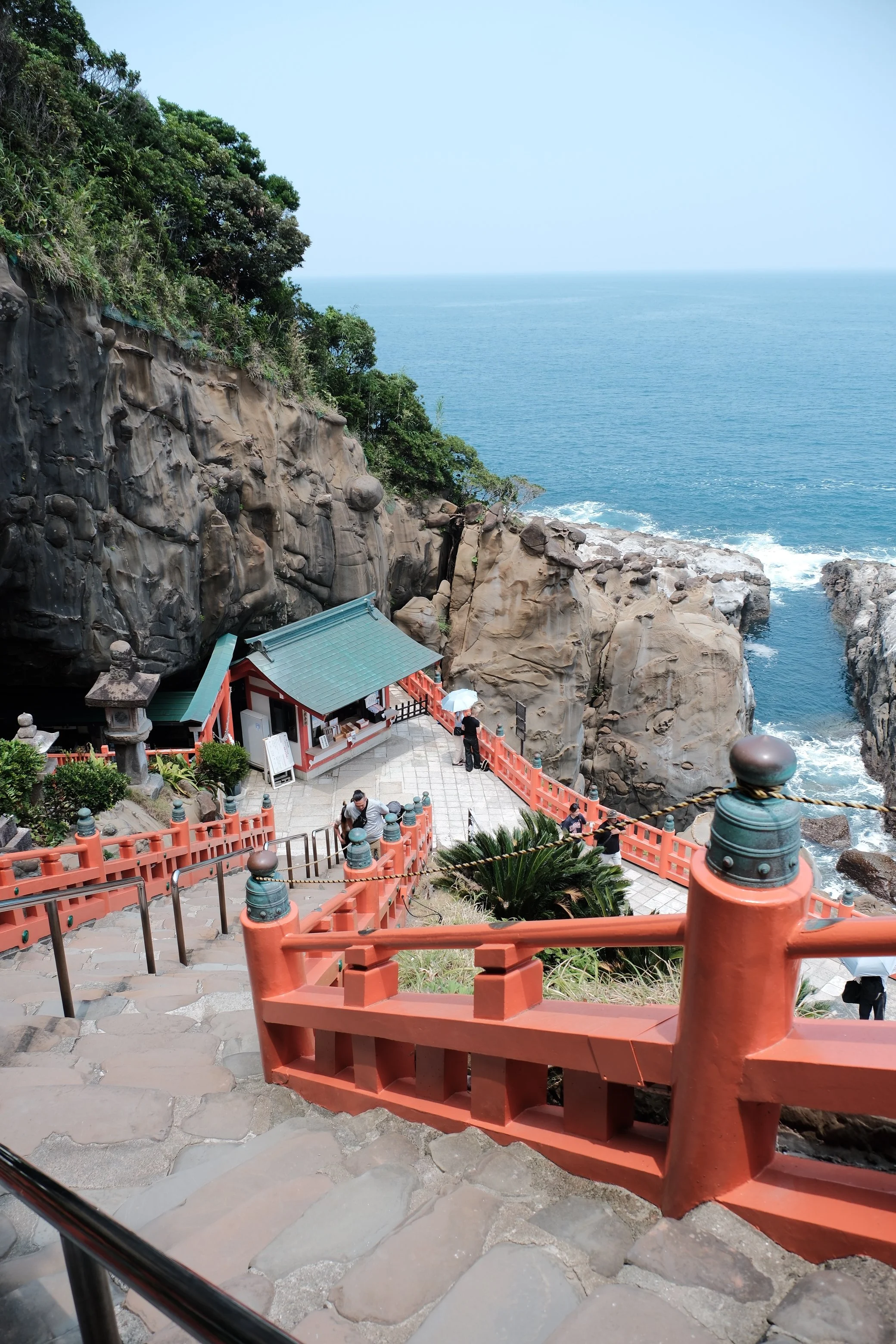
Farther south, Udo Jingu is built inside a cave on a cliff facing the Pacific Ocean. The approach provides dramatic views of the Hyuga-nada Sea, while the vivid shrine buildings stand against dark rock inside the cave. Visitors can also purchase small clay balls called undama and attempt to throw them into a depression on a rock below. The shrine is traditionally associated with marriage, safe childbirth and child-rearing.
Sun Messe Nichinan
Sun Messe Nichinan is best known for its row of Moai statues facing the ocean. The setting is unusual and highly photogenic, with open lawns running toward the Pacific.
The site requires paid admission and involves slopes, so allow enough time to explore without rushing—particularly during the hotter months.
Cape Toi
At the southern end of the coastline, Cape Toi is home to Misaki horses, a native Japanese breed that lives freely around the cape. Reaching it from Miyazaki City takes time, but the journey passes through some of the prefecture’s most peaceful coastal scenery. The horses are wild animals. Keep a safe distance, avoid feeding them and be prepared for changing road or weather conditions around the cape.
The Pleasure of Driving Without a Checklist
The major destinations are worthwhile, but some of my favourite moments in Miyazaki happen between them.
The Nichinan Coast passes beaches, fishing ports, roadside stations and small restaurants looking directly over the sea. Stop for coffee when you find somewhere interesting. Pull over at a legal viewpoint when the light changes. Leave room for a beach you did not know existed. Make sure you have cash on hand - a lot of the smaller spots don’t take credit card.
Even in summer, the roads and attractions often feel manageable compared with better-known destinations around Japan. Holiday periods can still be busy, and typhoons or heavy rain may affect the coastline, but the general experience is spacious and easygoing. This is not a route that benefits from squeezing six attractions into one day. Choose two or three places, leave early and allow the drive itself to become part of the trip, or throw a night at a hotel somewhere in between so you can give yourself a break.
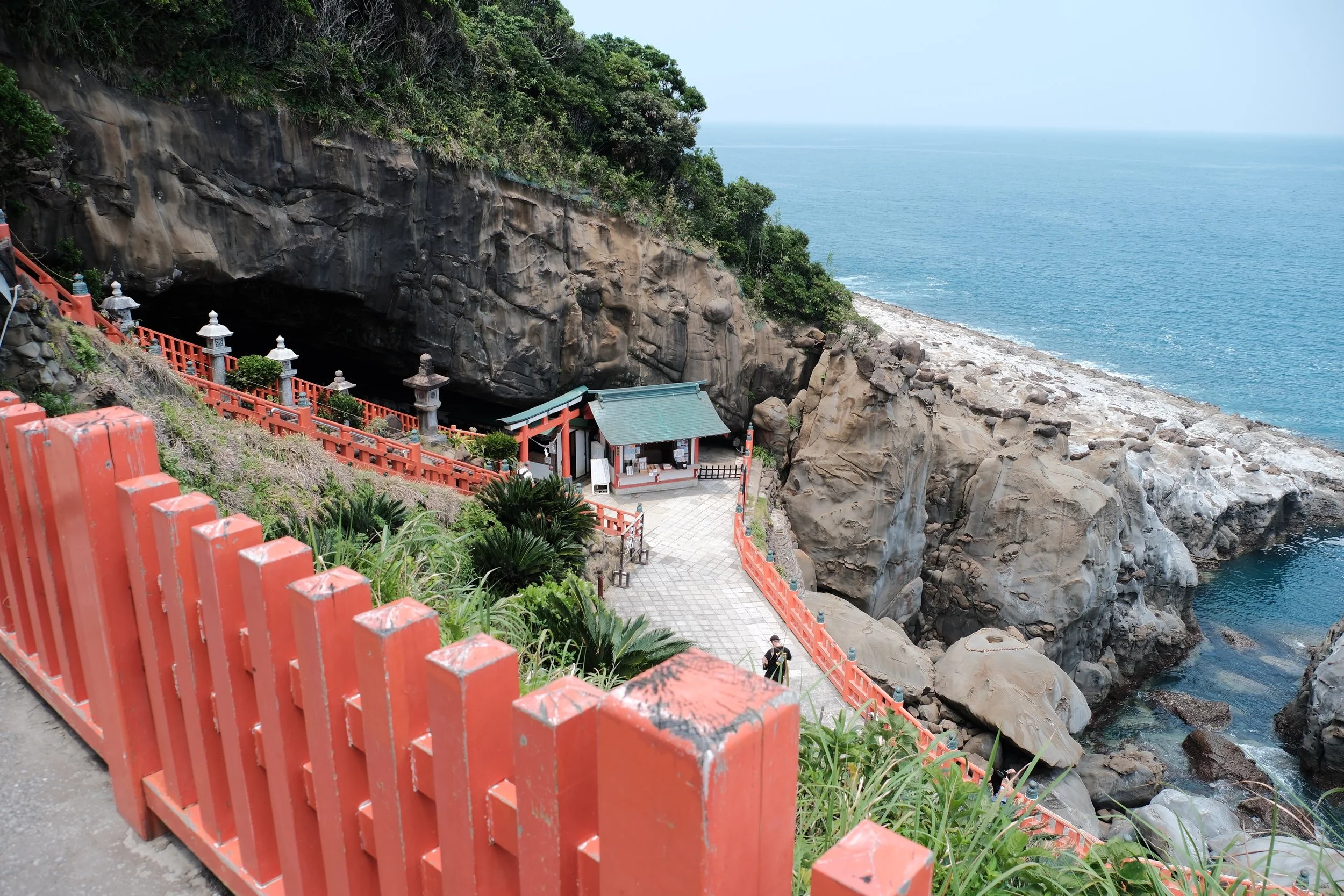
The dynamic views at Udo Shrine are thrilling and unique. Half of the shrine is built inside a cave, which can be accessed from the stairs below. Note that accessibility is a bit dodgy and strollers / wheelchairs may have a difficult time visiting this spot.
What to Eat in Miyazaki
Miyazaki has an unusually generous collection of regional specialities. There is enough variety to build an entire trip around eating.
Chicken nanban is one of the prefecture’s best-known dishes: fried chicken dressed with a sweet-and-sour sauce and usually topped with tartar sauce. Jidori sumibiyaki is chicken grilled rapidly over charcoal, giving it a smoky flavour and distinctive dark appearance.
Miyazaki is also known for high-quality Miyazaki beef, as well as nikumaki onigiri, rice wrapped in seasoned pork. Cheese manju—small pastries filled with sweetened cream cheese—make an easy snack or souvenir.
The warmer climate also produces refreshing citrus and fruit. Look for Hyuganatsu, hebesu, kumquats and seasonal Miyazaki mangoes. Mango season generally runs from spring into summer, with the greatest availability around May and June.
From salty charcoal-grilled chicken to bright citrus and sweet mango desserts, Miyazaki’s food reflects the climate remarkably well.
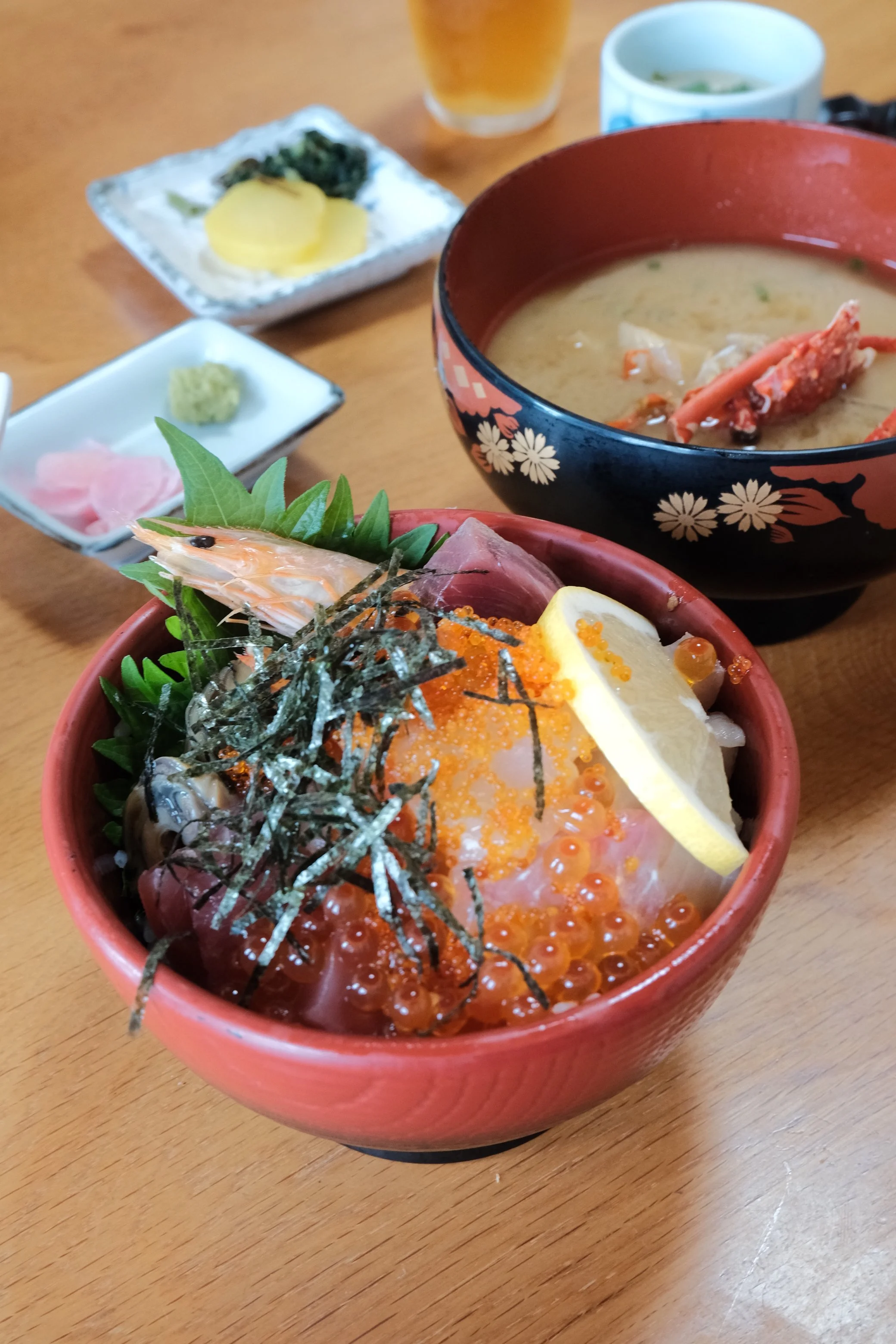
One of our most memorable meals on this trip, was a spontaneous stop at “Isoryori Hoshikura”, a humble roadside seafood resturuant that served luxurious seafood, and Japanese spiny lobster (Ise-ebi). We were served in a small private tatami room, aircon blasting, overlooking a small fishing harbor, and for those who don’t mind sitting on the floor - it was a quiet, private, and extremely child-friendly stop that allowed us to have a luxury meal in the middle of a hot day.
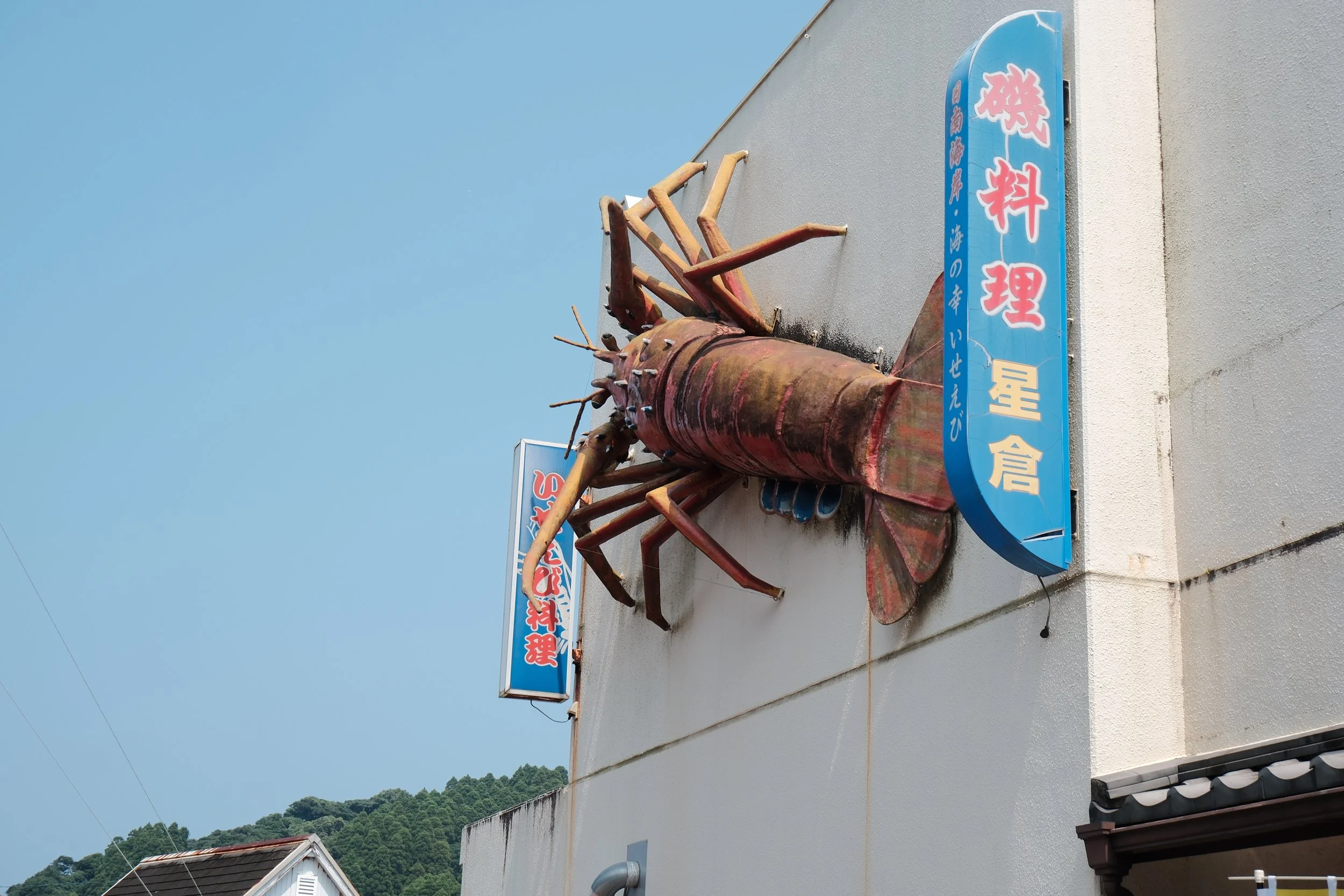
Isoryori Hoshikura’s sign is unmistakable if you’re taking a Nichinan Kaigan driving route - you’re bound to pass it and the giant spiny lobster on the side of the building is an unmistakable landmark.
Do Not Skip Miyazaki City and the Coast
I know, I know, Takachiho is one of Miyazaki Prefecture’s most popular destinations, but it is geographically separated from Miyazaki City and the southern coastline.
Many visitors arrive in Takachiho from Kumamoto or northern Kyushu, see the gorge and shrines, and then continue elsewhere without visiting the prefectural capital at all. Technically, they have visited Miyazaki—but they have missed an entirely different side of it. Takachiho represents Miyazaki’s mountains,mythology and deep interior. Miyazaki City and the Nichinan Coast offer beaches, surfing, palm-lined roads, subtropical vegetation and a more relaxed coastal culture. They should not be treated as interchangeable experiences.
If your schedule allows, spend several nights around Miyazaki City and approach Takachiho as a separate part of the prefecture rather than trying to force everything into one hurried loop. I strongly urge readers to stay for more than a night. If you are expecting non-stop action and a highly stimulating trip, you might leave disappointed. This isn’t the place for that. Miyazaki can seem inconvenient when measured only by the speed of reaching it. The journey from Fukuoka is long, the train connections are not especially efficient and many of its best places require a car.
But that distance has helped preserve something valuable. Miyazaki feels distinct, self-contained and less shaped by the expectations of mass tourism. It does not need to compete with Tokyo—or even Fukuoka, to be worthwhile.
Miyazaki and Seagaia Visitor Information:
English Friendly: 3.5/5
Phoenix Seagaia Resort and major attractions provide English information.
English may be limited in smaller restaurants, cafés and rural areas, but translation apps make most interactions manageable.
Access by Car:
Approximately 3.5 to 4.5 hours from central Fukuoka City to Miyazaki City, depending on traffic, stops and route conditions. A car is strongly recommended for exploring the Nichinan Coast.
Access by Train:
While it is not impossible to take the train, there is no direct route. Train travel from Fukuoka requires several hours and usually involves travelling via Oita or transferring to other services. Flying or driving is generally more practical.
Access by Bus:
You can access Miyazaki City by highway bus from surrounding prefectures, but if you plan to explore the area without a car, hiring a driver, joining a guided tour is recommended.
Address in English:
Phoenix Seagaia Ocean Tower
Hamayama, Yamasakicho, Miyazaki City, Miyazaki 880-8545, Japan
Google Maps:
Phoenix Seagaia Resort
Opening Hours:
Phoenix Seagaia Resort operates throughout the year, but individual restaurants, pools, children’s facilities and activities keep separate schedules. Coastal attractions also have their own opening hours and may close during severe weather. Wednesdays are also popular for holidays.
Estimated Costs:
Udo Shrine, Toi Misaki and Aoshima can be explored for free, while Sun Messe Nichinan requires paid admission. Highway tolls may require some change,
Parking:
Parking is available at Phoenix Seagaia Resort and most major attractions along the Nichinan Coast. Some shrine and beach car parks may become busy during weekends and holidays.
Best Length of Stay:
Allow at leastthree nights if you want to enjoy Miyazaki City, the resort and a full-day drive along the Nichinan Coast without rushing.
Important Note:
Summer in Miyazaki is hot, humid and exposed. Bring sun protection and water, and monitor typhoon and heavy-rain forecasts before driving the coastal route.
